Last updated November 21, 2026
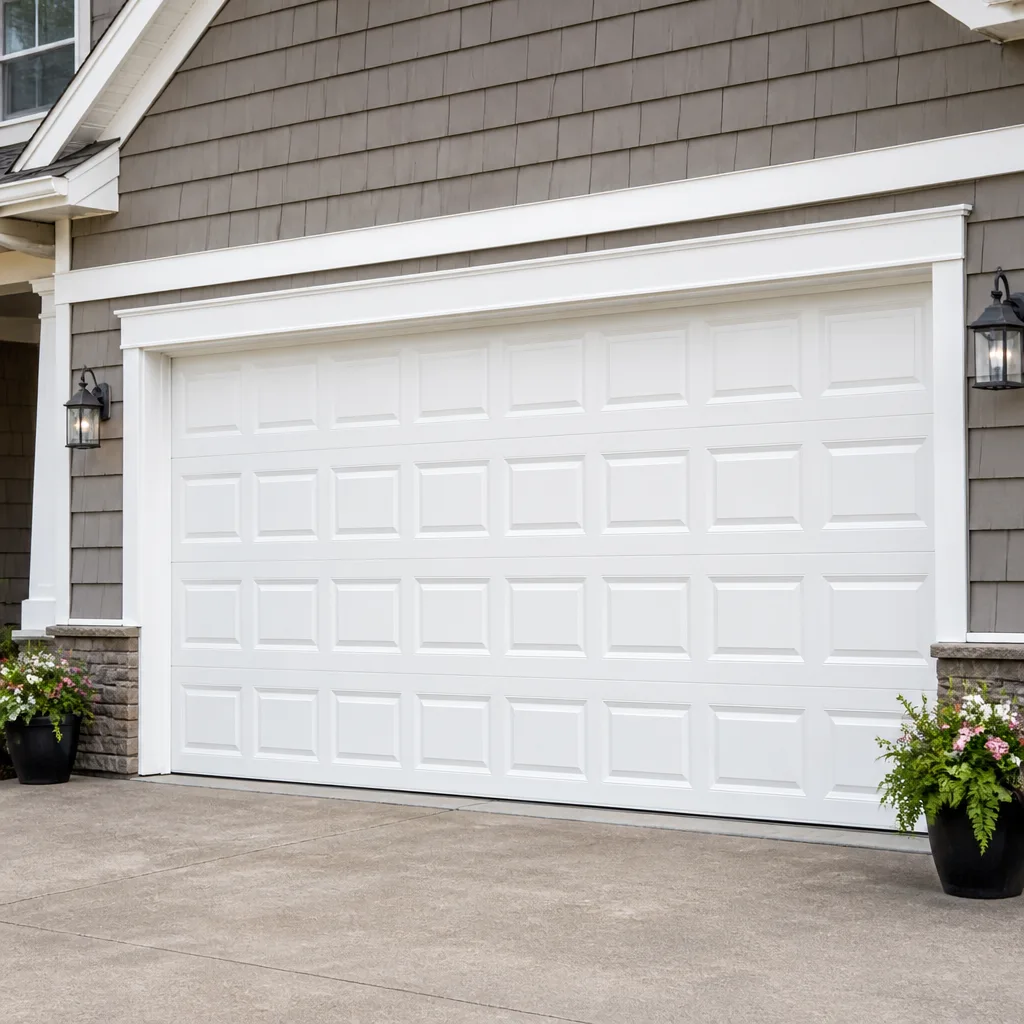 Raised-panel steel
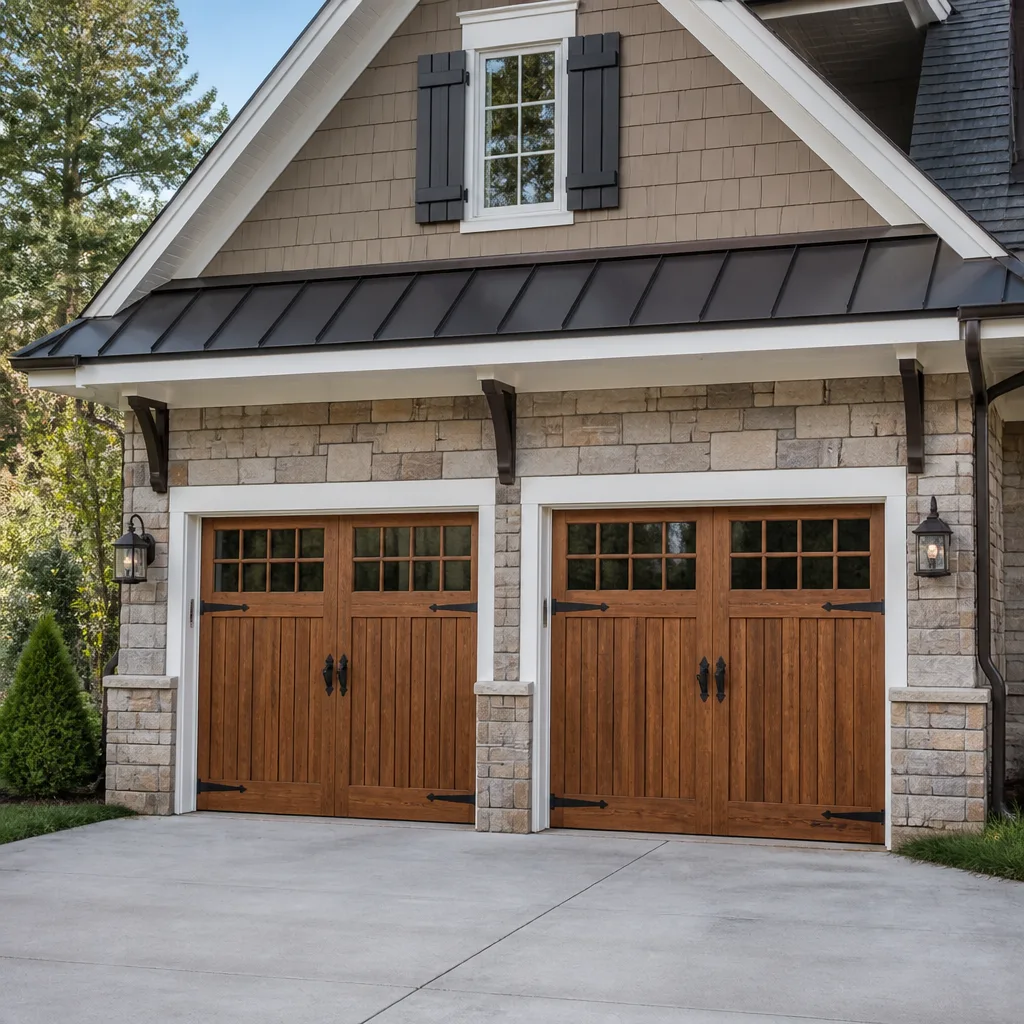 Carriage house
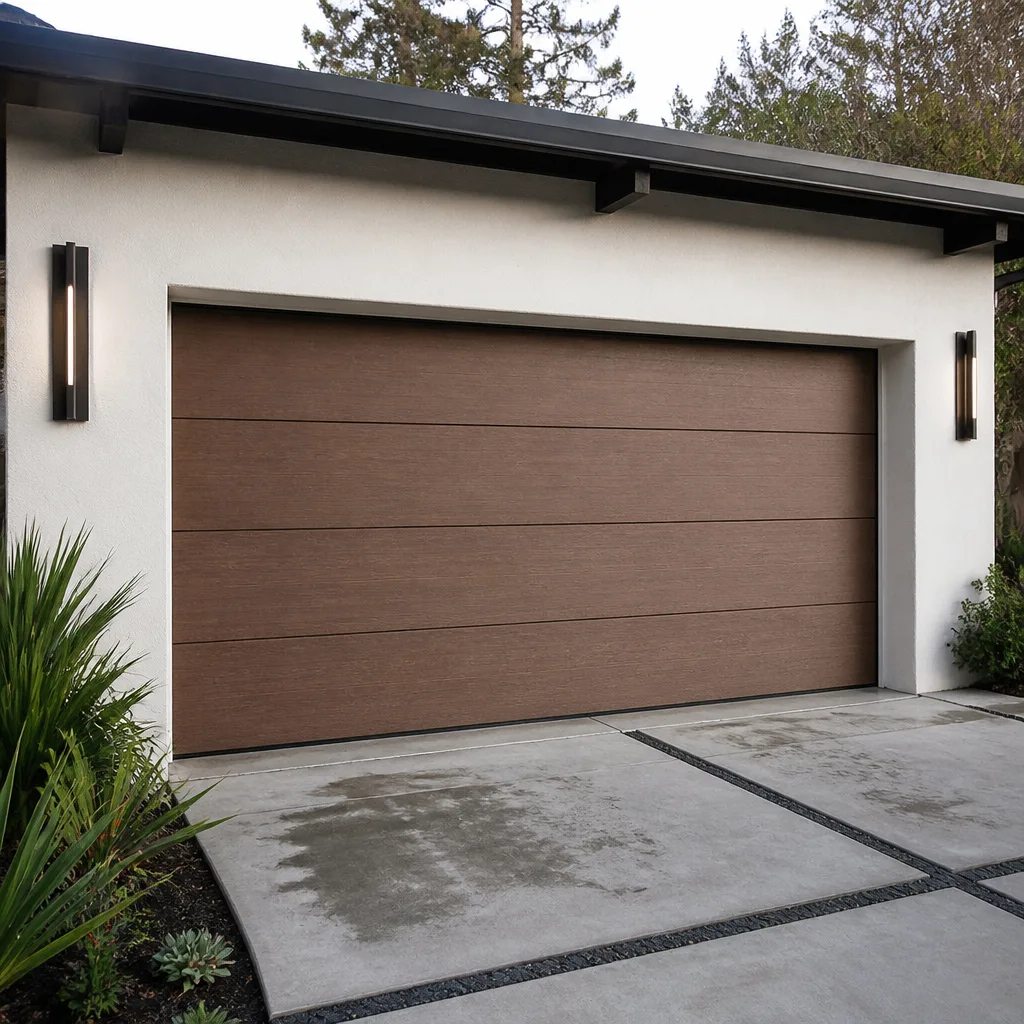 Modern flush
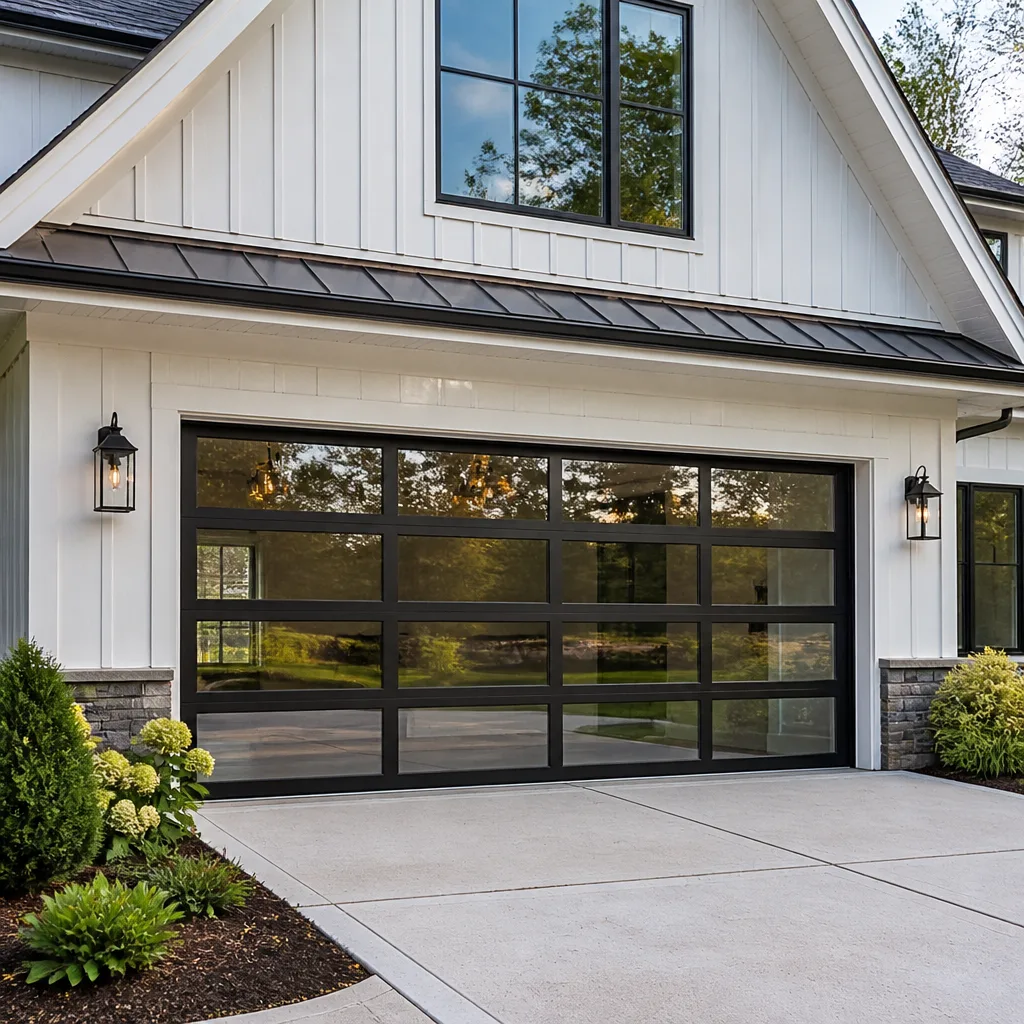 Full-view glass
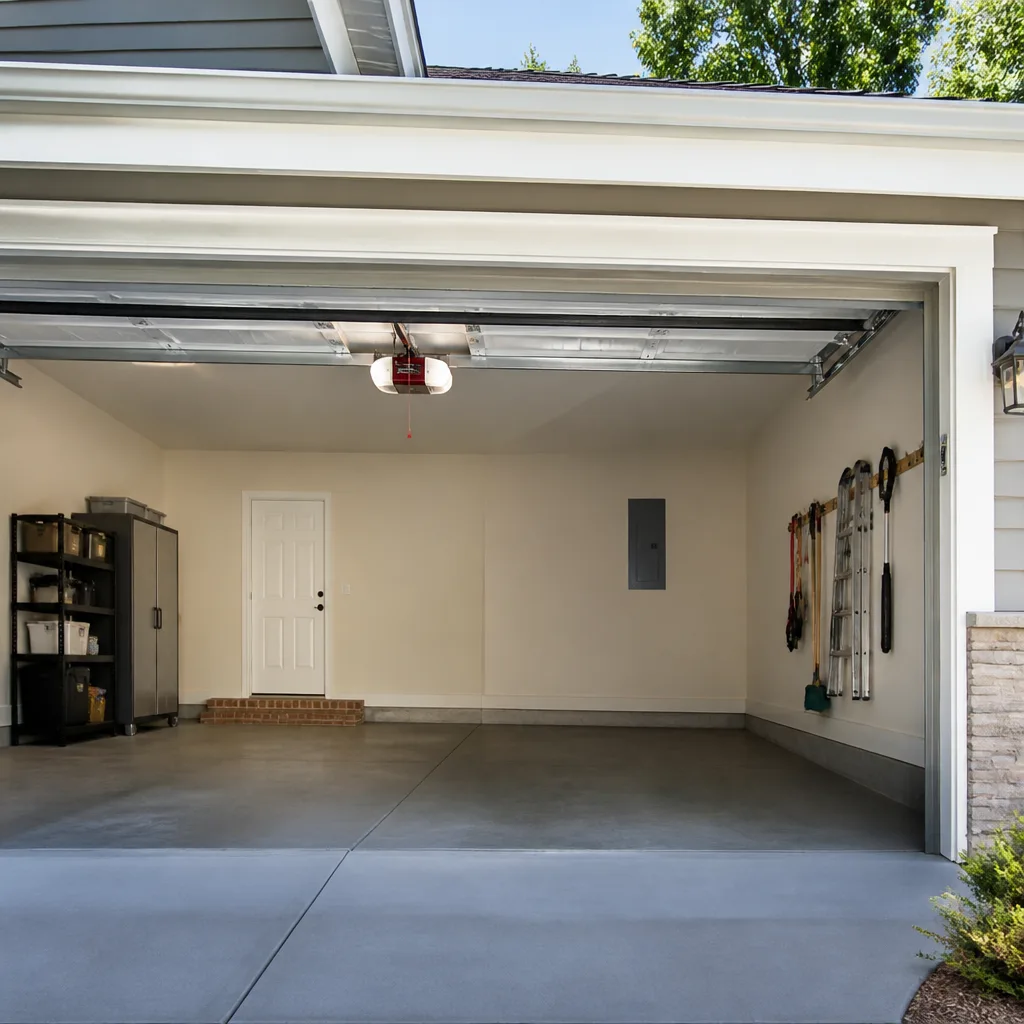 LiftMaster openers
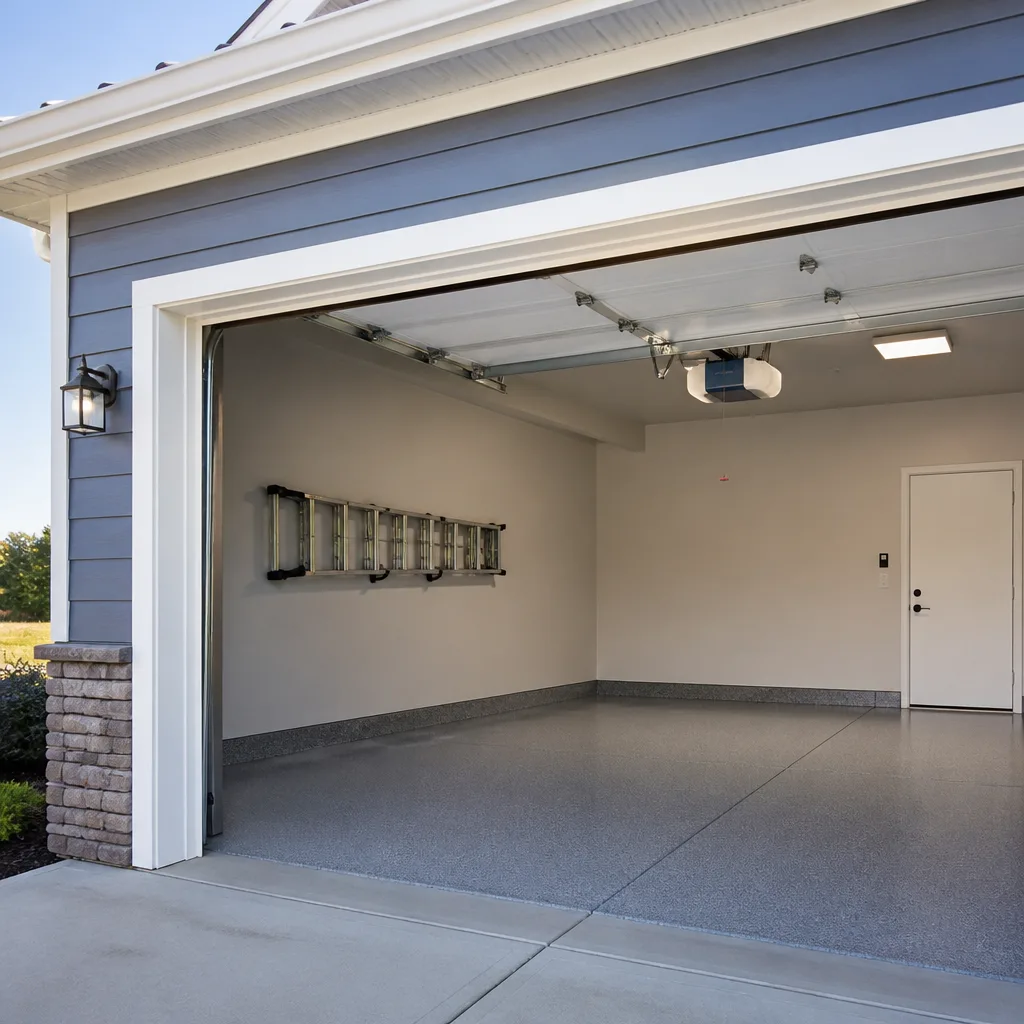 Chamberlain openers
Full 25-point door and opener safety check with every visit - springs, cables, rollers, tracks, and your LiftMaster or Chamberlain opener included
You get a price before we start. It does not change when the pro arrives.
Get your free estimateThe Complete Guide to Garage Doors in Palm Bay
Most garage door advice you’ll find online was written for a house in Ohio. It assumes snow load, freeze-thaw cycles, and a garage that sits below freezing half the year. A steel door in Palm Bay lives a completely different life: salt air, months of heavy rain, hurricane-season wind pressure, and interior temperatures that can push past 100°F on a summer afternoon. Those conditions decide which materials hold up, which openers survive daily heat cycling, and which warranties quietly void themselves the moment the door is installed on a coastal lot. This guide treats Palm Bay conditions as the starting point, not a footnote. You’ll learn how materials age here, what Florida Building Code wind-load rules actually mean at the hardware level, how to compare doors on lifecycle cost instead of sticker price, and when a repair is the smarter call than a replacement.
Quick Answer
Choosing and maintaining a garage door in Palm Bay comes down to three things most guides underplay: a corrosion-resistant finish rated for salt air, an opener and door combination that meets Florida wind-load requirements for this part of Brevard County, and a material choice weighed on lifecycle cost rather than purchase price. Aluminum and fiberglass generally resist Palm Bay’s humidity better than a standard painted steel door. And before you buy anything, ask the installer to confirm in writing that the local warranty isn’t voided by coastal installation. Our technicians have up to 12 years of experience with these conditions, and the answer is almost always the same: buy for the climate, not the brochure.
Styles & brands we work with
- Raised-panel steel
- Carriage house
- Modern flush
- Full-view glass
- LiftMaster openers
- Chamberlain openers
Table of Contents
- How Palm Bay’s Climate Changes What Works
- Steel, Aluminum, or Fiberglass: Choosing for Salt Air
- Picking an Opener That Survives the Heat
- Florida Building Code and Brevard County Wind Load
- Lifecycle Cost: The Comparison That Matters
- Warranties and Why Coastal Installation Matters
- Springs and Why They’re a Safety Issue
- A Year-Round Palm Bay Maintenance Routine
How Palm Bay’s Climate Changes What Works
Proximity to the water and year-round humidity are the two forces that age a garage door here faster than in an inland Florida city like Orlando or Lakeland. A door in Palm Bay spends its life in humid air with salt carried in on the breeze. On a painted steel panel, that combination shows up first as rust at the bottom edges, then at the joints and hardware, then as bubbling paint and pitting. The same door inland might last years longer before any of that becomes visible. It’s not that steel is wrong for Palm Bay. It’s that the finish has to be specified for the environment, and a lot of standard doors sold through national channels are finished for a milder climate.
Humidity drives a second, quieter problem: everything lubricated dries out faster, and everything metal sweats. Hinges, rollers, and the bottom bracket are where corrosion usually starts, because that’s where moisture collects and where the panels sit closest to the ground. Inspecting those points is the single most useful maintenance habit a Palm Bay homeowner can build. Round the corrosion before it reaches the panel face and you extend the door’s life by years.
Heat is the third force. A garage with a west-facing door can sit well above outdoor temperature in the afternoon, and that daily cycling works on the opener, the springs, and the door’s weather seal. It’s a case of an ordinary part doing more work than it would up north. If your door feels heavier or louder than it did a year ago, heat and humidity are often the cause, not the part itself.
Steel, Aluminum, or Fiberglass: Choosing for Salt Air
The material question in Palm Bay isn’t about which door looks best. It’s about which one reaches the end of its useful life in the best shape. Here’s how the three common choices behave in this climate:
- Steel. Strong for the price and available in a huge range of styles, but the finish is the whole ballgame. A steel door with a hot-dipped or galvanized base and a quality topcoat handles Palm Bay well; a standard painted steel panel exposed to salt air will show rust at the bottom rail first and pitting within a couple of years if the finish isn’t up to it. Steel is also the most wind-load-friendly choice for a hurricane-rated door.
- Aluminum. Naturally corrosion-resistant and lightweight, so it ages more gracefully in humid coastal air. It’s less rigid than steel, though, which matters when wind-load ratings are a requirement. Aluminum doors need the frame and reinforcement specifically rated for the job.
- Fiberglass. Wants nothing to do with rust, so salt air and humidity barely touch it. The tradeoff is that fiberglass can be less impact-resistant than steel and can discolor or fade over years of strong sun. It tends to suit interior-facing or low-wind-pressure applications better than a primary hurricane-rated door.
For a Palm Bay home with a street-facing garage door that takes full afternoon sun, the honest recommendation is usually a properly finished steel door paired with regular hardware maintenance, or aluminum if the look allows it. Where rust is the top concern and wind requirements are moderate, fiberglass earns its place. The wrong call isn’t a bad door; it’s a door finished for a climate that isn’t this one.
Picking an Opener That Survives the Heat
An opener works in the hottest room in most Palm Bay homes, and heat cycling is what shortens its life. Chain-drive openers are the most common and the most affordable, but they’re also the noisiest and the most stressed by an unbalanced door. Belt-drive openers run quieter and smoother, which suits an attached garage with living space above it. Screw-drive openers split the difference. Jackshaft openers mount on the wall beside the door and leave the ceiling clear, which is worth considering when overhead space is tight.
Whatever the drive type, the heat matters for two reasons. First, the lubricant inside the opener’s gear assembly and on the rail degrades faster in a hot garage. Second, a door that gets heavier with rust and stiff hardware makes the opener pull harder on every cycle. Heat and drag compound each other. That’s why an opener that seems to fail “for no reason” usually didn’t. It was working against a door that needed maintenance.
We work with LiftMaster, Chamberlain, and Genie, among other major brands, so we can advise on a replacement that matches your door’s weight and wind rating rather than a generic off-the-shelf unit. If your opener is struggling, garage door opener repair is often less expensive than replacement, and we’ll tell you which one actually makes sense. A worn gear, a failing logic board, or a misaligned safety sensor can all look like a dead opener.
Florida Building Code and Brevard County Wind Load
Wind-load requirements are where generic garage door guides fall apart, because an installed door isn’t just a door here. It’s a structural component that has to resist hurricane-season pressure, and Florida Building Code sets standards for that, with Brevard County-specific wind requirements that a licensed installer can confirm for your address. You don’t need to memorize the code to buy smart, but you do need to know what questions to ask.
- Ask for the wind-load rating in writing. A door, a frame, and the hardware must all be rated for the requirement at your address. A rated door hung on an unrated frame doesn’t meet the intent.
- Confirm reinforcement matches the door. Hurricane-rated doors use heavier hinges, struts, and center posts. If a door is sold with a rating, the hardware has to match or the rating is just a number on a sticker.
- Ask about the installation, not just the product. A correctly rated door installed incorrectly won’t perform. The attachment points and anchoring are part of the system.
- Verify the permit requirement. Most municipalities require a permit for a garage door replacement, and an installer who routinely handles this will know what your city’s building department needs.
In storm season, wind-rated doors and wind-rated openers protect more than the contents of the garage. A door that fails in a strong wind opens the whole house to pressure and water. When we quote a replacement, the wind-load requirement is the first thing we check, because a beautiful door that doesn’t meet your address’s rating isn’t a door you want. If storm damage has left your current door stuck or broken, our garage door repair team can assess it quickly.
Lifecycle Cost: The Comparison That Matters
Purchase price tells you what you pay on day one. Lifecycle cost tells you what the door actually costs to own, and in Palm Bay’s climate the two can look very different. A cheaper steel door that starts rusting early often costs more over its life than a slightly pricier door that resists corrosion. Here’s how the math usually goes when a door is finished correctly versus incorrectly:
- Steel, correctly finished. Highest up-front cost per square foot of the common materials, but the finish protects the base and hardware, so maintenance stays routine. Long service life when the bottom rail and hinges are inspected yearly.
- Steel, standard finish. Lower up-front cost, faster corrosion, earlier hardware replacement, and a higher chance you’re replacing the door sooner than expected. The savings disappear the first time you have to replace a panel or redo the finish.
- Aluminum. Doesn’t rust the way steel does, so it tends to need less corrosion maintenance. Lighter panels may cost more to stiffen for wind-load compliance.
- Fiberglass. Minimal corrosion maintenance, but possibly more cost if impact or wind-load needs push you toward a heavier structure.
The takeaway for Palm Bay homeowners: compare doors by expected life and maintenance, not by the number on the quote alone. A door that lasts and needs less work usually wins, even when it costs more at the outset. When you’re weighing repair against replacement, that comparison is what should drive the decision, and it’s the one we work through with you. Repairing a door with years of life left is honest work; replacing a door that’s already failing structurally is honest too.
Warranties and Why Coastal Installation Matters
This is the section most buyers skip, and it’s the one that costs the most when they do. Many garage door warranties exclude or limit coverage for installation in what the manufacturer defines as a coastal environment. The definitions vary. Some manufacturers list a distance from salt water, some refer to a coastal county, and some simply exclude corrosion claims unless the door’s finish was specified and the hardware maintained. A door can be perfect out of the box and still be installed in a way that voids half its warranty.
Before you buy, do three things:
- Read the warranty document, not the sales sheet. Look for the words “coastal,” “corrosion,” “exclusion,” and the definition of the environment. If the definition is vague, ask the supplier for it in writing.
- Ask what finish the door carries and whether it meets the warranty’s requirement. A door that meets the warranty’s finish specification is a door you can hold the manufacturer to later.
- Keep your maintenance records. Corrosion warranties often require documented care. Yearly hardware maintenance isn’t just good practice here; it can be the thing that keeps a claim alive.
If a supplier can’t tell you clearly whether the door’s warranty is upheld in Palm Bay, that’s your answer. Buy the door whose warranty you understand. We install and service doors from Clopay and other major brands, and we’ll walk you through what the paperwork actually says.
Springs and Why They’re a Safety Issue
Torsion and extension springs are the single most common failure point on a garage door, and they’re the one part of the system where “I’ll fix it myself” is a genuinely bad idea. A spring under tension stores enormous energy. When one fails it releases that energy with no warning, and a homeowner adjusting or replacing a spring is one slip away from a serious injury. Springs are a safety issue, not a convenience issue. If your door is suddenly heavy, slams down, or won’t stay up, stop using it and have the springs checked.
In Palm Bay, springs get worked hard by daily heat cycling and by a door that’s heavier than it should be if the hardware is corroding. They’re also replaced pair-by-pair in most matched systems, because a spring that’s done its work is often close in age to its partner. Garage door spring repair is a core part of our work, and we handle it in-house rather than handing you off. If a spring has failed, don’t force the door open or closed. Call and we’ll get a technician out to assess it safely.
A Year-Round Palm Bay Maintenance Routine
A little routine care in this climate goes further than in most places, because corrosion and heat are the main enemies and both are manageable. You don’t need to touch the springs or the opener’s internals. Here’s a routine a homeowner can safely follow:
- Wash the door a few times a year and dry it. Salt and dust build up on the finish, and a rinse removes them before they work into the paint.
- Check the bottom rail and hinges for rust. Treat any spot early. The bottom of the door is where Palm Bay’s humidity hits hardest.
- Lubricate the moving parts. Hinges, rollers, and the tracks benefit from periodic lubrication with a product meant for garage door hardware. Don’t put it on the opener rail’s belt or on the springs.
- Test the safety reverse. Put a small object in the door’s path and confirm it reverses. Do this periodically; it’s the easiest safety check you can run.
- Listen for changes. A door that’s getting louder, slower, or heavier is telling you something. Address the noise before it becomes a broken part.
- Check the weather seal. Heat and humidity degrade the seal at the bottom of the door. A worn seal lets water and pests into the garage.
That routine covers the homeowner-safe side. The springs, cables, and opener internals are the professional side, and skipping that inspection is how small issues become full replacements. If you’re not sure when the door was last looked at by a technician, that alone is a reason to book an inspection.
Common Mistakes to Avoid
- Buying a door finished for a milder climate. The finish is what protects the steel, and a standard finish sold for an inland market will corrode faster here. Ask what the finish is rated for before you commit.
- Ignoring the wind-load requirement for your address. A door that isn’t rated for your location’s requirement may not perform in storm season, and the paperwork matters as much as the product.
- Replacing the opener when the door is the problem. A door with corroded hardware or a failing spring will wear out any opener. Fix the door first and the opener often stops struggling.
- Assuming every installer handles the warranty the same way. Coastal exclusions are common and definitions vary. Confirm in writing that your door’s warranty holds in Palm Bay before you buy it.
- DIY spring work. Springs store dangerous energy. A homeowner replacing or adjusting a spring is one of the highest-risk things you can do in a garage. Leave it to a trained technician.
- Skipping the bottom-rail check. It’s where corrosion starts in this climate. A quick look a few times a year catches it before it reaches the panel face.
- Choosing on price alone. The cheaper door often costs more over its life if it corrodes early. Compare lifecycle cost, not sticker price.
See the difference
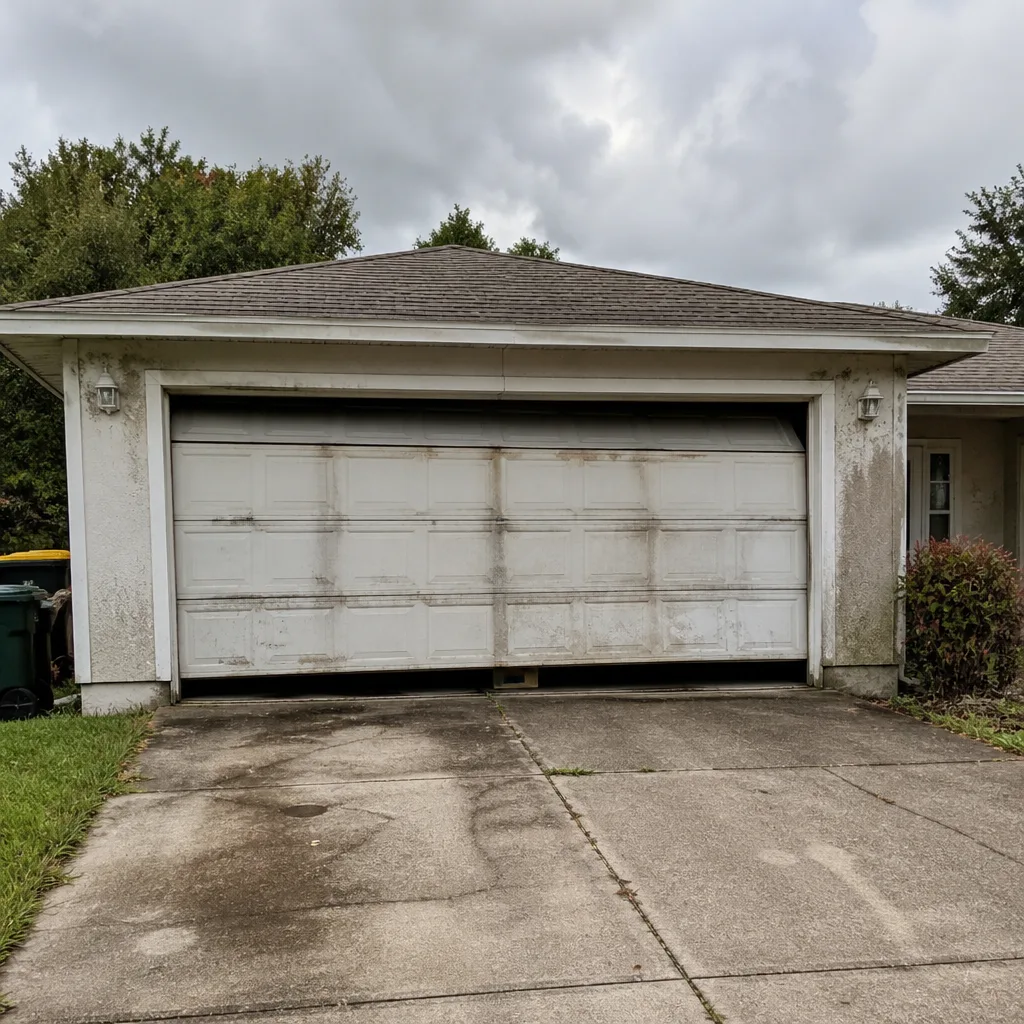 Before
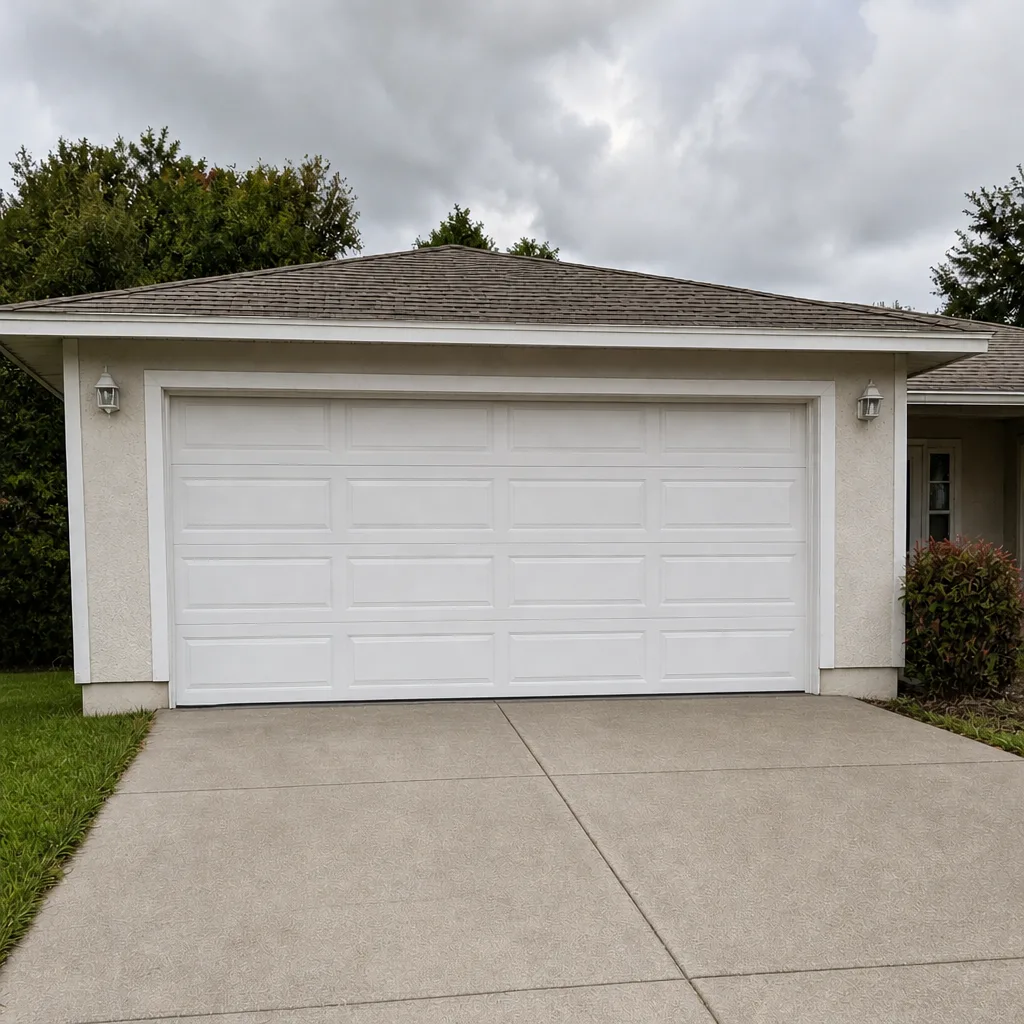 After
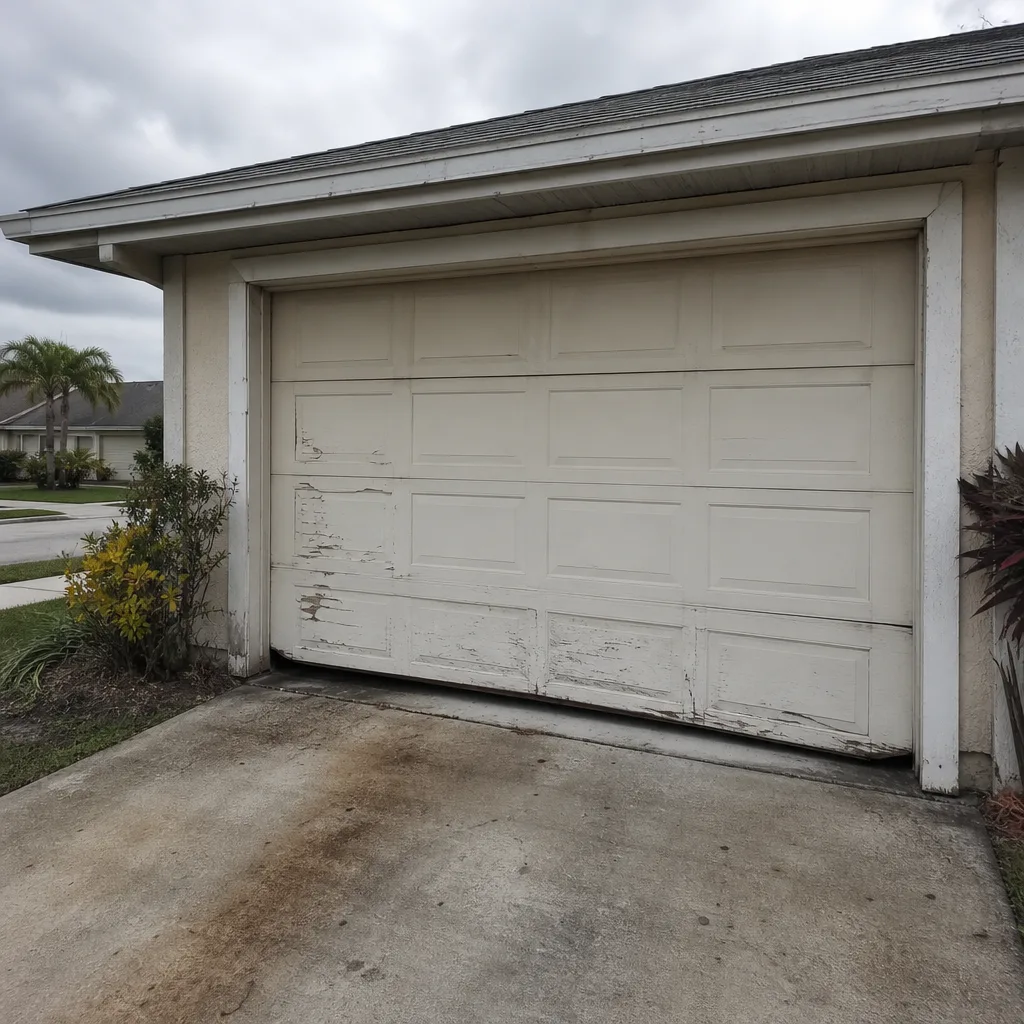 Before
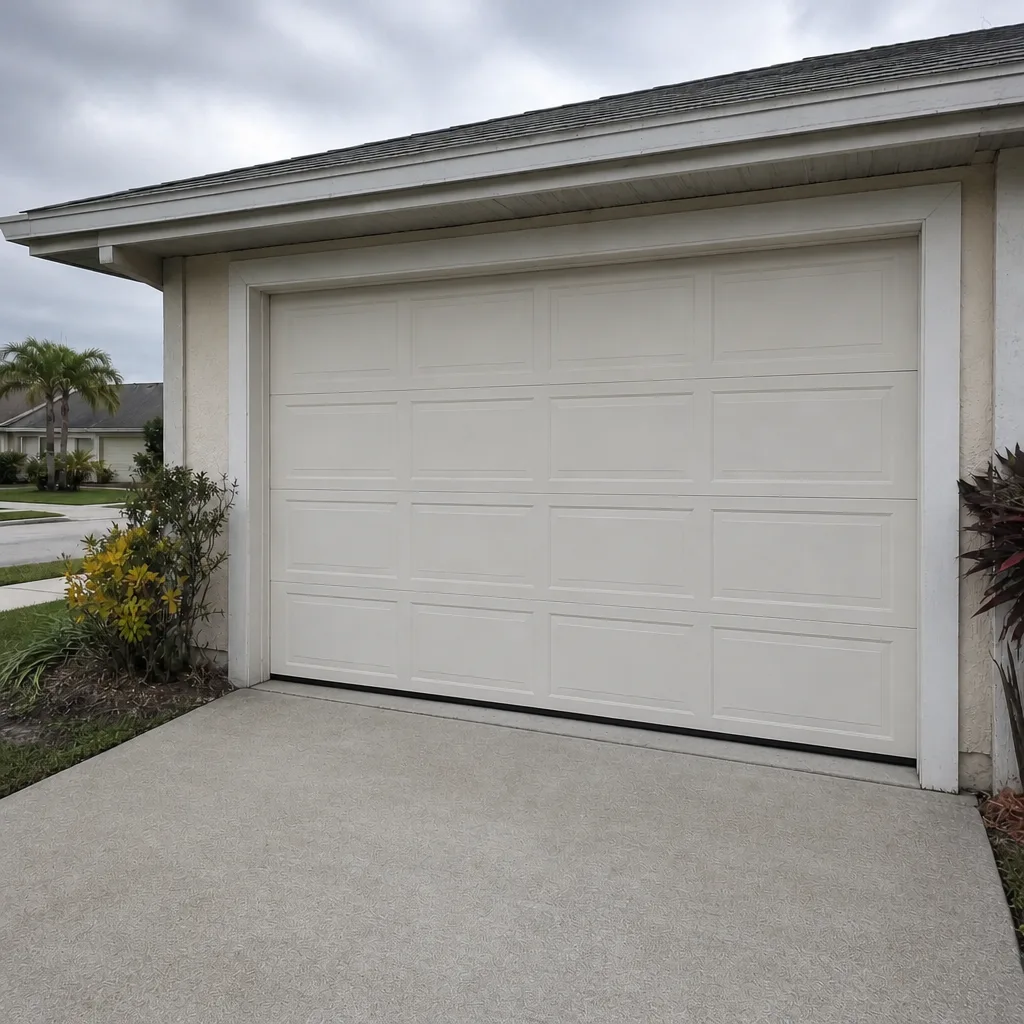 After
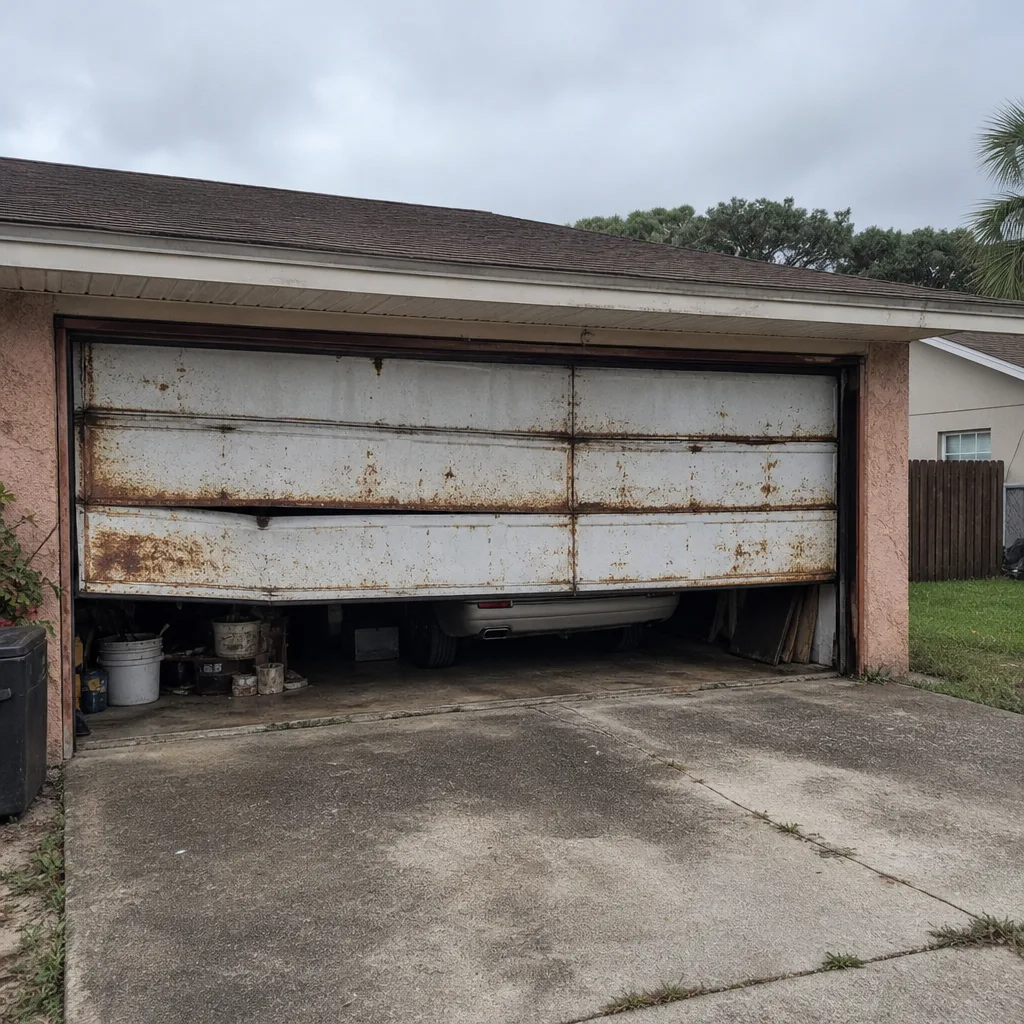 Before
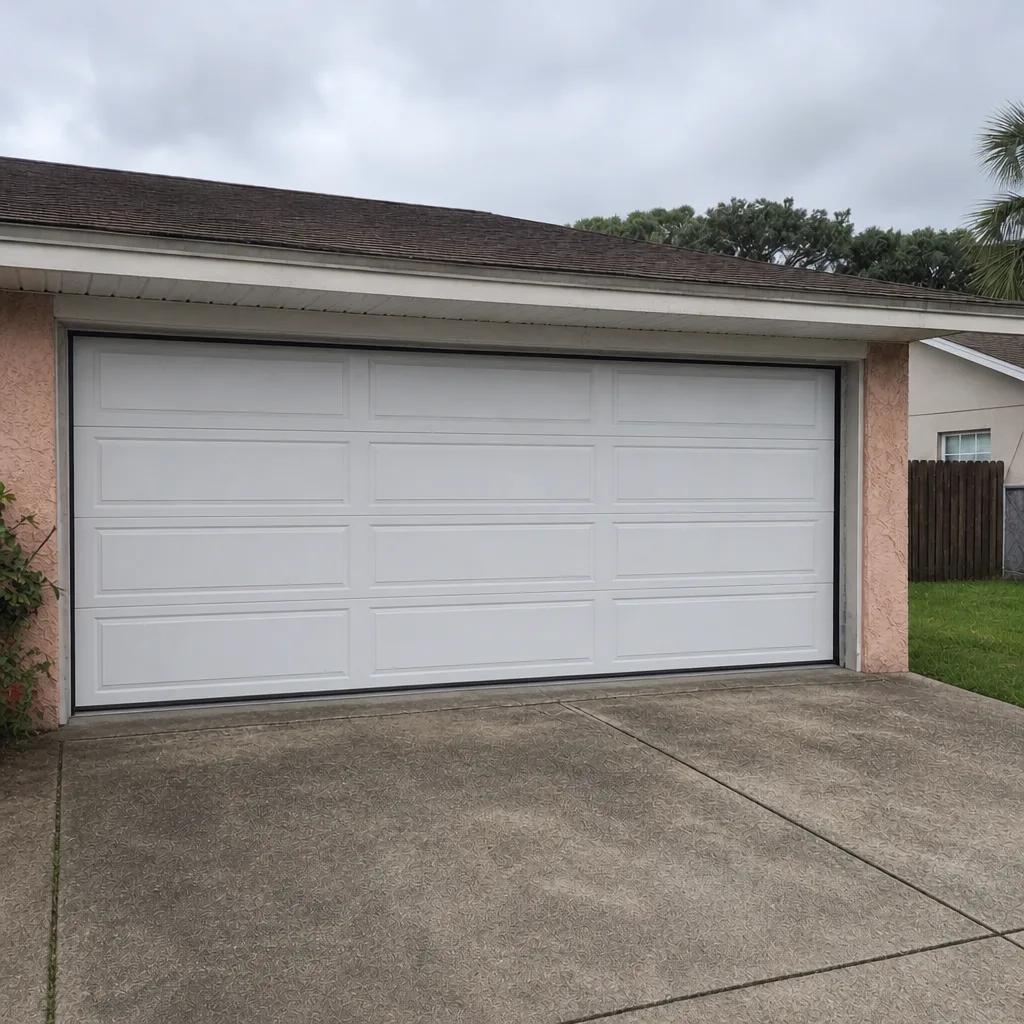 After
When to Call a Professional
Some things are homeowner maintenance. Others need a trained eye. Call a professional if the door won’t open or close at all, if it’s suddenly heavy or slams, if you see a broken spring or a cable off its drum, if the opener runs but the door doesn’t move, if the safety reverse fails, or if you’re considering a replacement and need a wind-load compliant door specified for your address. When a door won’t move and life can’t wait, our emergency service is genuine availability, not a phone-tree promise. Palm Bay Garage Door Repair Pros offers free estimates in Palm Bay. Call (833) 468-5770 and we’ll schedule an assessment, agree the price before any work starts, and tell you honestly whether repair or replacement is the smarter investment.
Frequently Asked Questions
A standard replacement door in Palm Bay typically runs into the low four figures, with wind-rated doors and aluminum or fiberglass styles at the higher end. The exact number depends on door size, material, wind-load rating, and whether the frame and hardware need updating. Because the finish and rating matter more here than in inland markets, it’s worth getting a written estimate that names the door, its rating, and its warranty terms. Call (833) 468-5770 for a free estimate, and the written quote sets the final price.
Aluminum and fiberglass resist salt air and humidity best; steel holds up well only when its finish is rated for a coastal environment. In practice the finish matters as much as the material. A correctly finished steel door lasts, and a standard-finish steel door can pit early. Ask what the finish is rated for and check the warranty’s coastal terms before you buy.
Yes, in most cases a garage door in this part of Brevard County needs to meet a wind-load requirement that a licensed installer can confirm for your address. The door, the frame, and the hardware all have to be rated together. If you’re replacing a door, the wind-load rating is the first thing to verify, and most municipalities require a permit for the work.
Yes, spring repair is a core service, and same-day service is often possible. We handle it in-house, and we quote the price in advance. Never try to open a door with a broken spring, and never attempt the repair yourself. Springs store dangerous energy. Call (833) 468-5770 and we’ll get a technician out safely.
No. The written quote you agree to before work starts is the price. If we find something that changes the scope, we’ll tell you before we touch it, not after. That’s how an estimate is supposed to work, and it’s the standard we hold ourselves to in Palm Bay.
We handle the major brands, including LiftMaster, Chamberlain, Genie, Clopay, and others, so there’s no referral and no brand-compatibility excuse. We’ve seen a lot of these systems in Palm Bay homes, and we’ll tell you whether a repair or a full replacement makes sense. Our technicians have up to 12 years of experience with these brands. Call (833) 468-5770 for a free estimate.
The Bottom Line
Palm Bay’s climate sets the rules for garage doors here: salt air and humidity wear finishes and hardware, heat cycles the opener, and hurricane season makes wind-load ratings non-negotiable. Buy for the climate, not the brochure. Choose a corrosion-resistant material with a finish you can verify, confirm the wind-load requirement for your address, and read the warranty’s coastal terms before you sign. Compare lifecycle cost, not sticker price. Maintain the door and treat springs as the safety issue they are. When you need repairs, replacement, or emergency service, call (833) 468-5770. Palm Bay Garage Door Repair Pros offers free estimates, agrees the price before work starts, and handles the door and the opener in one call.
To learn more about how we work and the full range of services we offer in Palm Bay, visit Palm Bay Garage Door Repair Pros.
Written by the team at Palm Bay Garage Door Repair Pros.