Last updated November 21, 2026
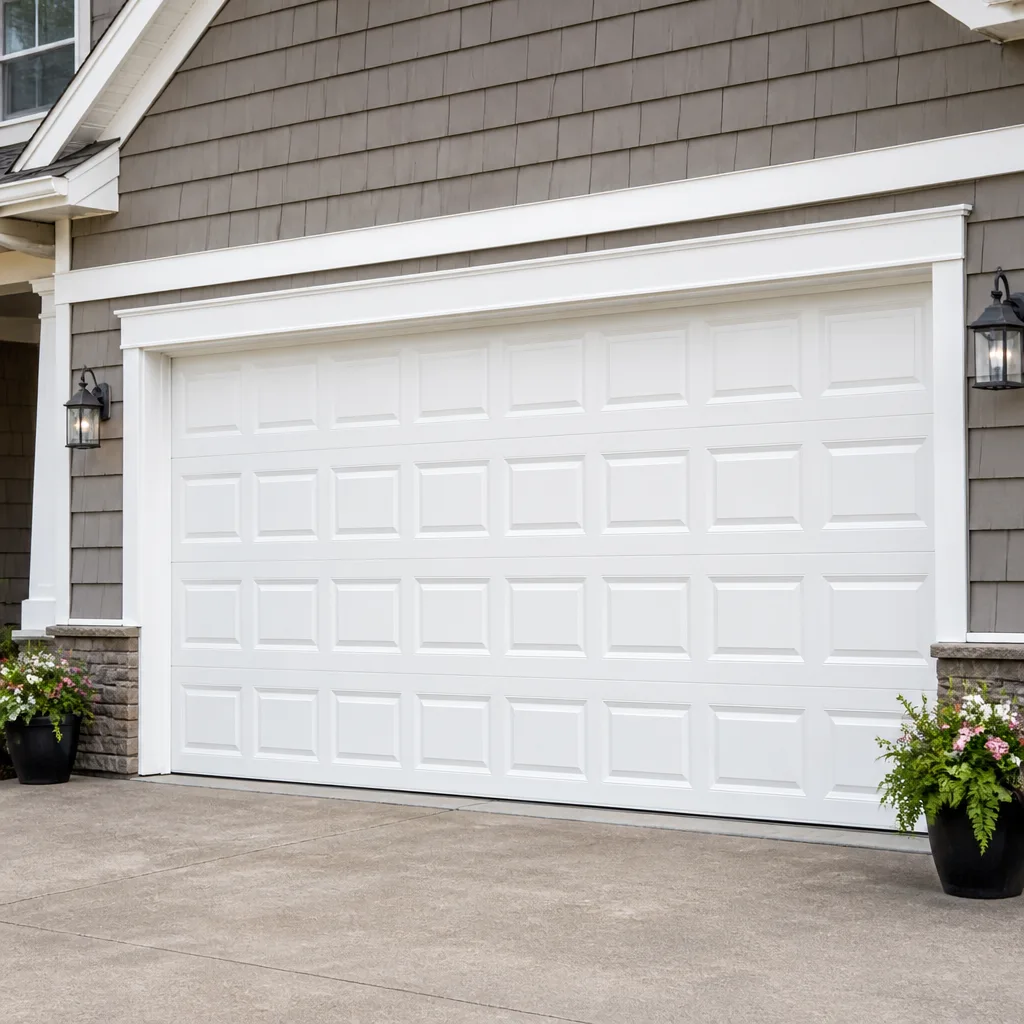 Raised-panel steel
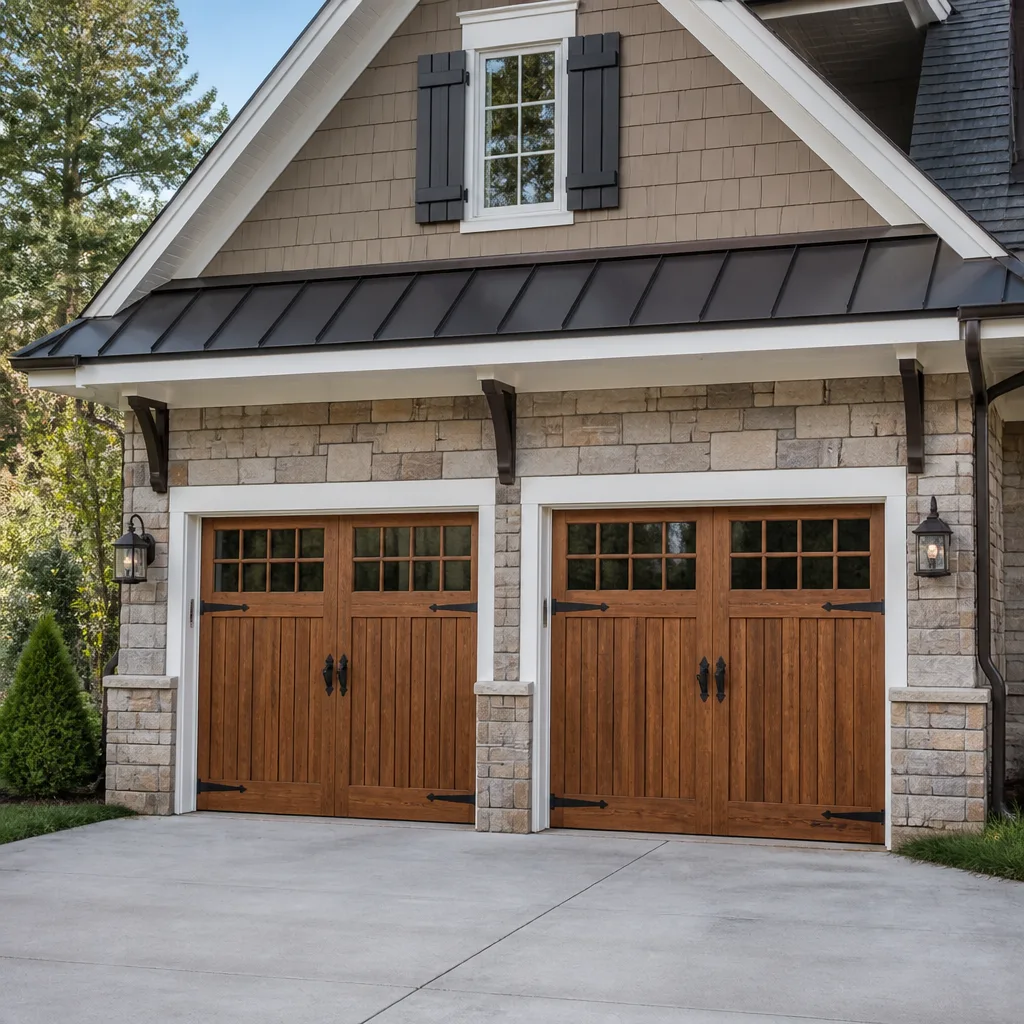 Carriage house
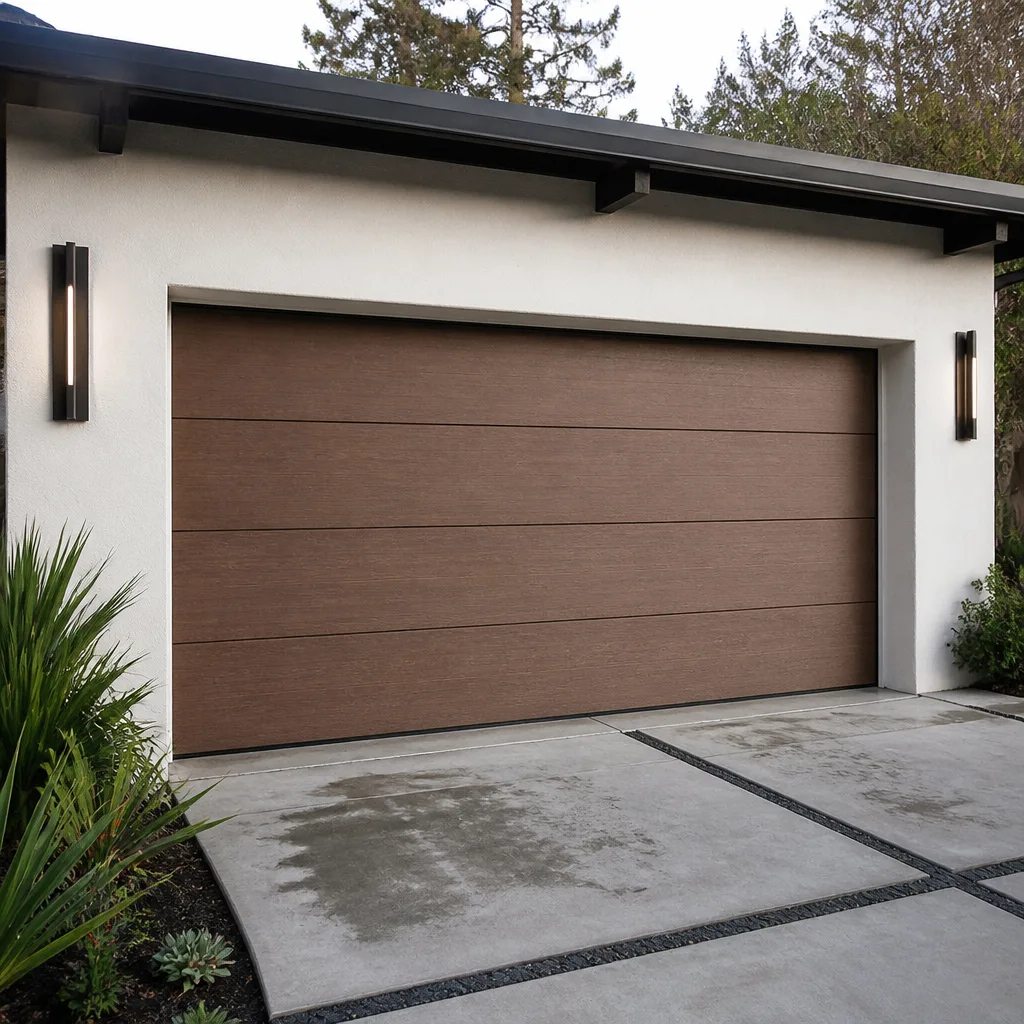 Modern flush
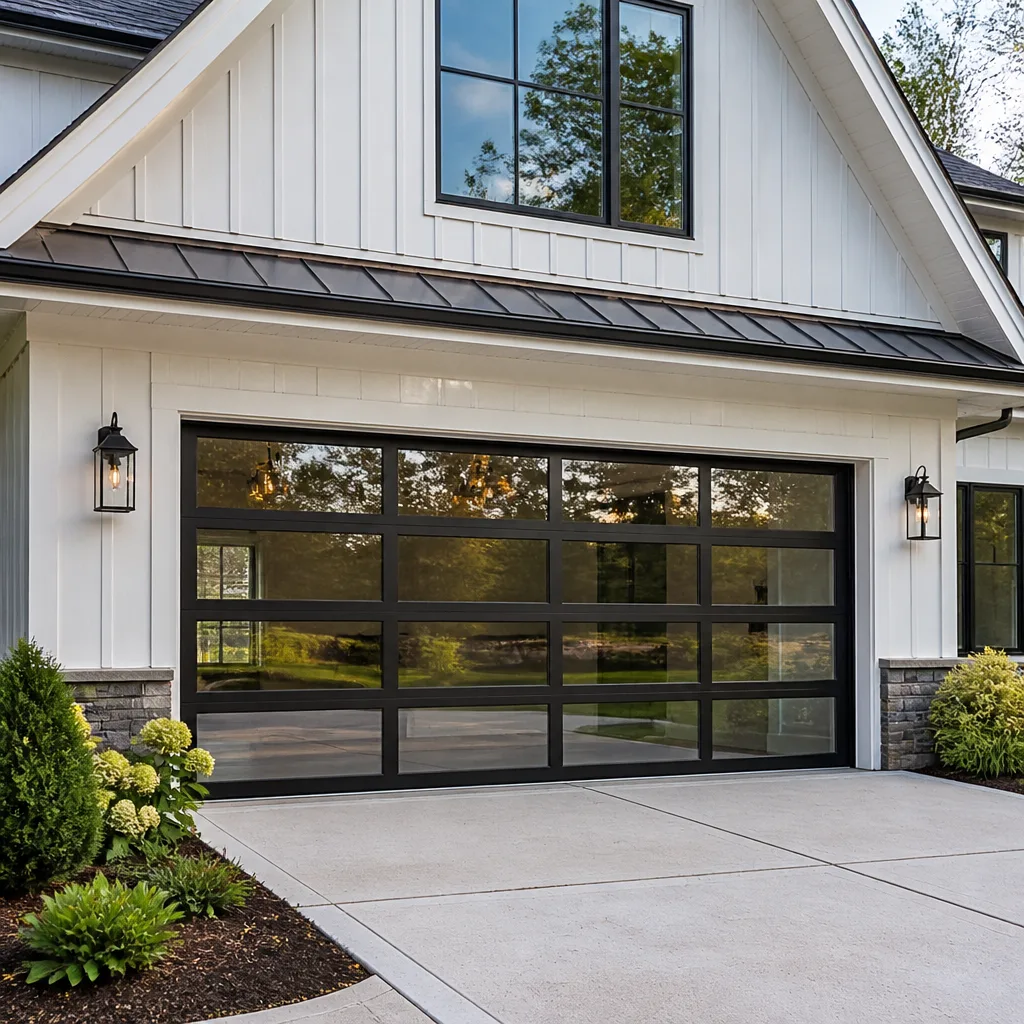 Full-view glass
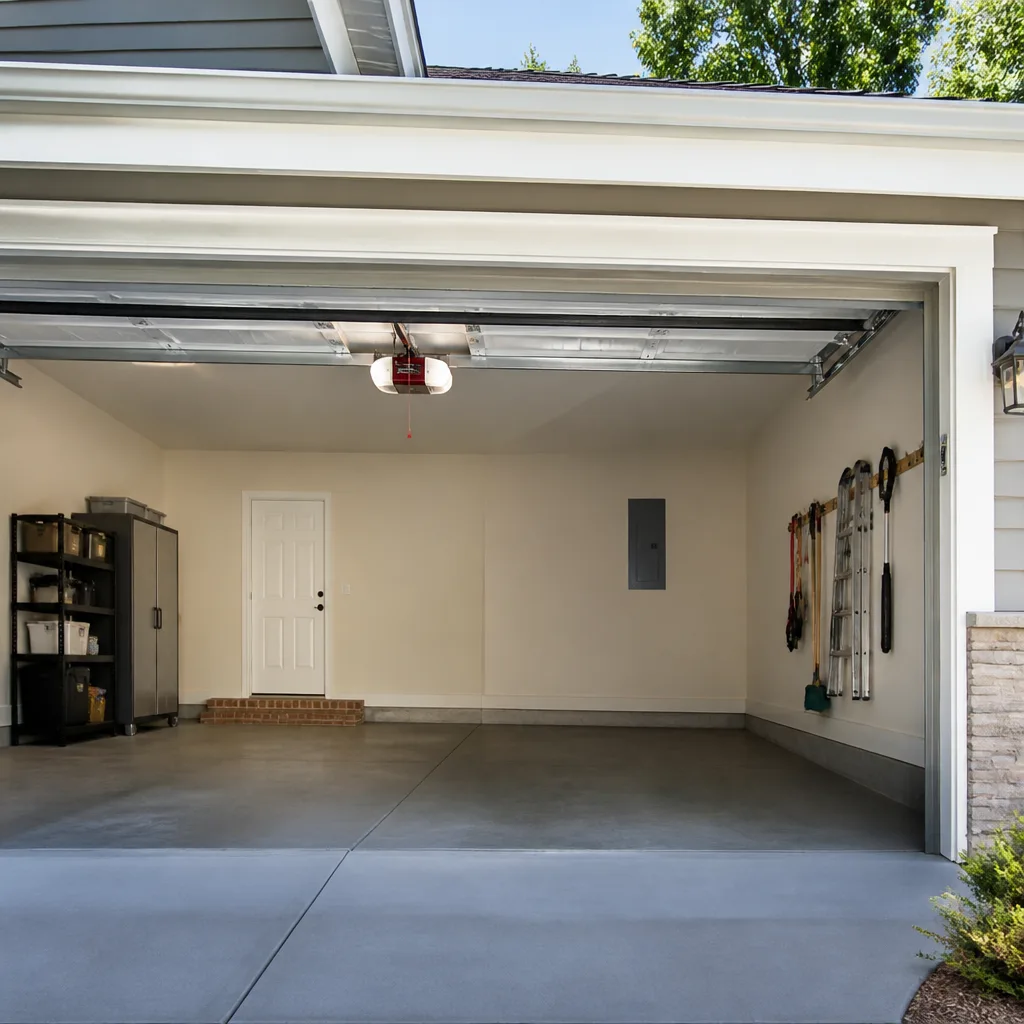 LiftMaster openers
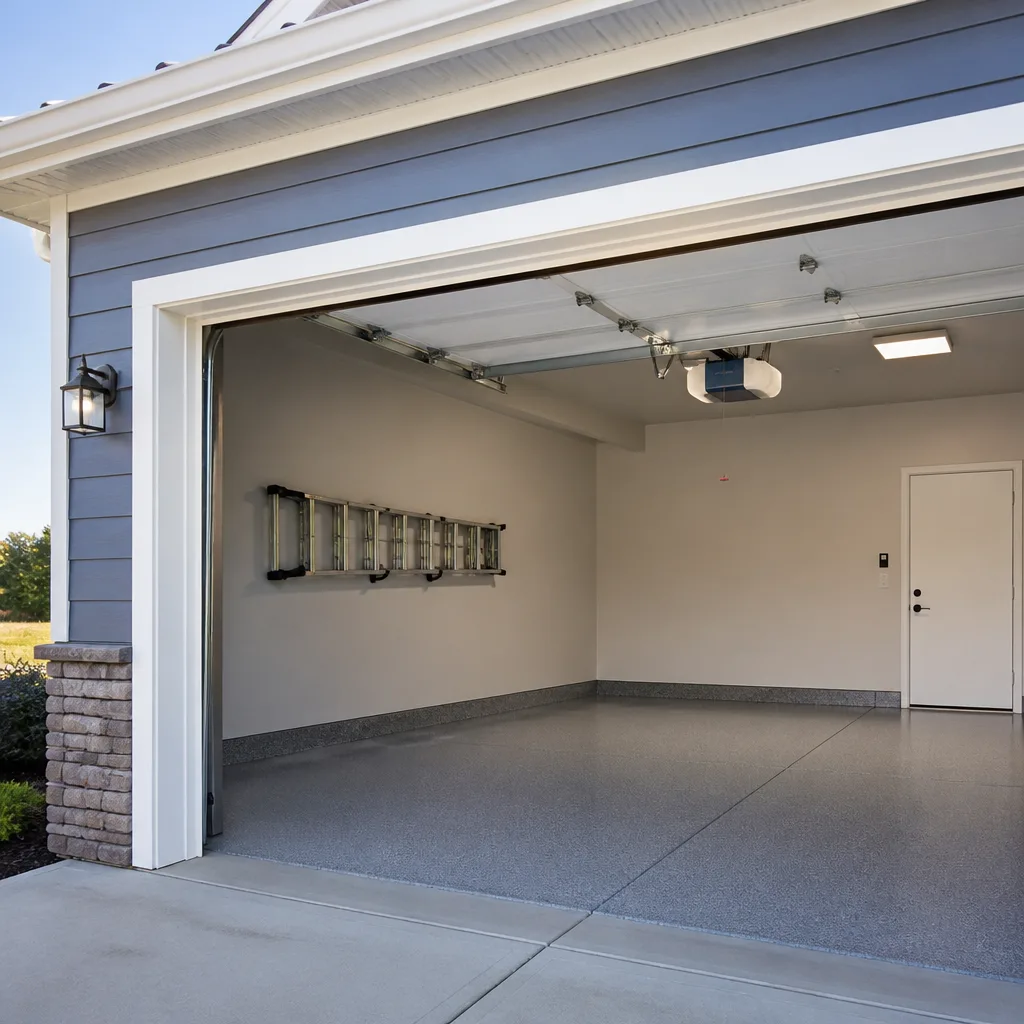 Chamberlain openers
Full 25-point door and opener safety check with every visit - springs, cables, rollers, tracks, and your LiftMaster or Chamberlain opener included
You get a price before we start. It does not change when the pro arrives.
Get your free estimateGarage Door Emergency Preparedness Guide for Palm Bay Homes
Most Palm Bay homeowners think about their garage door only when it stops working. That’s the wrong time to learn how the manual release works, where the emergency cord hangs, or whether the door will open when the power is out and the car needs to leave. The real problem with a garage door emergency isn’t the broken spring or the dead opener. It’s the panic that comes from not knowing what to do, and that panic is preventable. This guide walks through how to prepare before anything fails, how to handle the door when it does, and how to get it fixed safely in Palm Bay. It’s written for people who’d rather spend ten minutes now than an hour in the dark trying to figure out a jammed door.
Styles & brands we work with
- Raised-panel steel
- Carriage house
- Modern flush
- Full-view glass
- LiftMaster openers
- Chamberlain openers
Quick Answer
Garage door emergency preparedness in Palm Bay comes down to three things: knowing how to operate the manual release on your specific opener brand, testing it before you need it, and having a plan for securing a stuck door during storm season. If your door is already stuck, damaged, or creating a security problem, call Palm Bay Garage Door Repair Pros at (833) 468-5770 for emergency service. If you’re preparing in advance, work through the steps below and you’ll be ready before the next failure or evacuation order.
Table of Contents
- Why Garage Door Preparedness Matters More in Palm Bay
- How to Use the Manual Release on Every Major Opener Brand
- What to Check After a Power Outage
- How to Temporarily Secure a Door That Won’t Close Before a Storm
- How to Assess Post-Storm Structural Damage Safely
- What to Have Ready Before You Call for Emergency Service
- The Palm Bay Pre-Season Garage Door Checklist
- Common Mistakes to Avoid
- When to Call a Professional
- Frequently Asked Questions
Why Garage Door Preparedness Matters More in Palm Bay
Palm Bay sits in Brevard County, where mandatory evacuation orders during hurricane season are a real part of life, not a hypothetical. When an order comes, the window to leave is short. A garage door that won’t open turns that window into a scramble. We’ve seen this play out often enough to know the difference between a homeowner who’s tested their manual release and one who’s reading the opener manual for the first time while the car idles in a closed garage.
The second reason preparedness matters here is security. A garage door that’s stuck open, or stuck halfway, exposes everything stored inside and, on many homes, the door between the garage and the house. In a Palm Bay neighborhood after a storm, when power is out and streets are quiet, an unsecured garage is a genuine exposure. The third reason is that the heat and humidity in this part of Florida work on the hardware year-round. Springs, cables, rollers, and opener components wear at a steady pace, and the failure often shows up at the least convenient moment.
None of that means you need to become a garage door technician. It means you need to know four or five facts about your own door and opener, and where they are on the unit. That’s what this guide covers.
What a Prepared Palm Bay Homeowner Actually Knows
- The brand of the opener (LiftMaster, Chamberlain, Genie, and Craftsman are all common in Palm Bay homes).
- Where the manual release cord or handle hangs, and how it disengages the door.
- Whether the door is spring-balanced with torsion or extension springs.
- Whether the door currently closes fully and reverses on contact.
- The number to call when something fails.
If you can answer five of those, you’re already ahead of most homes in Palm Bay. If you can’t, the sections below will get you there.
How to Use the Manual Release on Every Major Opener Brand
Every residential garage door opener sold in the U.S. has a manual release, and the mechanism works essentially the same way across brands. A cord or handle hangs from the trolley that rides on the opener rail, and pulling it disconnects the door from the motor so you can lift the door by hand. The differences between brands are in the shape and color of the handle and the exact wording in the manual, not in the way the release functions. LiftMaster and Chamberlain (which share the same engineering) use a red or yellow handle. Genie uses a red T-handle on most models. Craftsman follows the Chamberlain pattern. The release point is always the same: the trolley, the carriage that slides along the rail above the door.
Here’s the sequence, in general terms. Don’t perform this with the door open and the spring system under tension if anything feels wrong; check with a technician first.
- Close the door fully if it will close, and turn off the opener at the wall switch or by unplugging it.
- Locate the release cord hanging from the trolley on the rail. On most Palm Bay installations it’s a few feet back from the door itself.
- Pull the cord straight down, firmly, until the trolley disengages. You’ll feel and hear it release.
- Lift the door by hand from the bottom panel, using both hands, and raise it slowly.
- Once the door is up, prop or secure it before letting go. A door with a broken spring will not stay up on its own.
The tricky cases are the ones where the cord has been painted over, is missing, or has been cut short. If the cord is gone or unusable, don’t climb up to reach the trolley and don’t try to disengage it with a tool from below. Call for service. If the cord has been painted over and won’t pull freely, the release may be stuck, and forcing it risks damage to the trolley or injury.
If the Cord Is Missing or Painted Over
A missing cord is common on older Palm Bay openers where the cord was removed or broke years ago and nobody thought to replace it. In that situation, the safe move is to leave the door where it is until a technician arrives. The trolley can be reached and disengaged safely with the right tools and knowledge, but that’s not a job to attempt from a ladder in a Palm Bay garage after dark. A new release handle and cord is an inexpensive repair once a technician is on site.
What to Check After a Power Outage
After a power outage, most garage door openers need very little to get back to normal, but a few checks will tell you whether the door is going to behave or whether something failed during the outage. Here’s the sequence we’d walk through in a Palm Bay home.
- Check the wall switch and the opener’s power indicator. Confirm the outlet the opener plugs into is live.
- Look at the safety sensors at the bottom of the door tracks. The LED on each sensor should be steady, not blinking. A blinking LED means the sensors are misaligned or blocked.
- Press the wall button once. If the door doesn’t move, the opener may need to re-learn its travel limits or may have gone into a locked state.
- Check the battery in the remote and the keypad. Power outages sometimes coincide with dead batteries nobody noticed.
- If the door moves but reverses immediately, a sensor is blocked or out of alignment. Clean the lenses with a soft cloth and re-aim.
- If the door moves but makes unusual noise, stop and schedule garage door repair. Noise after an outage often points to a roller or spring issue that the outage didn’t cause but did expose.
On most LiftMaster and Chamberlain openers, the safety sensors are the single most common reason a door won’t close after an outage. The lenses get dust or cobwebs here in the Florida humidity, or the sun hits one sensor directly, and the door refuses to close. A quick clean and realignment usually fixes it. If the opener itself is dead after power returns, garage door opener repair is the next step.
When the Opener Won’t Come Back After Power Returns
If the outlet is live and the opener is silent, the logic board or transformer may have failed during a surge. This happens more often in homes without a surge protector on the opener outlet, which is most Palm Bay homes. A technician can test the opener and tell you whether it’s a board-level fix or a full replacement. Sometimes the answer is repair and sometimes it’s a new unit, and you deserve a straight answer either way.
How to Temporarily Secure a Door That Won’t Close Before a Storm
When a storm is approaching and the door won’t close, or closes but leaves a gap, you need a short-term fix that keeps the opening covered and doesn’t require a technician to arrive in bad weather. The tools you already have will handle most of this. What you’re doing is closing the opening securely, not repairing the door. Never force a door that’s stuck with a broken spring or cable, and never try to prop a door open in high wind.
- C-clamps on the tracks. If the door is closed but the opener won’t hold it, clamp a C-clamp on each vertical track just above a roller to keep the door from rising or being lifted.
- Vise grips as a door lock. A pair of locking pliers clamped on the track above a roller does the same job as a C-clamp. Use two, one per side.
- Ratchet strap or heavy rope across the door. With the door closed, run a strap from the door’s bottom bracket to the track on each side or to a garage structural element. This keeps the door from being pushed open by wind.
- Pipe or bar across the tracks. A short length of pipe or a sturdy bar laid horizontally across the interior of the door at the top panel, braced against the tracks, adds a barrier to forced entry.
- Deadbolt on the door between garage and house. If the garage is exposed, lock the interior door. This is the most important single step.
None of these are permanent repairs. They’re what you do while the weather is turning, and they buy you time to get a Palm Bay technician scheduled. What they don’t do is fix a door that’s off its track, has a broken spring, or has a bent panel. Those are the cases where the call for service matters most, and where garage door spring repair handles the actual failure safely.
How to Assess Post-Storm Structural Damage Safely
After a storm passes, the first look at the garage door should be done without touching it. High wind, impact damage, or a shifted track can leave the door in a state where opening it will make the damage worse or drop a panel on someone. Start from a distance and look at the whole assembly before approaching. The spring system stores enormous energy even when the door is closed.
Here’s what to look at, in order, from a safe distance.
- The panels. Are any bent, cracked, or separated from the frame? A bent panel that’s still in place can still be under tension.
- The tracks. Are the vertical and horizontal tracks straight and attached at the mounting points? A track that’s pulled away from the wall is a serious problem.
- The spring. If you can see the torsion spring (the horizontal one over the door) or the extension springs (the two parallel ones along the sides), look for a visible break or a gap. A broken spring means the door is not safe to operate by hand or by opener.
- The cables. Are all cables intact and on their drums? A loose or frayed cable is dangerous and should not be touched.
- The opener and rail. Is the opener still mounted to the ceiling and is the rail still straight? A rail that bent during the storm means the opener is not aligned with the door.
If anything in that list looks wrong, don’t operate the door. Call for service. If everything looks intact, operate the door slowly with the opener and listen for anything unusual. Grinding, popping, or a door that reverses without cause means something’s off. That’s when Palm Bay Garage Door Repair Pros is the right call.
What to Have Ready Before You Call for Emergency Service
An emergency service call goes faster when the technician already knows what they’re walking into. Having this information ready before you dial means the technician arrives with the right parts on the first trip instead of making a second. It also means the phone call itself takes less time, which matters when you’re standing next to a door that won’t close.
Have these details ready.
- The opener brand and model. LiftMaster, Chamberlain, Genie, Craftsman, and the others each have their own parts. The model number is usually on the back or side of the opener housing.
- The door brand. Clopay and Amarr are both common door brands in Palm Bay, and the door brand helps the technician identify the spring system and panel configuration.
- Whether the door is spring-balanced with torsion or extension springs. If you don’t know, describe what you see over the door or along the sides.
- What the door is doing. Stuck open, stuck closed, halfway, won’t reverse, won’t stop reversing, making noise.
- Whether the manual release has been used. If it’s been pulled, say so, because it changes how the technician approaches the door.
- Whether anyone has tried to force it. A door that’s been forced has additional issues.
- Your address and any gate or access detail. In Palm Bay, some neighborhoods have HOA access or gated entrances, and the technician needs to know.
With that information, Palm Bay Garage Door Repair Pros can dispatch with the right parts and the right plan. We work on eight major garage door brands, so the brand answer alone saves a trip.
The Palm Bay Pre-Season Garage Door Checklist
Once a year, ideally before hurricane season starts, run through this checklist. It takes about twenty minutes and it catches most of the failures that turn into emergencies. It’s also the checklist that makes the difference between a door that works when you need it and a door that doesn’t.
- Test the manual release. Pull it, lift the door by hand, and re-engage it. If the door won’t lift smoothly or won’t stay where you put it, book a service call.
- Test the auto-reverse. Place a piece of wood or a roll of paper towels under the door and let it close. It should reverse on contact. If it doesn’t, the opener needs adjustment or repair.
- Test the safety sensors. Wave something across the beam and confirm the door reverses. Clean the sensor lenses with a cloth.
- Look at the springs. Check for visible gaps, rust, or sagging. Don’t touch them. Just look.
- Look at the cables. They should be taut and on their drums. Fraying is a sign the cable is near failure.
- Lubricate the moving parts. Rollers, hinges, and the opener rail get a white lithium grease or a garage-door-specific lubricant. Not WD-40, which attracts dust.
- Check the balance. With the door disconnected from the opener, lift it halfway. It should stay there on its own. If it drops or rises, the spring balance is off and needs service.
- Look at the weather seal. The bottom seal should meet the floor evenly. Gaps let water and wind in, which matters in Palm Bay.
If any of these checks fails, schedule service before the season. A small repair now is cheaper and faster than an emergency call during a storm.
Common Mistakes to Avoid
- Never testing the manual release. The single biggest cause of an evacuation-time panic is a release cord that’s never been pulled and doesn’t work when it’s needed. Test it once a year, every year.
- Pulling the release with the door open. Disengaging a door that’s under tension and above your head can drop it. Close the door first, then release.
- Forcing a stuck door. A door with a broken spring or a cable off its drum cannot be safely pushed by hand. Forcing it risks serious injury and makes the repair larger.
- Using the opener to “help” a weak spring. If the door feels heavy or won’t stay up, the opener is dragging a failing spring. Running the opener anyway burns out the motor and the spring can break next.
- Replacing a spring yourself. Torsion springs are under tension that can cause serious injury. This is one of the few garage door jobs that should always go to a trained technician, and most Palm Bay homeowners don’t have the tools or the spring knowledge to do it safely.
- Ignoring a door that reverses on its own. A door that reverses without a reason is telling you something in the safety system or opener is failing. It usually gets worse before it gets better.
- Waiting until the storm is on top of you. Palm Bay storm prep is a before-the-storm activity. Once the outer bands arrive, technicians can’t safely be on the road, and the call volume spikes. Schedule ahead when you can.
When to Call a Professional
Call Palm Bay Garage Door Repair Pros when the door won’t open or close and you need it working, when the spring is broken or visibly damaged, when the opener runs but the door doesn’t move, or when the door is off its track or hanging unevenly. Call if you’ve used the manual release and can’t get it re-engaged, if the door reverses on its own, or if the door has been damaged in a storm. Call if the release cord is missing or painted over and you can’t safely disengage the door. Emergency service is a real offering here, not a marketing line, and Palm Bay Garage Door Repair Pros offers free estimates in Palm Bay. When your door won’t move, we move fast. Call (833) 468-5770.
Frequently Asked Questions
Pull the manual release cord hanging from the trolley on the opener rail. That disengages the door from the motor so you can lift it by hand. If the door lifts and stays up, the opener is the problem. If it feels heavy or drops back down, the spring system has failed and the door should not be forced.
Pull the red or yellow handle hanging from the trolley on the rail straight down until you feel it disengage. The door should then move freely by hand. Chamberlain and LiftMaster use the same mechanism. Genie and Craftsman use the same principle with a different handle shape, so the technique is identical.
Yes, by using the manual release. Disengage the opener, close the door by hand, and secure it. On most doors, once the door is closed you can re-engage the trolley by pulling the door up slightly or by pressing the carriage back into the trolley, depending on the model. If the door is a LiftMaster or Chamberlain with a battery backup, the opener may close it without the release at all.
Look at the door from a distance first. Bent panels, tracks pulled away from the wall, a visible break in the spring, or cables off their drums all mean the door is not safe to operate. Don’t run the opener or lift the door by hand until a technician has inspected it.
Have the opener brand and model, the door brand, whether the springs are torsion or extension, what the door is doing, and whether the manual release has been pulled. Also have your address and any gate or access code. That’s enough for the technician to arrive prepared.
Emergency spring repair in Palm Bay typically runs $180 to $340 for one spring, and most doors use a matched pair, which runs about twice that. Opener repairs commonly fall in the $150 to $350 range, and track or cable repairs vary by the extent of the damage. The written estimate sets the final price, and the price is quoted and agreed before any work starts. Call (833) 468-5770 for an exact quote. Estimates are free.
The Bottom Line
A garage door emergency in Palm Bay is preventable, and the work of prevention is small. Test the manual release once a year. Know your opener brand. Keep the safety sensors clean. Check the springs by eye, never by hand. Have a plan for a door that won’t close when a storm is coming, and know what to look at before you operate the door after one. The homes that weather a storm and an evacuation with a working garage door are the ones that did these checks in the calm weeks before. When something does fail, and eventually every door does, call Palm Bay Garage Door Repair Pros at (833) 468-5770. We work on your brand, we handle the door and the opener with one call, and we’ll tell you honestly whether a repair or a replacement makes more sense.
Written by the team at Palm Bay Garage Door Repair Pros.
See the difference
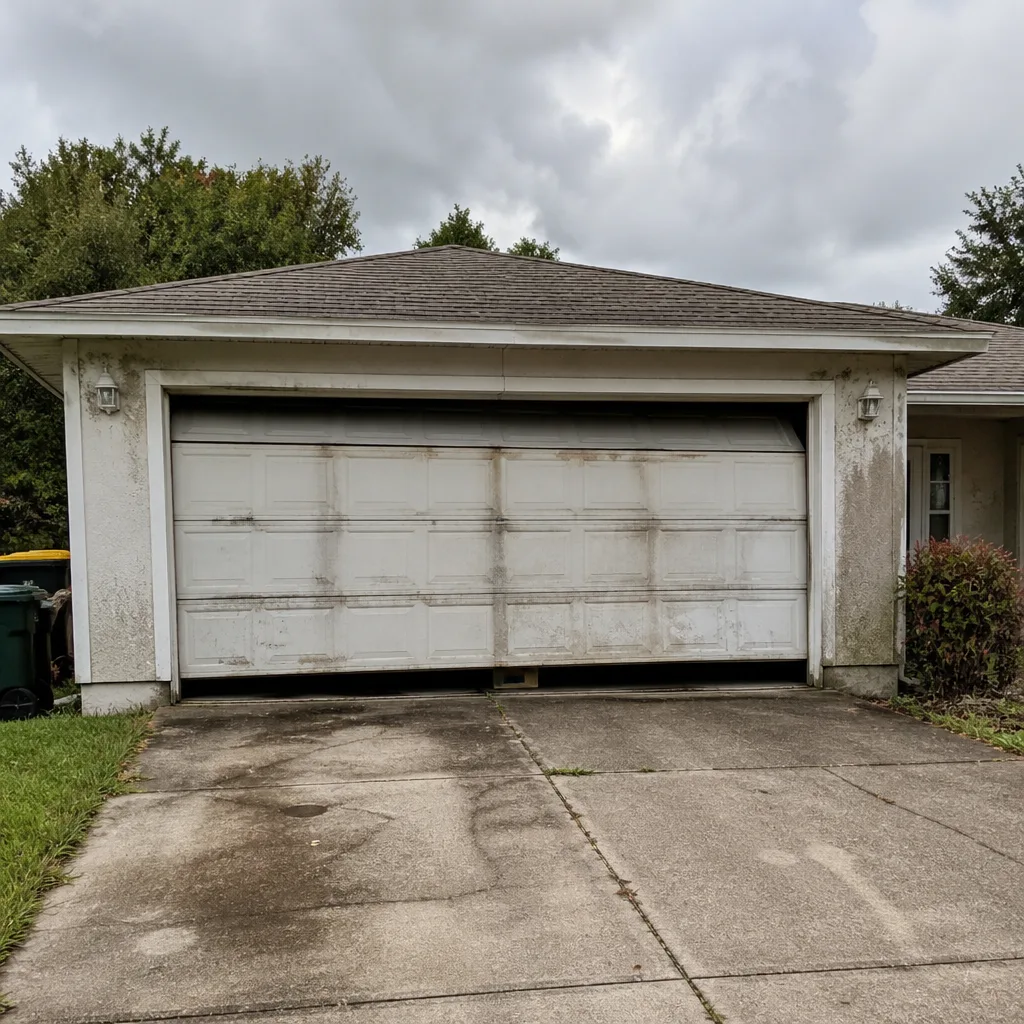 Before
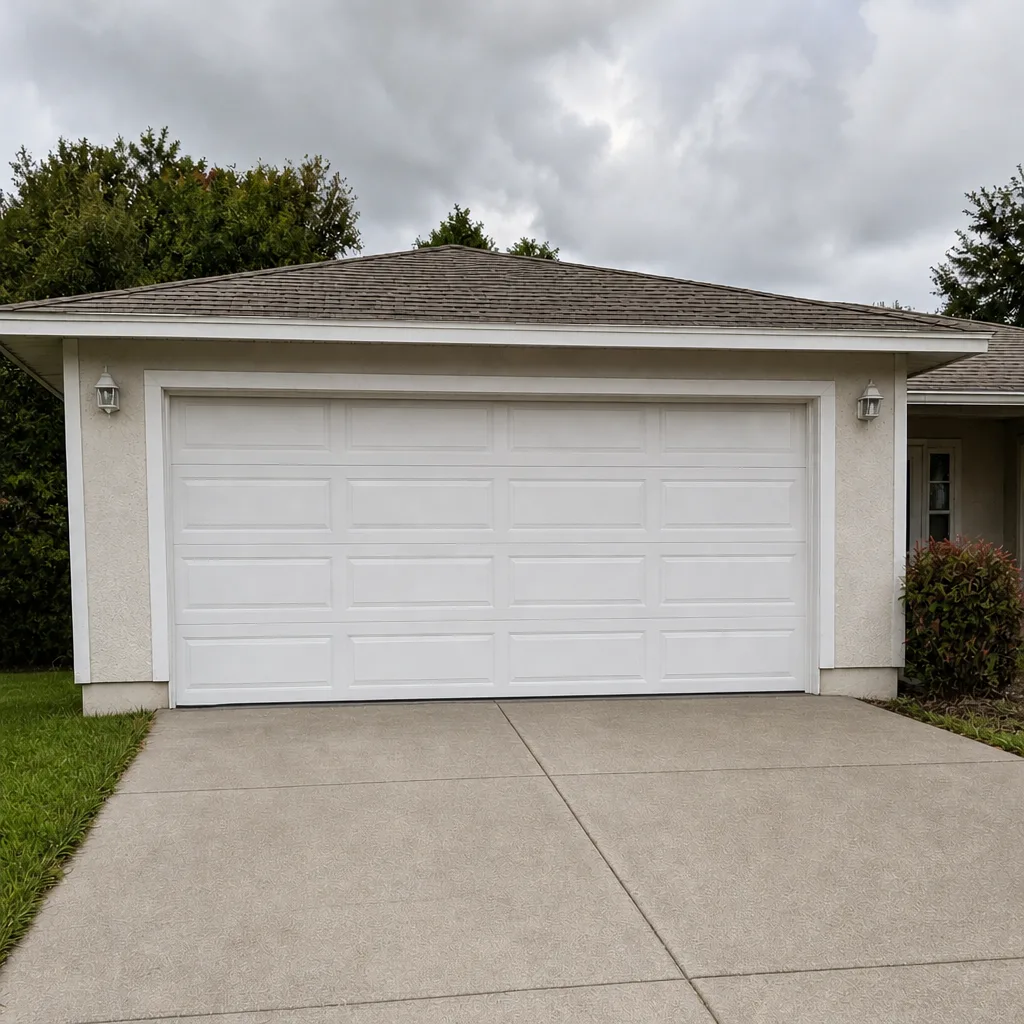 After
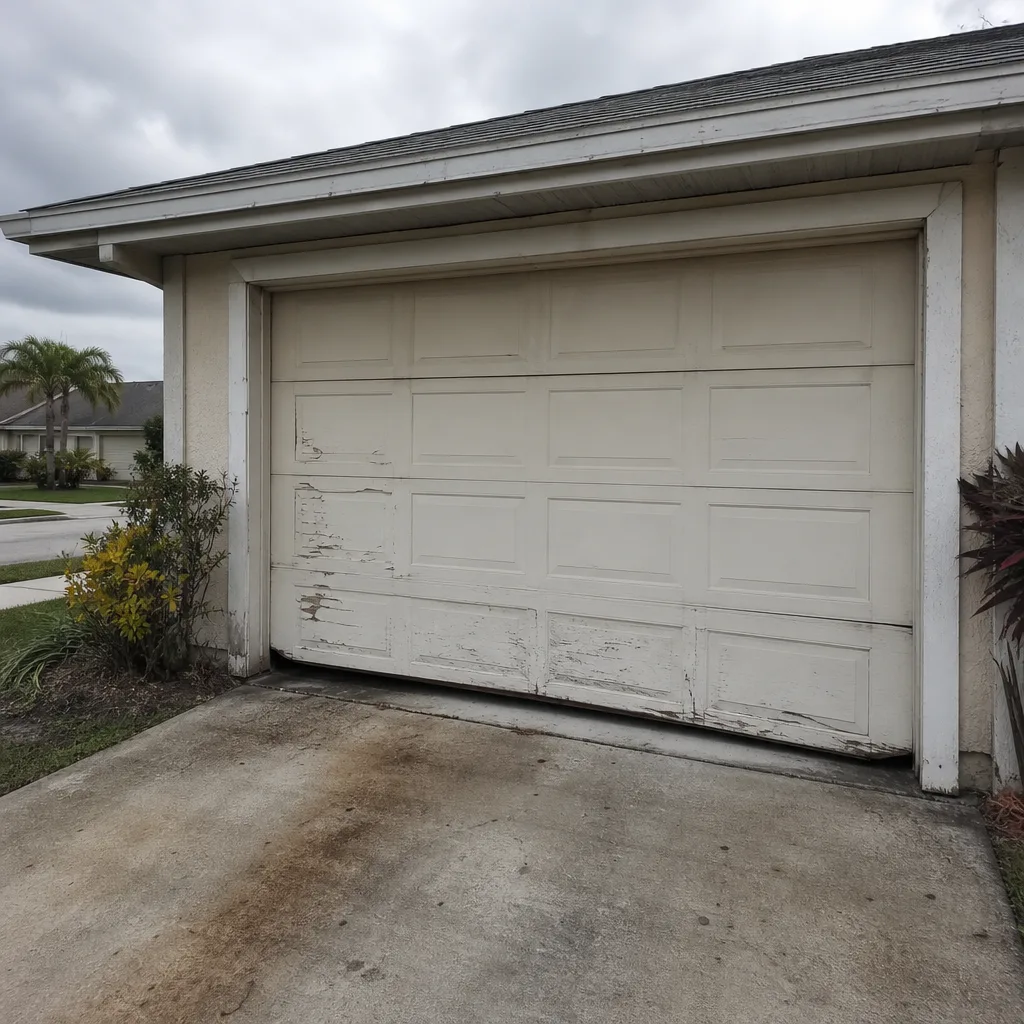 Before
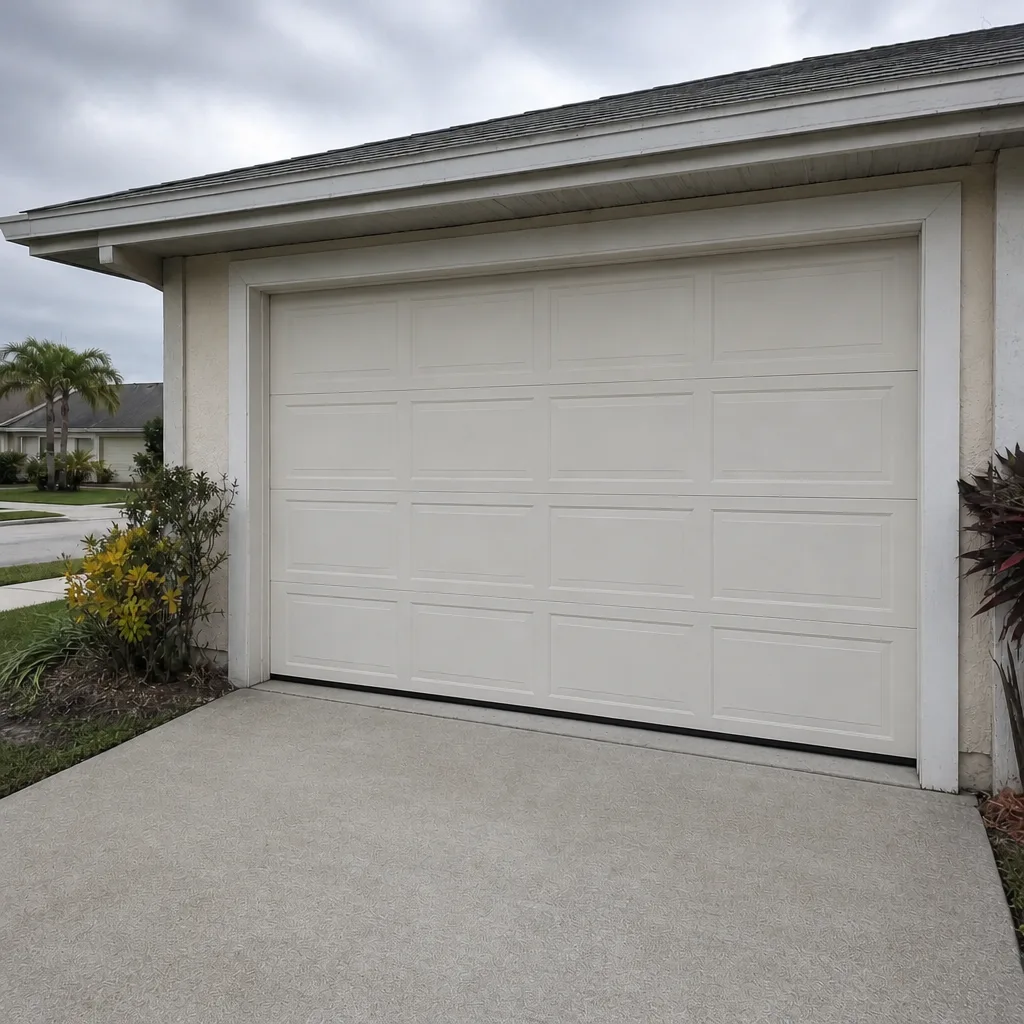 After
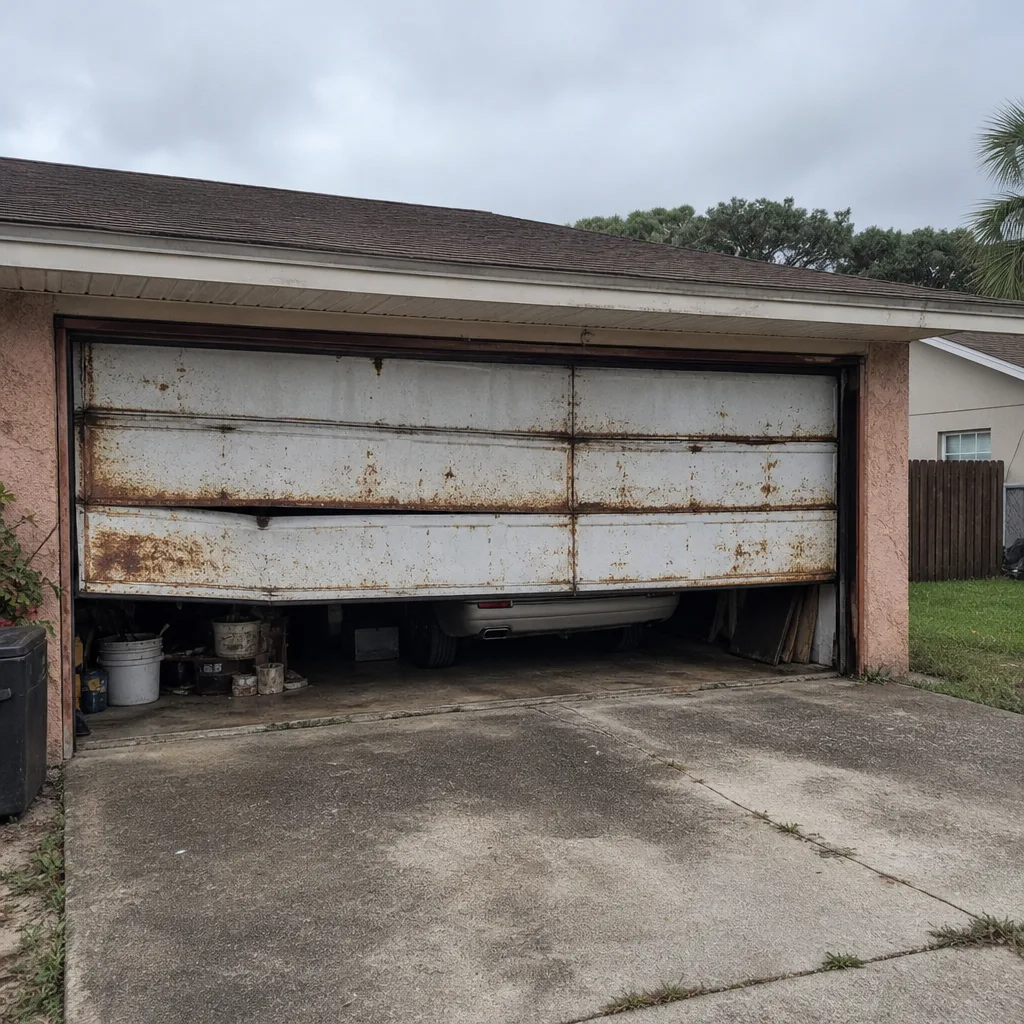 Before
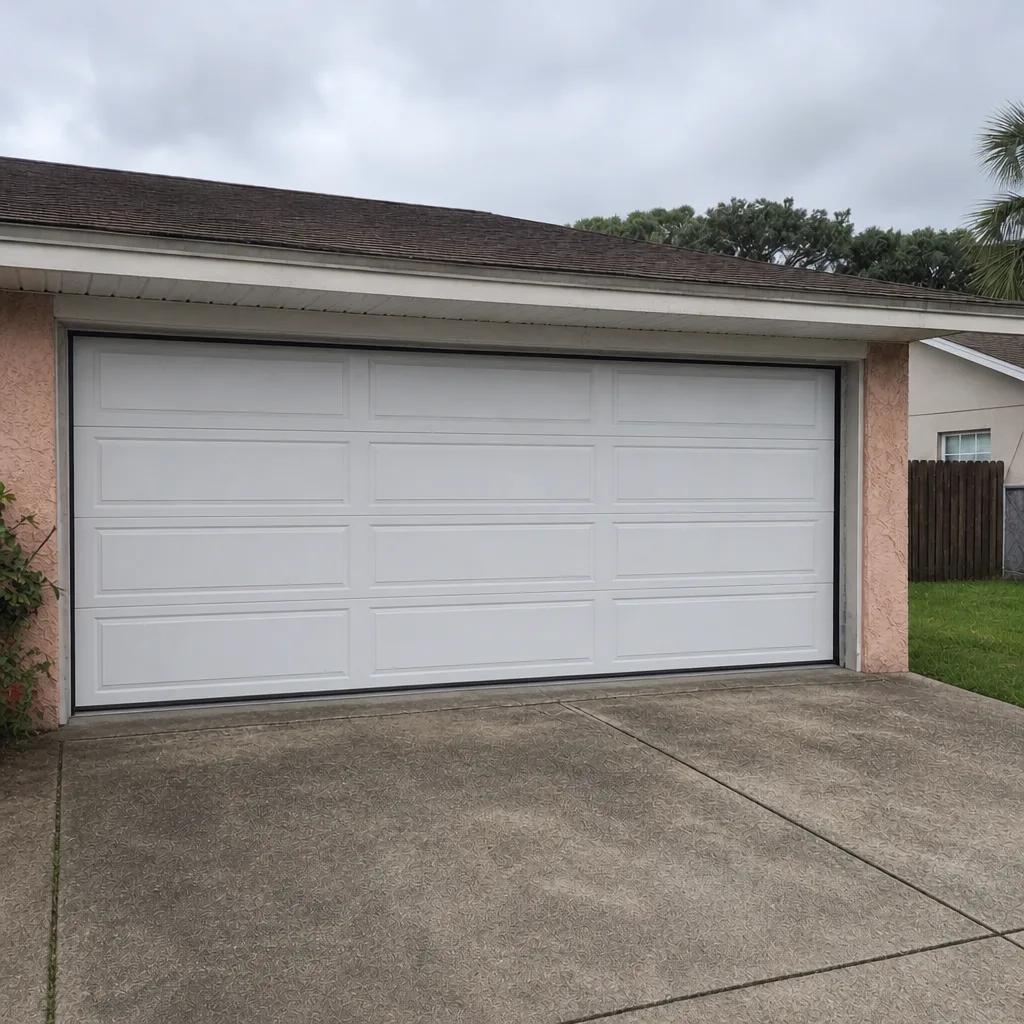 After