Last updated November 21, 2026
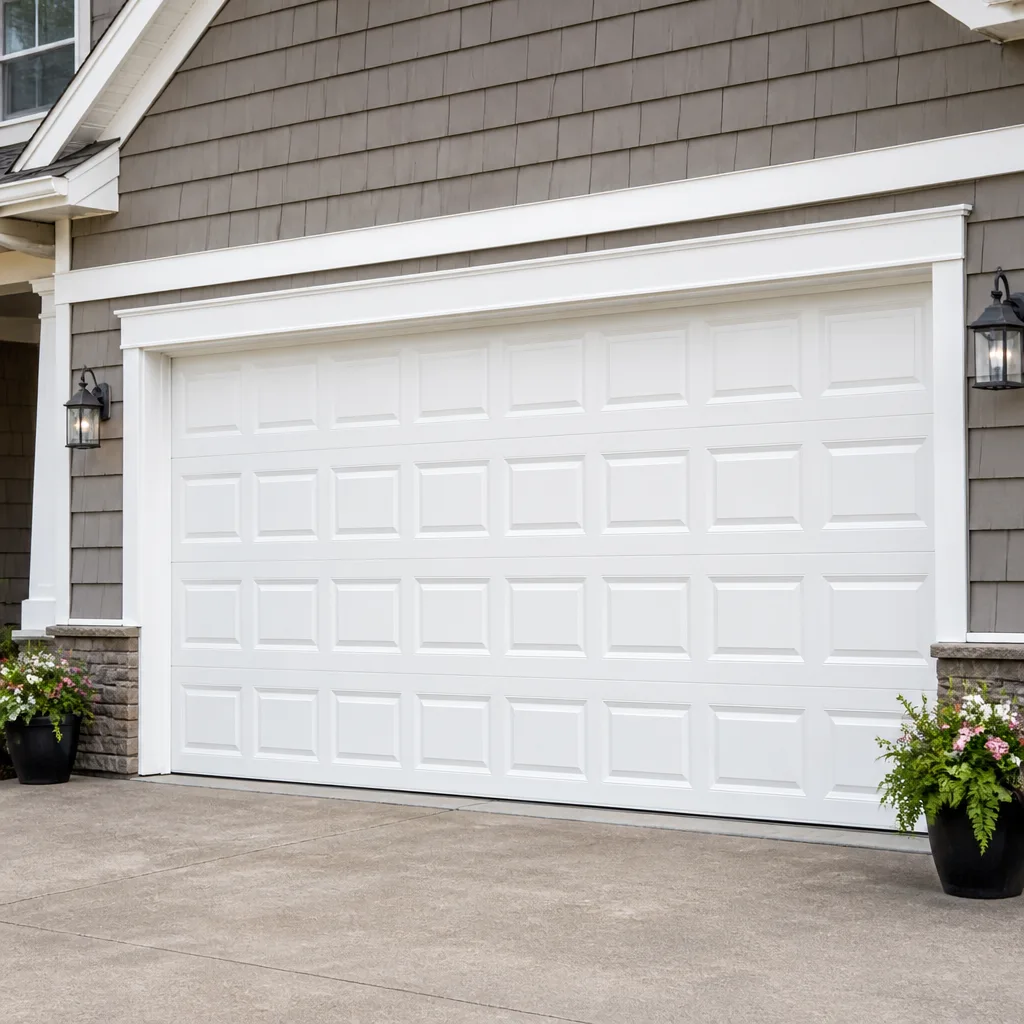 Raised-panel steel
 Carriage house
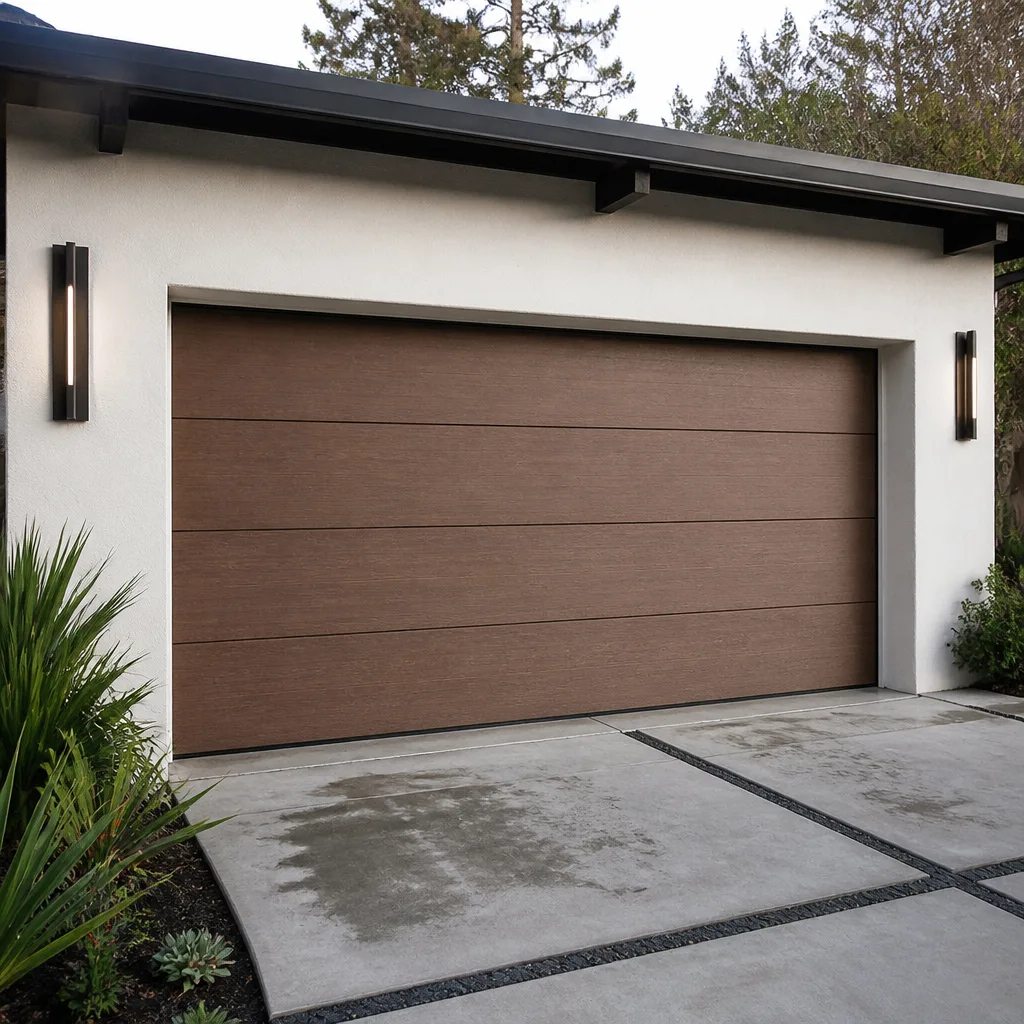 Modern flush
 Full-view glass
 LiftMaster openers
 Chamberlain openers
Full 25-point door and opener safety check with every visit - springs, cables, rollers, tracks, and your LiftMaster or Chamberlain opener included
You get a price before we start. It does not change when the pro arrives.
Get your free estimateGarage Door Repair Maintenance Checklist for Palm Bay Homeowners
Most garage door maintenance advice you’ll find online was written somewhere with four mild seasons and moderate humidity. Palm Bay doesn’t work that way. Our summers push heat and moisture into every joint, hinge, and seal on the door, and that changes the schedule entirely. Manufacturer lubrication intervals assume a gentler climate; here, you should cut them roughly in half or you’re gambling on a spring that snaps early. The same goes for seals, cables, and the opener itself. This guide lays out a month-by-month plan built around Palm Bay’s actual weather calendar, the lubricants that hold up above 90°F, the inspection points you can check without tools, and what to record so a technician can track wear over time. It’s the checklist we’d hand a neighbor.
Quick Answer
A garage door maintenance checklist in Palm Bay should be driven by humidity and heat, not the calendar seasons other guides use. That means lubricating springs and moving parts every three months instead of six, checking bottom seals and weatherstripping right after rainy season, inspecting cables and drums monthly during summer, and testing the opener’s safety reverse every month year-round. Documenting each pass lets a technician spot deterioration before it becomes an emergency.
Styles & brands we work with
- Raised-panel steel
- Carriage house
- Modern flush
- Full-view glass
- LiftMaster openers
- Chamberlain openers
Table of Contents
- Why Palm Bay’s Climate Rewrites the Maintenance Calendar
- The Month-by-Month Maintenance Calendar
- The Right Lubricants for Palm Bay Heat and Humidity
- Inspecting Bottom Seals and Weatherstripping After Rainy Season
- Cable and Drum Checks You Can Do Without Tools
- Opener and Safety Reverse Testing
- What to Document After Every Maintenance Pass
- Springs: A Safety Issue, Not a Convenience Issue
Why Palm Bay’s Climate Rewrites the Maintenance Calendar
Palm Bay sits in a subtropical stretch of Florida where the summer humidity climbs and stays there for months. That sustained moisture does two things to a garage door. First, it works its way into hinges, rollers, and the torsion hardware and thins out whatever lubricant is already there. Second, it swells wood-composite and vinyl seals, which then dry out and pull away from the frame. Both failures happen faster here than in the moderate climates most maintenance guides were written for. The heat compounds it: a garage facing west can bake through the afternoon, and that temperature swing stresses cables and spring tension every single day.
That’s the core reason a generic “lubricate every six months” schedule falls short in Palm Bay. By the time six months pass in a humid summer, a hinge can be dry and grinding, and a bottom seal can be warped enough to let water and pests under the door. We’d rather see you on a three-month lubrication cycle through the warm months and a seal check right after the rainy stretch. The rest of this checklist builds around that reality.
A quick note on scope: some of what follows is safe for any homeowner to do. Lubrication, seal inspection, and visual checks are all fine. Anything involving the springs, cables, or the opener’s electrical internals deserves a trained technician, and we’ll flag that clearly where it comes up.
The Month-by-Month Maintenance Calendar
Instead of spring and fall, think in terms of Palm Bay’s dry season and wet season plus the ramp-up into summer heat. Here’s how the year breaks down in a way that actually matches local conditions.
- January through March (cool, dry): This is your deep-maintenance window. Do a full lubrication pass, tighten all hinge and bracket bolts, and inspect rollers for flat spots. The milder temperatures make it comfortable to work and easy to spot rust that built up over the wet months.
- April through May (heat building): Test the opener’s safety reverse and balance the door by hand. Check weatherstripping for early cracking before the heavy rains arrive. Re-lubricate the torsion spring and hinges as the heat starts to thin older grease.
- June through September (wet season and peak heat): Lubricate every four to six weeks. Inspect bottom seals and cables monthly. Watch for rust on hinges and drum bearings. This is when most failures show up, so stay on top of it.
- October through November (rainy season winding down): Do a full seal and weatherstripping inspection now, before the door sits against swollen material all winter. Re-check balance and safety reverse.
- December (cool and dry): Full lubrication and hardware inspection, plus a visual cable and drum check. Document everything so you have a year-over-year record.
If that looks like more work than the six-month plan you’ve read elsewhere, it is. That’s deliberate. The door system suffers through more moisture and heat in a Palm Bay summer than a northern door sees in a year, and the schedule should reflect that.
The Right Lubricants for Palm Bay Heat and Humidity
The lubricant you choose matters more here than almost anywhere. A product that works fine in a dry climate can turn sticky and attract grit once the humidity and heat climb past 90°F, and grit in a hinge or roller is worse than no lubricant at all. White lithium grease, for example, is popular and cheap, but in sustained heat it can thin, run, and collect dust. Heavy motor oil is another common mistake: it drips, stains the concrete, and grabs debris.
- Use a silicone-based or synthetic spray lubricant formulated for high temperatures. These resist breakdown in the heat and stay slick through the humid months.
- Apply to hinges, rollers, the torsion spring, and the bearing plates, not to the tracks. Tracks should be wiped clean and left dry; lubricating them attracts dirt that gums up the rollers.
- Avoid white lithium and general-purpose grease in Palm Bay’s summer where you can. They tend to collect grime in the humid air and can thicken in cooler months after running in the heat.
- Reapply more often than the label says. Most products assume moderate climates. Here, a three-month interval through the wet season keeps the parts properly coated.
We work on doors from LiftMaster, Wayne Dalton, Raynor, and other major brands, and the lubrication principle is the same across all of them: keep the moving metal coated and keep the tracks clean and dry. If you’re ever unsure what a part needs, a quick call to a technician saves you from making it worse.
Inspecting Bottom Seals and Weatherstripping After Rainy Season
The bottom seal and weatherstripping take the worst beating in Palm Bay. During the wet season, vinyl and rubber seals absorb moisture and swell; when the drier months return, they shrink and crack, and the seal that once sat flush against the floor can pull away or misalign. That gap lets in water, insects, and humid air, and it makes the door work harder to close fully.
A good inspection routine after the rains look like this:
- Lower the door and look along the bottom seal for daylight. Any consistent gap means the seal isn’t contacting the floor evenly.
- Run your hand along the weatherstripping on the sides and top, feeling for cracks, hardening, or sections that have come loose from the frame.
- Check the threshold where the door meets the concrete for pooled water stains or gaps that let water under.
- Look for swelling or warping on wood-composite bottom sections, which can misalign the whole seal track.
Replacing a bottom seal is a straightforward, inexpensive job most homeowners can handle with the right part. But if the door itself has warped, or the seal track is bent, that’s a sign of a bigger alignment or balance problem. If the door doesn’t sit square after a seal swap, it’s worth having a technician look before it strains the opener or a cable. Our garage door repair team sees plenty of these after the wet season, and catching a misaligned door early keeps it from turning into a cable or spring failure.
Cable and Drum Checks You Can Do Without Tools
The lift cables and the drums they wind on are what actually raise and lower the door, and they’re a common failure point as they age. You don’t need tools to spot the early warning signs, and catching them before they fray or snap is far cheaper than an emergency.
- Look for fraying: Run your eyes along each cable for broken strands, kinks, or a fuzzy appearance. A healthy cable is smooth and taut.
- Check for slack or sag: With the door closed, the cables should be under tension. Slack on one side points to a balance or drum problem.
- Inspect the drums: The cable should wind evenly around the drum with no overlapping or bunching. Uneven winding signals a problem that needs a technician.
- Check for rust at the attachment points: In Palm Bay’s humidity, cables can corrode where they fasten to the bottom bracket and drum. Surface rust warrants a closer look.
Here’s the limit of the do-it-yourself check: a frayed or slack cable is not something to adjust or tighten yourself. The cables are under significant tension, and loosening or re-routing one can release stored energy in a hurry. Treat a bad cable as a call-a-professional finding. We handle both the door system and the opener, so one call covers the whole diagnosis rather than sending you to two different companies. If a cable looks wrong, or you notice the door hanging unevenly, that’s when to reach out.
Opener and Safety Reverse Testing
The opener is half the system, and in Palm Bay’s heat it works hard. Heat stress and voltage fluctuation can wear the motor and the control board over time, and the safety reverse is the feature that keeps a closing door from trapping a person or pet. Test it monthly; it’s the single most important check for household safety.
- Test the safety reverse with an object. Place a firm object like a roll of paper towels or a 2×4 flat on the ground under the door, then close it. The door should reverse immediately on contact. If it doesn’t, stop using the door and have it serviced.
- Test the photo-eye sensors. Break the beam between the two sensors mounted near the floor. The door should stop and reverse. Clear dust and debris, and make sure the small indicator lights on each sensor are solid and aligned.
- Balance the door. Disconnect the opener by pulling the release, then lift the door halfway by hand. A balanced door stays put; one that drifts down or slams up needs spring or tension attention, which is a professional job.
- Listen for strain. Grinding, a lagging start, or a motor that sounds labored in the heat points to a worn opener. That’s when garage door opener repair becomes worth a look before the motor fails outright.
Our technicians are trained on openers from LiftMaster, Chamberlain, Genie, Craftsman, and others, so if your operator is losing its safety reverse or running rough, we can diagnose it directly rather than telling you to call a separate opener company.
What to Document After Every Maintenance Pass
This is the step most homeowners skip, and it’s the one that makes the whole checklist work. A single inspection tells you how the door is today. A record across visits tells a technician which parts are deteriorating and how fast, which is what lets you repair a component before it fails or plan for a replacement on your schedule instead of in an emergency.
Keep a simple log with these entries for every pass:
- Date and the temperature or season when you did the check.
- Which parts you lubricated and which product you used.
- Any fraying, cracks, rust, slack, or gaps you noticed, and where.
- Results of the safety reverse and balance tests.
- Anything that changed since the last pass – a new gap under the seal, a sound that wasn’t there before.
When a technician visits, that log cuts the guesswork. We can see that a bottom seal was fine in the dry season and warped three months later, or that a hinge has been slowly rusting. It turns maintenance from a snapshot into a trend line, and trends are what let us advise honestly on repair versus replacement. Keep the log near the garage or on your phone; consistency matters more than detail.
Springs: A Safety Issue, Not a Convenience Issue
Of everything on a garage door, the springs are where a maintenance shortcut can actually hurt you. Torsion springs and extension springs hold the entire weight of the door, and when they fail, they release that stored energy all at once, sometimes loudly and with flying parts. In Palm Bay’s heat and humidity, springs work through more load cycles and corrode faster than in milder climates, so the lubrication interval on the spring matters most of all.
Here’s what you can safely do: keep the torsion spring lightly lubricated on your three-month cycle, and watch for the warning signs of a spring nearing failure – a door that suddenly feels much heavier, a gap between the coils of a torsion spring when the door is closed, or a loud bang followed by a door that won’t lift. Here’s what you should never do: try to adjust, wind, or replace a spring yourself. The tension involved is enough to cause serious injury, and there’s no safe shortcut. This is one of those jobs where a trained professional is the only sensible option.
Garage door spring repair is a core part of what we do, and we handle both torsion and extension springs in-house rather than passing them off. Whether your spring snaps on a Sunday or you just want a worn pair replaced before it fails, that’s the call to make. And if you’re weighing a repair against a full replacement, we install doors too, so we can tell you which one actually makes sense for the age and condition of your door.
Common Mistakes to Avoid
- Following a six-month lubrication schedule. That interval assumes a gentler climate. In Palm Bay’s humidity, moving parts dry out and corrode faster. Cut it to three months through the warm season, or to four to six weeks during the wettest, hottest stretch.
- Greasing the tracks. It feels productive but it backfires. Lubricant in the tracks collects dust and debris that gums up the rollers. Clean the tracks and leave them dry.
- Using white lithium or heavy oil in summer. Both can thin, run, or grab grime once temperatures pass 90°F. A high-temp silicone spray holds up better here.
- Skipping the post-rainy-season seal check. Swollen seals dry out and crack after the wet season, and a gap lets in water and insects. Inspect right after the rains, not months later.
- Ignoring a door that drifts or hangs unevenly. Uneven movement usually points to a cable or spring problem. Waiting strains the opener and can turn a small repair into a spring failure.
- DIY-ing spring or cable work. These parts store enough energy to cause serious injury. Keep your checks visual and hand the adjustment work to a trained technician.
- Not keeping a maintenance log. Without a record, every visit starts from zero. A simple log lets a technician spot deterioration trends and plan repairs before they become emergencies.
See the difference
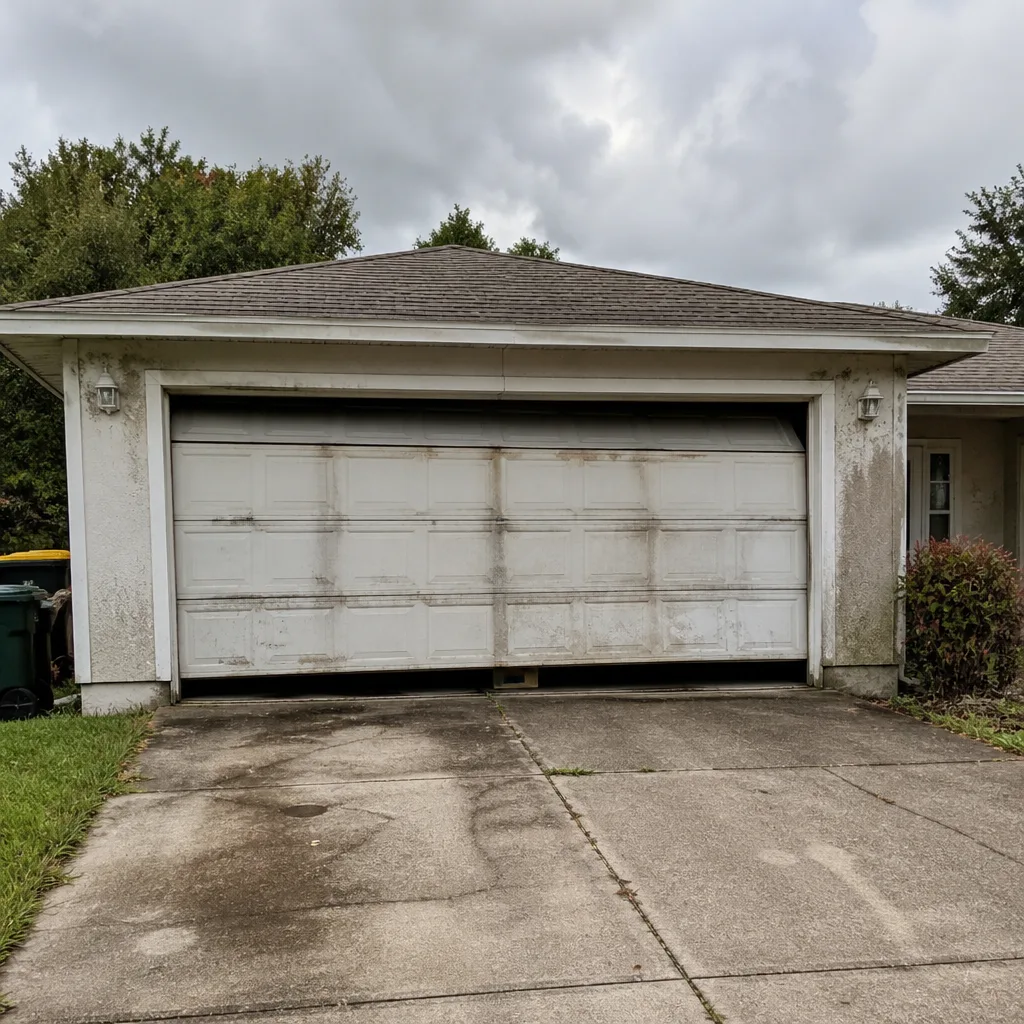 Before
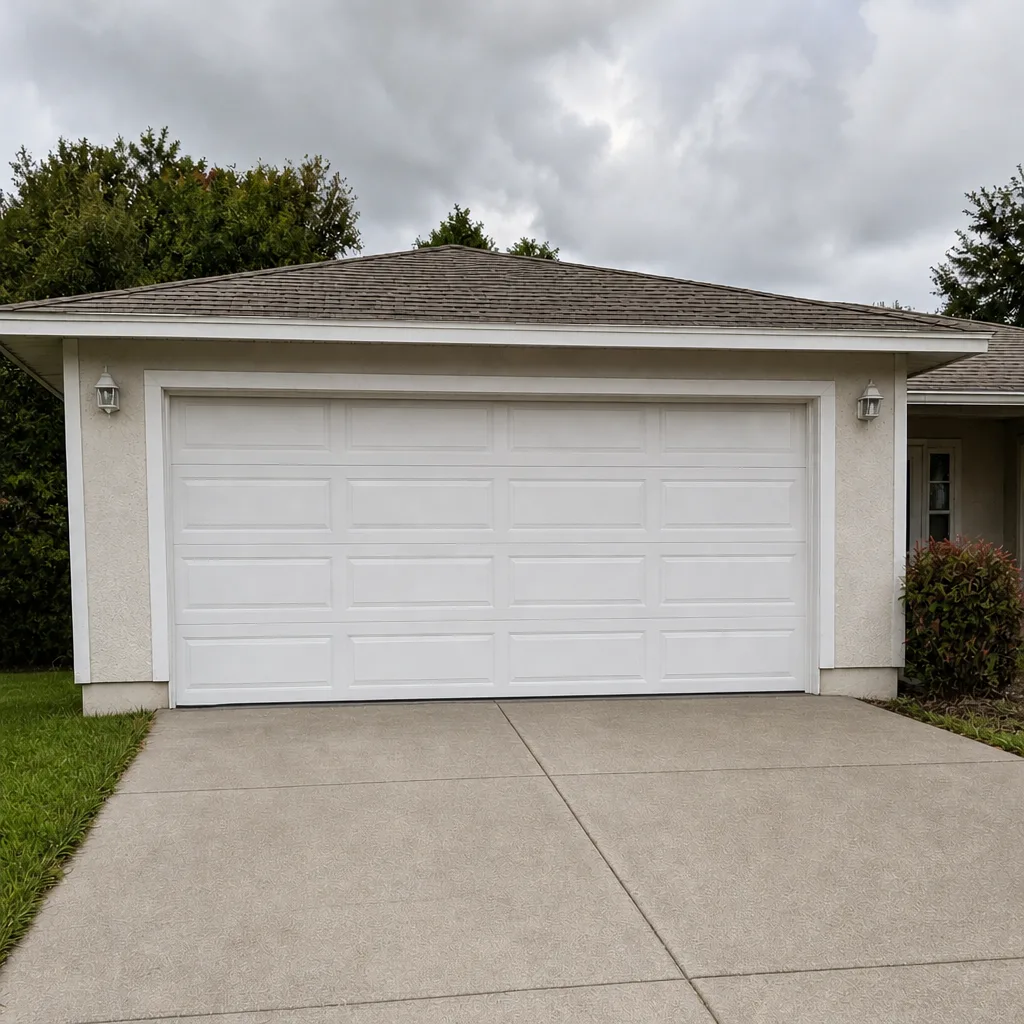 After
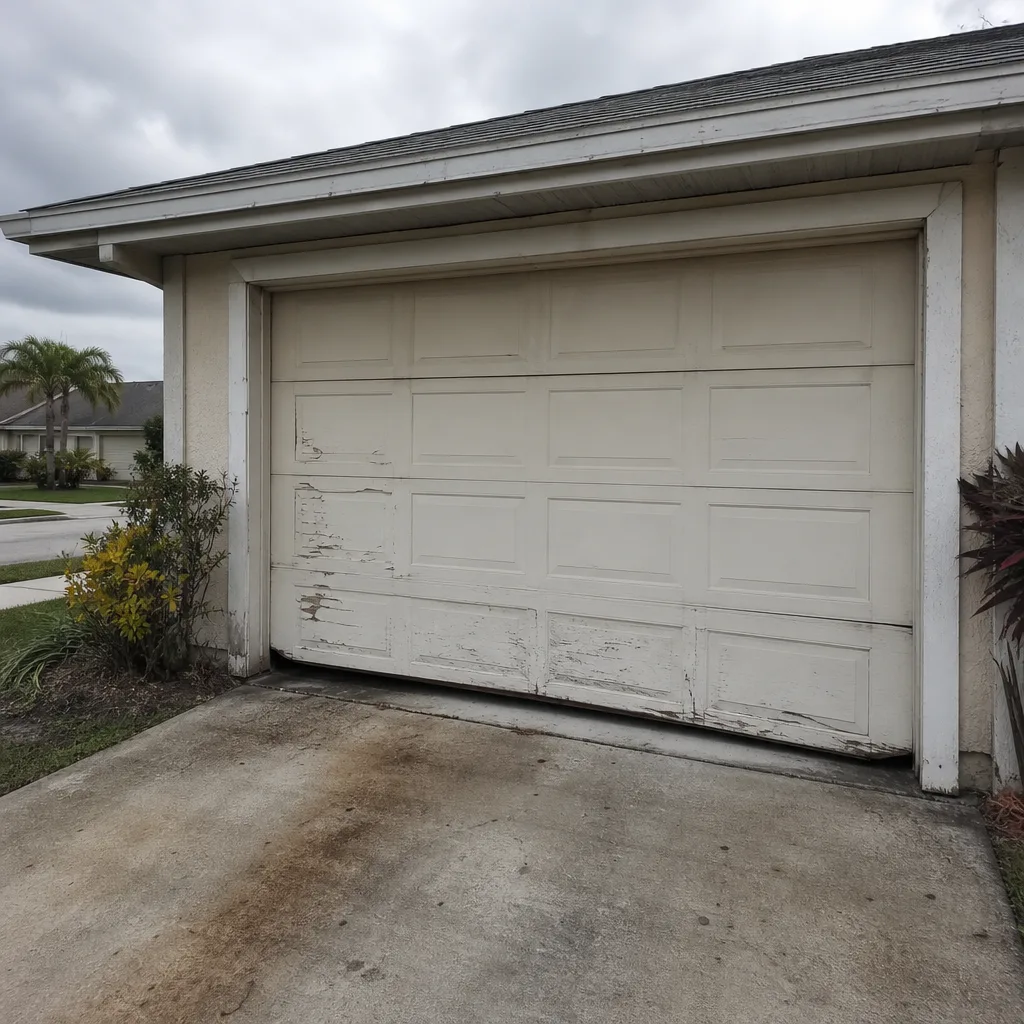 Before
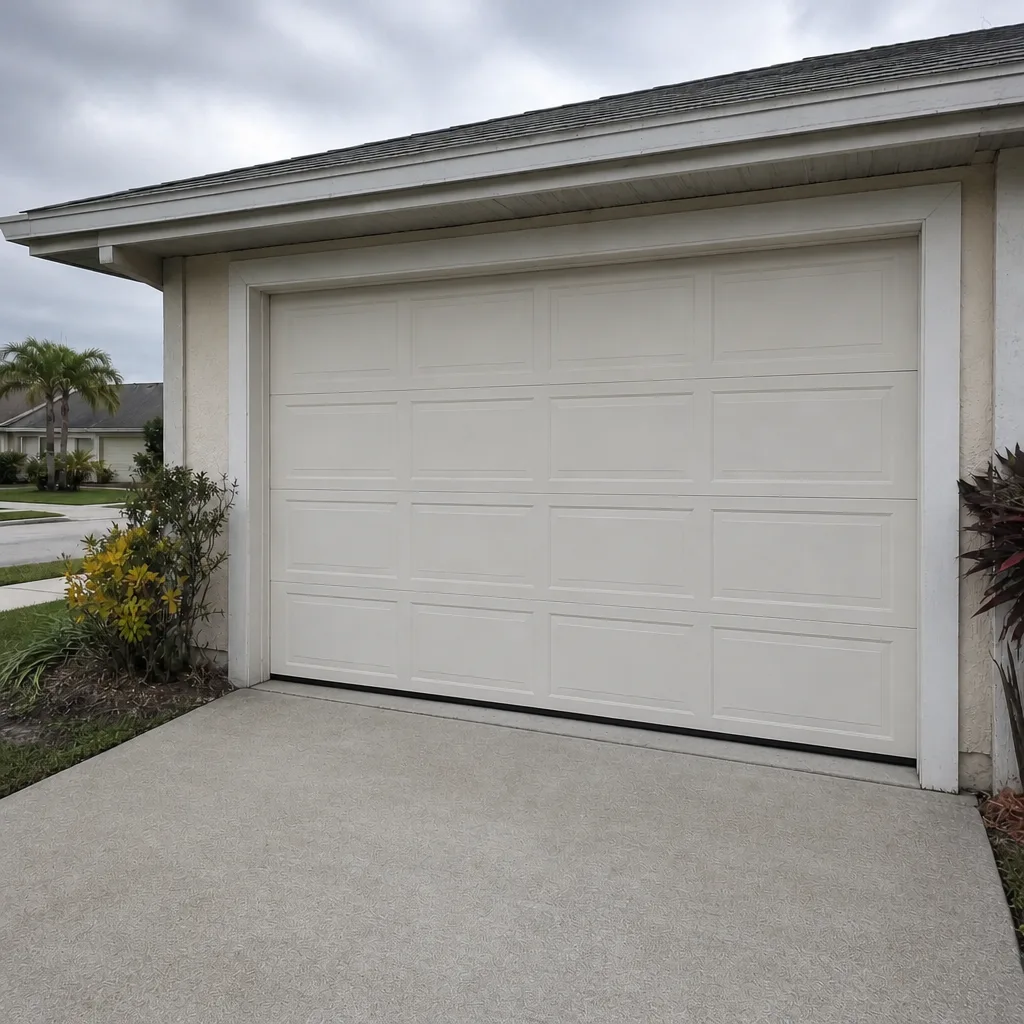 After
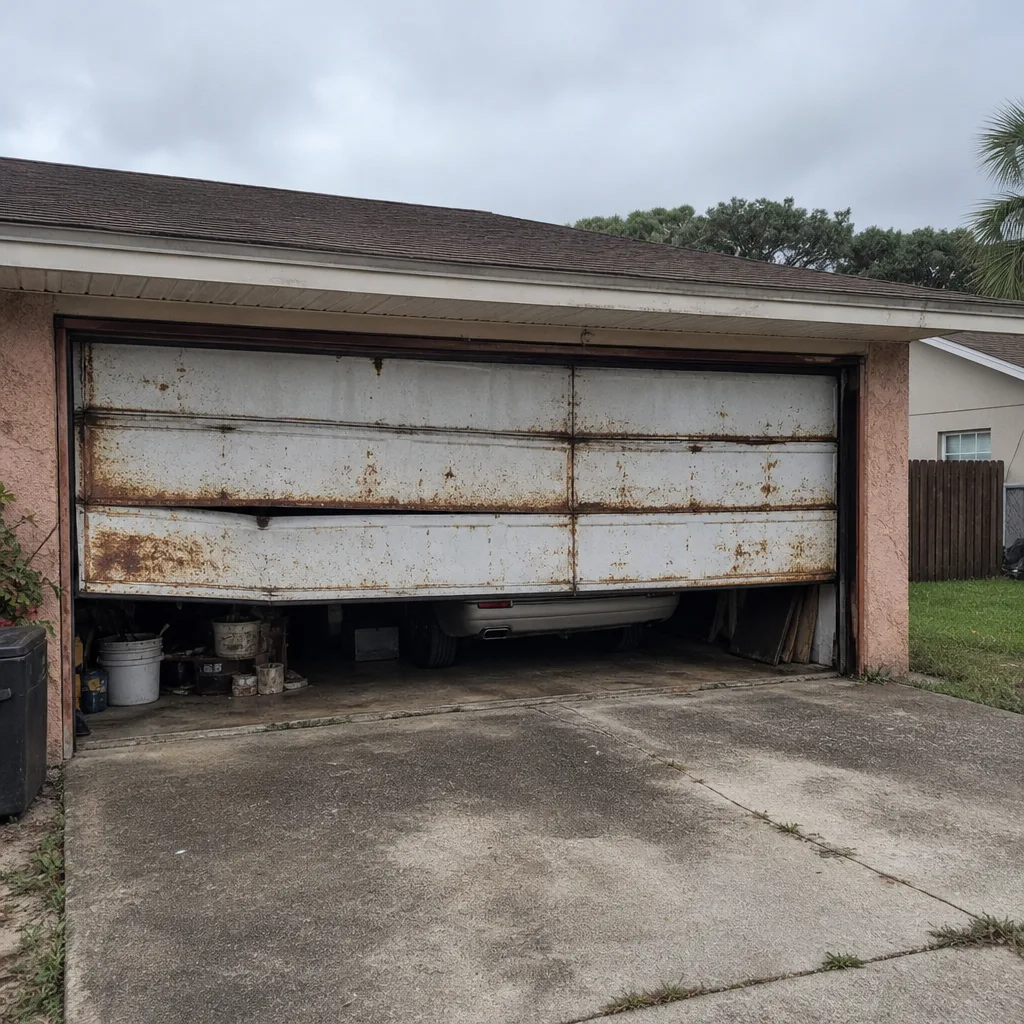 Before
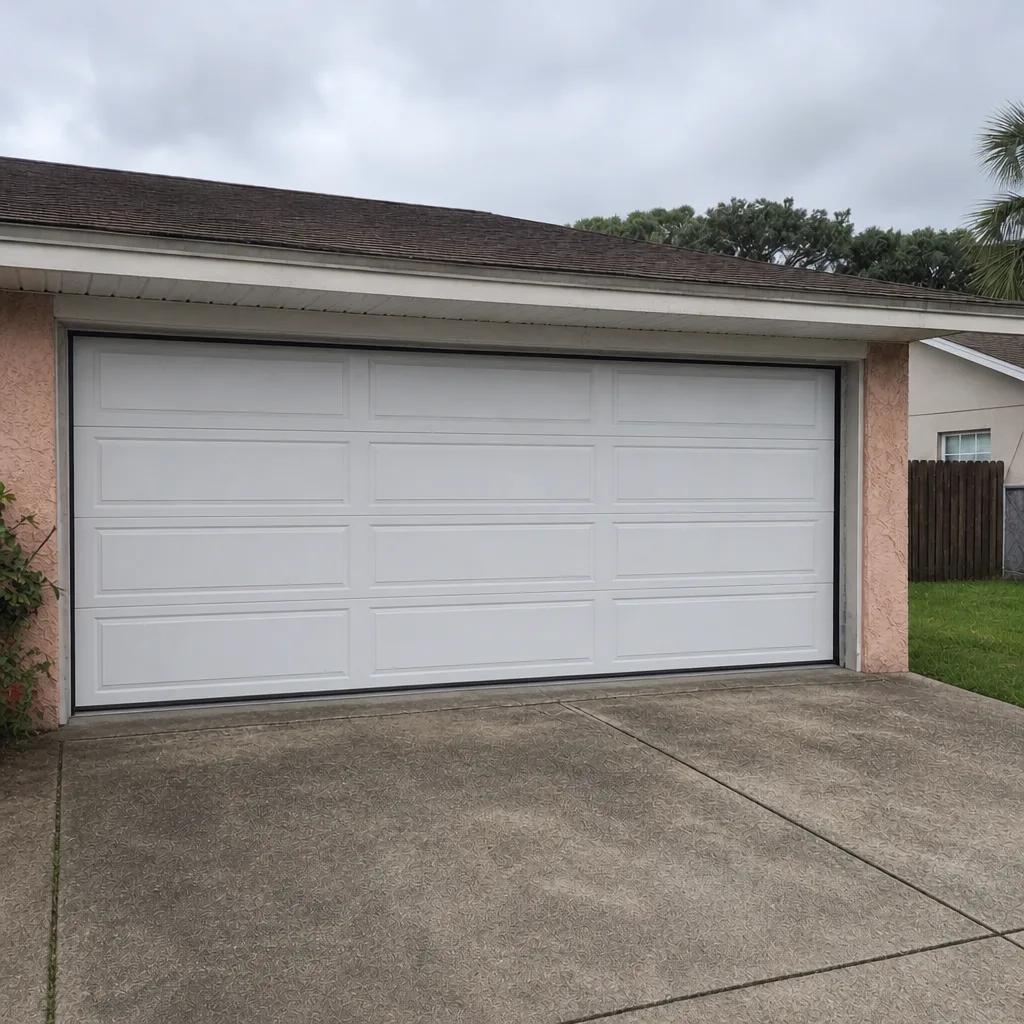 After
When to Call a Professional
Some tasks on this checklist belong in your hands; others don’t. Call a professional when a spring has snapped or the door suddenly feels much heavier than usual, when a cable is frayed, slack, or visibly mis-wound on the drum, when the door hangs unevenly or reverses unpredictably, or when the opener loses its safety reverse or runs rough in the heat. If a door won’t move at all, that’s an emergency call, and we treat it that way. Palm Bay Garage Door Repair Pros offers free estimates in Palm Bay – call (833) 468-5770 to book one, whether it’s routine spring service or a stuck door you need looked at before it becomes a safety or security problem. Our technicians have up to 12 years of experience, are trained across major brands, and quote and agree the price with you before any work starts.
Frequently Asked Questions
Every three months through the warm and humid months, and every four to six weeks during the wettest, hottest stretch of summer. That’s roughly double the frequency most general maintenance guides recommend, because Palm Bay’s sustained humidity and heat thin out lubricant and corrode moving parts faster than a moderate climate. Keep a high-temp silicone spray on hinges, rollers, springs, and bearing plates, and keep the tracks clean and dry. If you’re unsure about a part, call (833) 468-5770 for a free estimate and a technician can advise.
A high-temperature silicone or synthetic spray lubricant is the best choice in Palm Bay’s climate. It resists breakdown above 90°F and stays slick through humid air, unlike white lithium grease or heavy oil, which can thin, run, and collect grit. Apply it to the moving metal parts and never to the tracks. When in doubt about what a specific part needs, call (833) 468-5770 – estimates are free.
Yes, you can do a visual check for fraying, slack, rust, and uneven winding on the drums without any tools. What you should not do is adjust, tighten, or re-route a cable yourself, since they’re under significant tension and a mistake can cause serious injury. If a cable looks wrong, stop using the door and call a professional at (833) 468-5770 for a free estimate.
Palm Bay’s wet season causes vinyl and rubber seals to swell with moisture, then shrink and crack when the drier months return, which can leave gaps under and around the door. Inspect the bottom seal and weatherstripping right after the rainy season each year and watch for daylight along the bottom. A worn seal is inexpensive to replace; if the door itself has warped, call (833) 468-5770 for a free estimate before it strains the opener.
Yes, and summer is when spring failures are most likely, because heat and humidity accelerate wear and corrosion on the springs that carry the door’s full weight. A door that suddenly feels much heavier, a gap between torsion spring coils, or a loud bang followed by a door that won’t lift are warning signs. Never adjust or replace a spring yourself – call (833) 468-5770 for a free estimate on spring repair.
Yes. A simple log of each maintenance pass – dates, parts lubricated, anything you noticed, safety reverse and balance results – lets a technician spot deterioration trends across visits rather than starting from scratch each time. That record is what helps us advise honestly on whether a repair or a full replacement makes sense. To set up a service visit, call (833) 468-5770 for a free estimate.
The Bottom Line
A garage door maintenance checklist for Palm Bay has to be built around this climate, not the moderate-climate schedules most guides hand you. Lubricate more often with a high-temp silicone spray, inspect bottom seals right after the rainy season, keep monthly visual tabs on cables and drums, and test your opener’s safety reverse every month without fail. Log every pass so a technician can track wear over time. And leave the springs and cables to a trained professional – that’s where a shortcut becomes a real risk. Stay ahead of the humidity and heat, and your door will last longer and fail less often, on your schedule instead of in an emergency.
If any part of this checklist points to a problem, or you’d just rather have a trained eye go over the door, the team at Palm Bay Garage Door Repair Pros is ready. We work on your brand, handle both the door and the opener, and quote the price before work begins. Call (833) 468-5770 for a free estimate.
Written by the team at Palm Bay Garage Door Repair Pros.