Last updated November 21, 2026
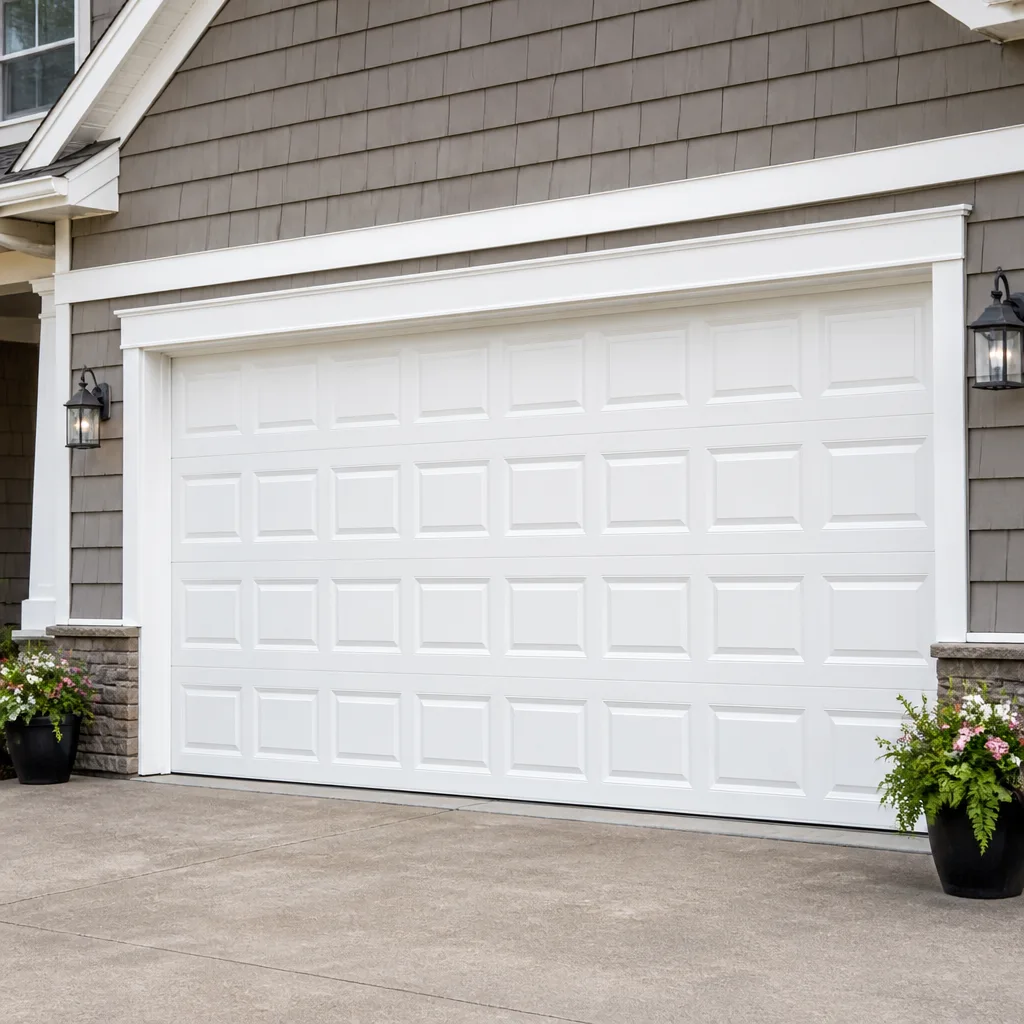 Raised-panel steel
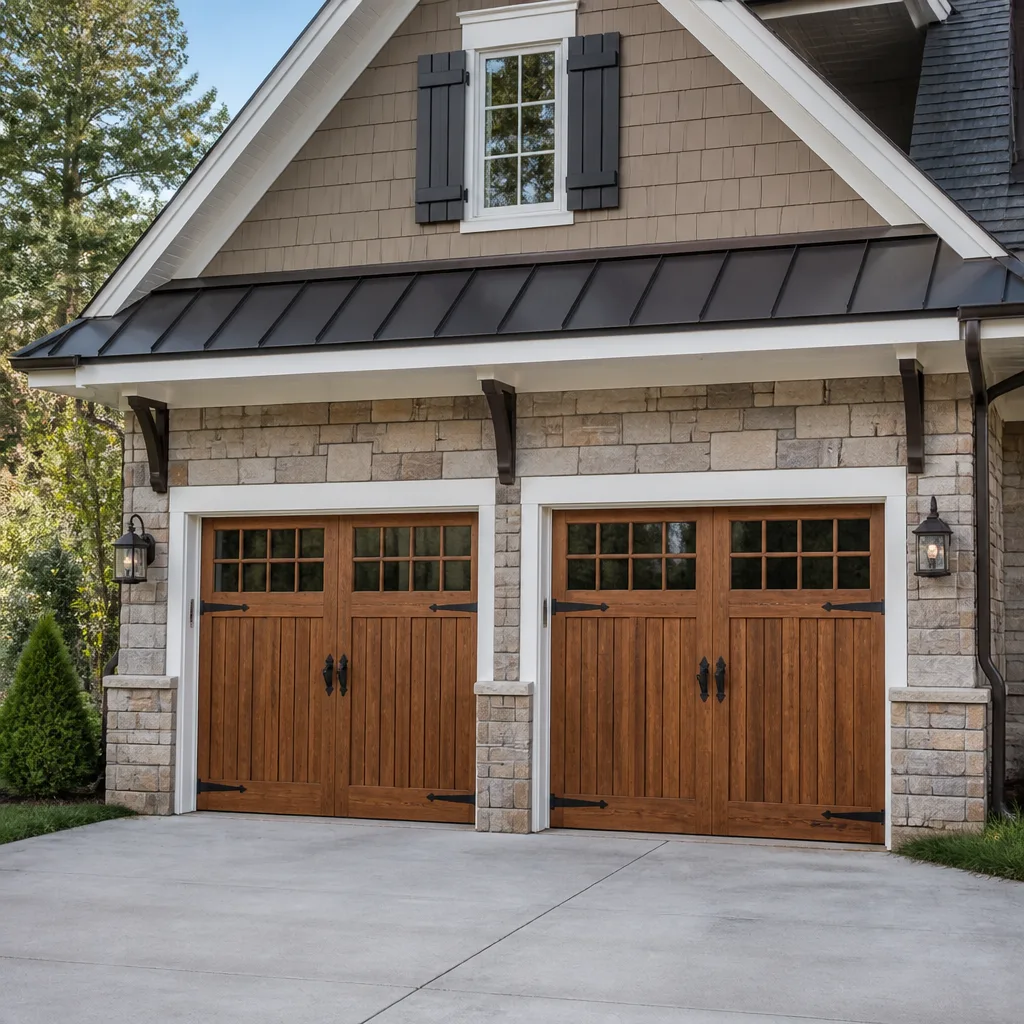 Carriage house
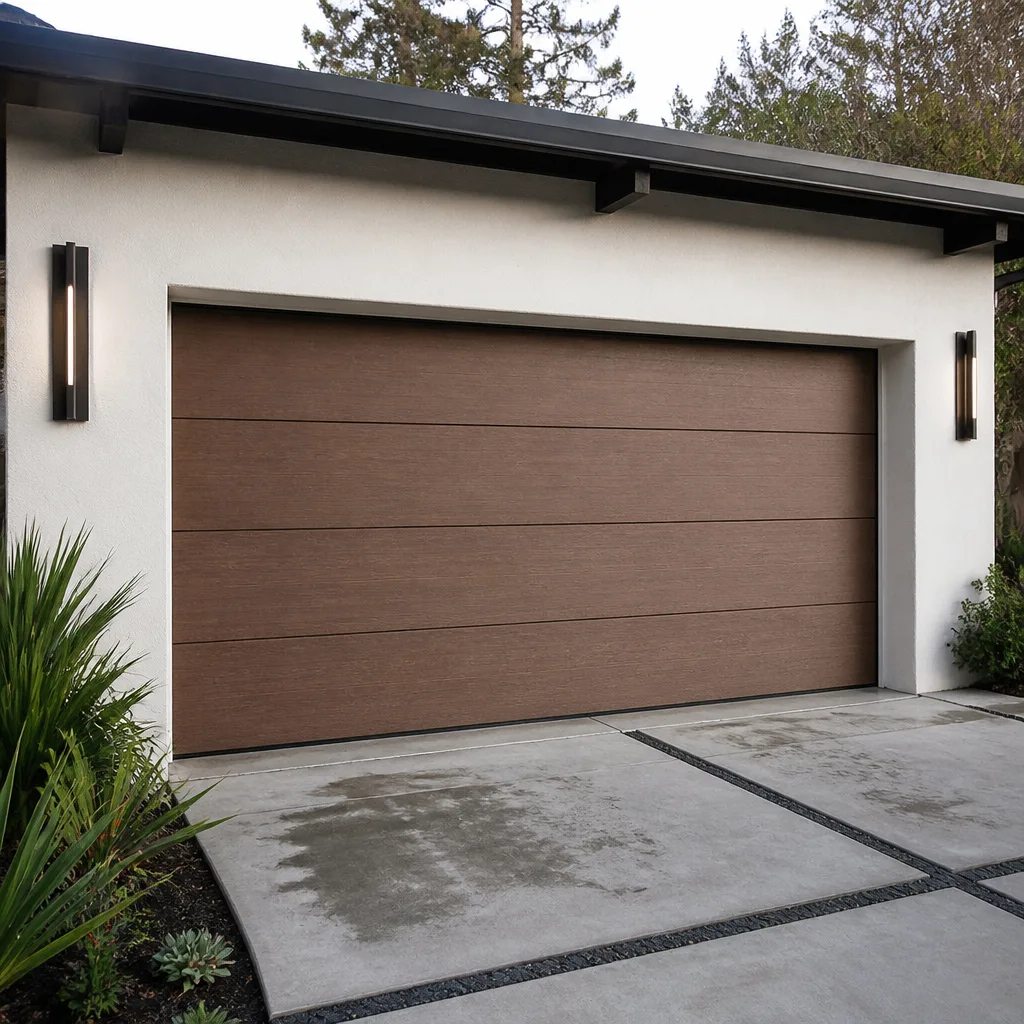 Modern flush
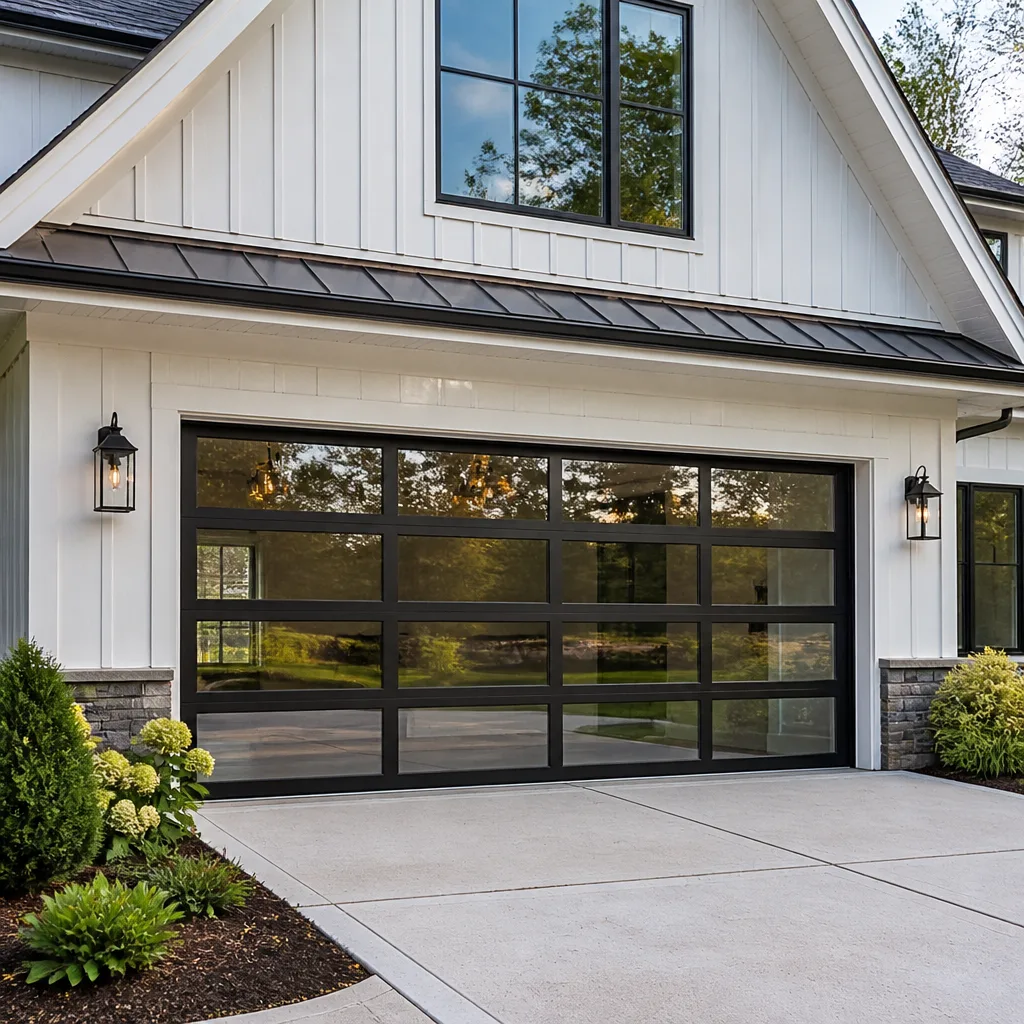 Full-view glass
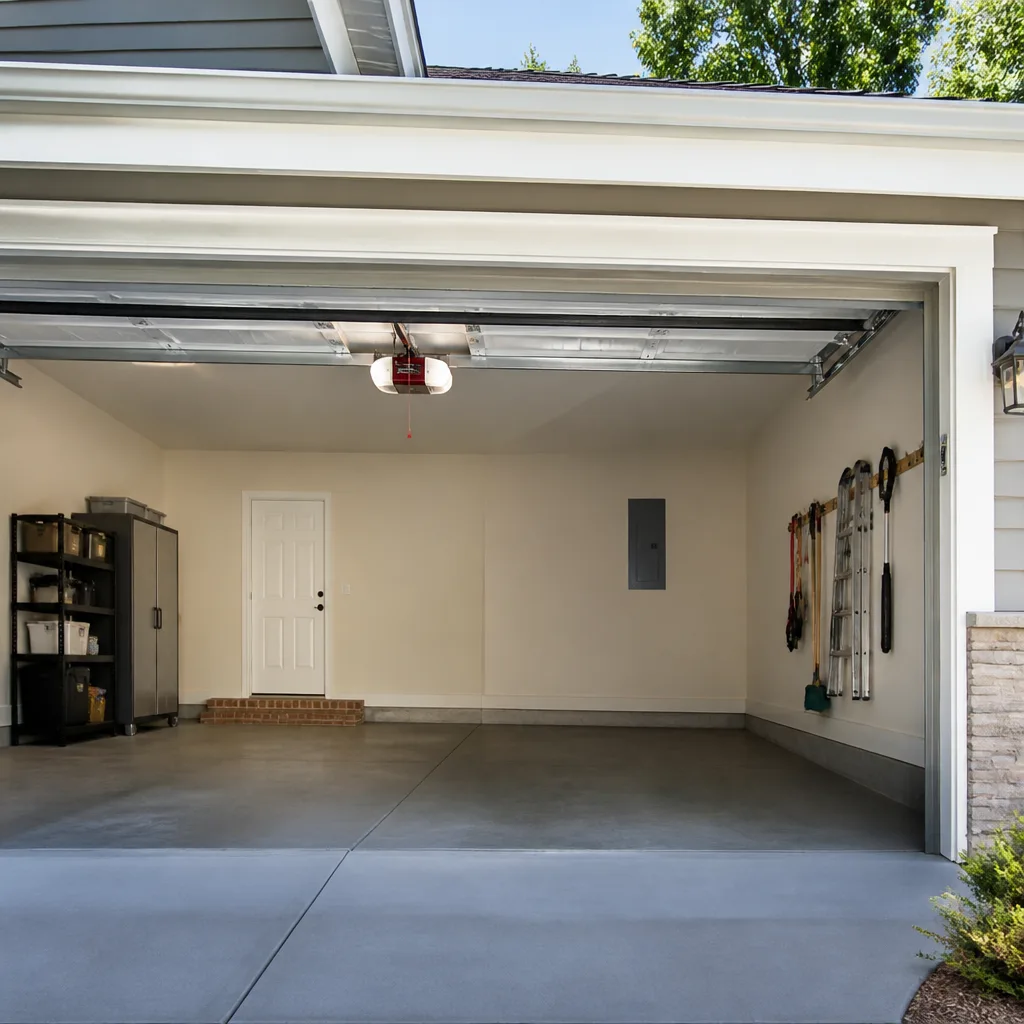 LiftMaster openers
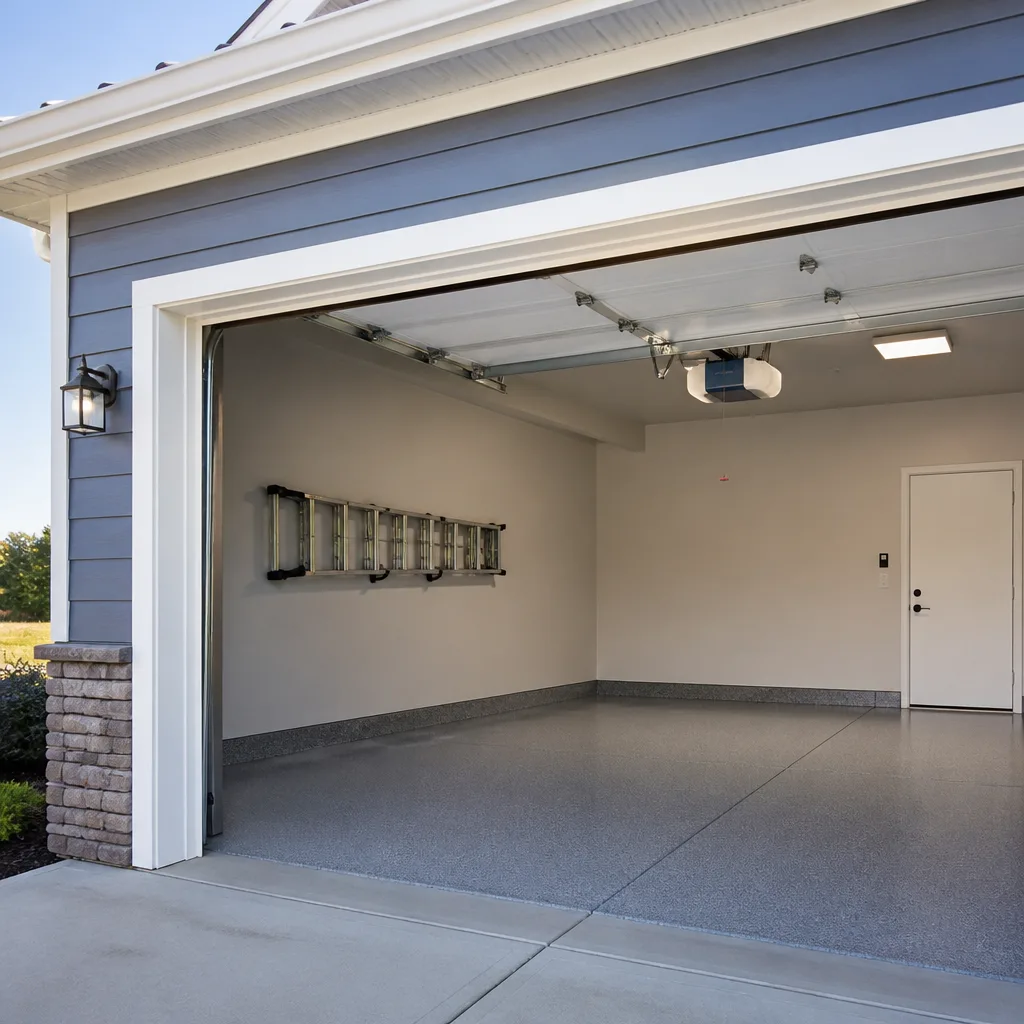 Chamberlain openers
Full 25-point door and opener safety check with every visit - springs, cables, rollers, tracks, and your LiftMaster or Chamberlain opener included
You get a price before we start. It does not change when the pro arrives.
Get your free estimateSeasonal Garage Door Care for Palm Bay: Year-Round Homeowner’s Guide
Most garage door advice you’ll read was written for a place with four real seasons, and it doesn’t translate here. Palm Bay has a wet season, a dry season, and a hurricane window, and each one leans on a different part of your door system. The failures we see most often aren’t caused by old parts. They’re caused by the way this climate pushes the same components through big swings year after year. This guide walks through what to check in each phase, how the tasks fit together, and which jobs a homeowner can safely handle versus which ones belong to a technician.
Quick Answer
Seasonal garage door care in Palm Bay means matching maintenance to three distinct phases: pre-hurricane hardware and anchoring checks before storm season, wet-season attention to seals, tracks, and any wood trim, and dry-season work on UV-cracked seals, paint, and spring tension after the cooler, drier air settles in. Batching related tasks into two or three service windows a year covers everything without redundant visits. Spring, cable, and panel work always belongs to a trained technician.
Styles & brands we work with
- Raised-panel steel
- Carriage house
- Modern flush
- Full-view glass
- LiftMaster openers
- Chamberlain openers
Table of Contents
- Why Palm Bay’s Climate Has Three Phases, Not Four
- Pre-Hurricane Season Checklist: Torque, Anchoring, and Bracing
- Wet Season Protocols: Seals, Track Drainage, and Wood Trim
- Dry Season Tasks: UV Cracking, Paint, and Spring Re-Tensioning
- Assessing Post-Storm Damage Beyond the Obvious
- Batching Tasks to Reduce Annual Service Visits
- Opener and Hardware Care That Fits the Calendar
- What You Can Safely Check and What You Can’t
Why Palm Bay’s Climate Has Three Phases, Not Four
If you moved to Palm Bay from a colder part of the country, the seasonal maintenance calendar you grew up with no longer applies. There’s no spring thaw, no deep winter, no stretch of freezing nights. What you have instead is a long, hot wet season, a drier and slightly cooler stretch, and a hurricane window that overlaps both. Each phase stresses your garage door differently, which is why a single annual tune-up misses things a three-phase approach catches.
The wet season runs hot and humid, with heavy afternoon rain and long stretches of high moisture in the air. That moisture works on your door’s bottom seal, on any wood trim or panels, and on the tracks where water and debris collect. The dry season brings lower humidity, stronger sun, and cooler nights. That’s when you’ll notice rubber seals starting to crack, paint lifting, and springs behaving differently as the metal contracts. The hurricane window is its own category: it’s about the door’s ability to stay anchored and braced under wind load, which is a hardware and fastening concern, not a moisture one.
The order matters. A door that’s been properly secured before storm season frees you up to focus on moisture issues during the wet months, and by the time the dry air arrives you’re mostly doing cosmetic and tension work. If those phases get out of order, you end up chasing the same problems twice.
What Each Phase Hits Hardest
- Hurricane window: hinges, brackets, anchor bolts, and any wind-rated bracing.
- Wet season: bottom seals, track channels, wood trim, and anything that traps water.
- Dry season: rubber seals, paint, and spring tension as metal contracts.
For a closer look at what a repair visit covers when something does go wrong, see our garage door repair page. Our technicians have up to 12 years of experience and are trained on equipment from Clopay, Amarr, and Wayne Dalton, among others, so a maintenance visit here isn’t just a visual check.
Pre-Hurricane Season Checklist: Torque, Anchoring, and Bracing
Before storm season, the priority shifts from convenience to structure. Your garage door is the largest moving opening on your house, and the fasteners that hold it, the tracks, and the opener rail are what matter when wind pushes against it. Here’s what a pre-season inspection looks like.
- Check hardware torque. Hinges, brackets, and the bolts that fasten tracks to the wall should be snug. Loose fasteners let the door rack slightly under load, which puts strain on the panels and the torsion system.
- Inspect the anchoring. Look at the bolts and brackets securing the vertical tracks and the spring system to the framing. Any mounting point that shows movement, rust, or pulled threads needs attention.
- Review any wind-rated bracing. If your door has a reinforced strut, wind bar, or post system, check that it’s securely fastened and not bent. If you’re not sure what rating your door was built for, a technician can tell you.
- Cycle the door and watch the travel. It should move evenly without binding or stopping. A door that hesitates or reverses mid-travel before storm season is signaling a problem.
- Test the release and the opener’s force settings. Make sure the emergency release works and the opener isn’t straining to lift the door.
A door that’s loose before a storm will be a door that hangs or fails during one. That’s why we treat the pre-hurricane visit as the most important of the three. If you’d rather not climb to inspect fasteners, that’s the right call. We handle it in a single appointment and can advise on what your specific door needs.
Storm-season prep doesn’t have to mean a long list of separate calls either. Batched with a general tune-up, it becomes one visit. For a broader overview of how our full service works across the region, see Palm Bay Garage Door Repair Pros.
Wet Season Protocols: Seals, Track Drainage, and Wood Trim
Through the long, humid months, your door system is dealing with moisture that never fully dries out. That makes the wet season the time to focus on anything that traps water or sits against the ground.
Seal Integrity
The bottom weather seal is your first line of defense against both water and pests. Run your hand along it and look for gaps, tears, or spots where it no longer meets the floor. Also check the sides and top: the jamb seal and any header seal should still be pliable. When a seal fails, water finds its way into the tracks and holds there.
Track Drainage
Vertical tracks act like shallow channels. When debris, leaves, or grit collect in them, moisture sits against the metal and the rollers. Clear the channels and make sure the tracks aren’t pitched in a way that traps water. If you see rust streaks or bubbling at the bottom of a track, that’s moisture damage that’s been building.
Mold on Wood Trim and Panels
Homes with wood trim panels or older wood-framed doors can develop surface mold and mildew during the warm, sticky months. It’s usually cosmetic if caught early, but it spreads into the grain if you ignore it. Wipe surfaces down, keep the door operating freely for airflow, and pay attention to any spot that stays damp. These are the seasonal jobs a homeowner can do, and they go a long way.
When the door’s mechanical behavior changes during the wet season (binding, a hard pull on the opener, or a sagging panel), that’s no longer a moisture complaint. If seals or tracks are worn enough that the door’s operation is affected, our garage door repair work addresses the cause rather than just the symptom. We’ll also advise honestly on whether repair or full replacement is the smarter investment.
Dry Season Tasks: UV Cracking, Paint, and Spring Re-Tensioning
Once the humidity drops, the effects of the previous months become visible. The drier air and stronger sun show you exactly what UV and moisture did to the rubber and paint. This is also when the spring system feels the change.
UV Cracking and Seal Replacement
Rubber seals dry out and crack when they’re exposed to long stretches of sun. Look for chalky gray surfaces, small cracks, or sections that have pulled away. A cracked bottom seal does two things: it lets water in, and it lets conditioned air out. Replacing it is a straightforward job, and doing it in the dry season means the new seal gets its best start.
Paint Delamination
On painted steel and wood doors, sun and moisture combine to lift paint at the edges of panels, especially on the sunny side of the house. Check panel seams, the bottom rail, and any area where water runs. Catching bare metal early stops rust from starting under the paint.
Spring Re-Tensioning After Temperature Swings
Steel contracts as temperatures come down, and your torsion or extension springs can behave differently than they did in the heat. A door that balanced well in August may feel heavy or drop faster in January. That change is a tension question, and it’s the kind of thing that should be checked, not adjusted by a homeowner. Torsion springs store enormous energy even when a door looks closed and calm.
If a door suddenly lifts hard, drops fast, or balances poorly through part of its travel, book a spring inspection rather than living with it. Our garage door spring repair service covers both torsion and extension systems, and springs are a safety issue, not just a convenience issue.
Assessing Post-Storm Damage Beyond the Obvious
After a storm passes, everyone looks at the big things: a bent panel, a door off its track, a drenched floor. The problems that show up weeks later are usually the ones nobody checked, because the damage wasn’t visible.
The classic example is torsion bar stress. Wind buffeting and repeated heavy cycling put load on the torsion bar and its mounting hardware. A bar that’s been slightly bent or has loosened end plates may function normally for a while, then fail suddenly. You won’t see the stress under the cover plate. What you can do after a storm is listen and observe: does the door make a new noise at the start or end of travel? Does it balance the same way it did before? Does the opener sound like it’s working harder? Those are signals to have the system inspected.
Post-Storm Checks That Belong to a Technician
- Torsion bar alignment and the cable drums at each end.
- Cable wear and fraying at the drum, especially after the door has been worked hard.
- Anchor bolts and track brackets that may have shifted.
- Panel alignment and whether the door still runs true without binding.
If a door won’t move at all after a storm, or a panel is hanging and the door can’t be operated safely, that’s when garage door opener repair and structural evaluation overlap. Our emergency service exists for exactly these situations, when a stuck or broken door creates a real safety or security risk. When your door won’t move, we move fast.
For homeowners in neighborhoods across Palm Bay, from the streets near Bayside High to the quiet blocks off Malabar Road, the post-storm check is the same: don’t assume a functioning door is an undamaged door.
Batching Tasks to Reduce Annual Service Visits
You don’t need twelve trips a year. Most of the work here groups naturally into two or three service windows, with some homeowner-level chores woven in between. The key is not to skip the critical checks while reducing the number of professional visits.
- Window 1 (before storm season): Hardware torque, anchoring, wind-rated bracing, track security, and a full spring and cable inspection. This is the structural visit.
- Window 2 (mid wet season or early dry season): Seal condition, track clearing, lubrication, and an opener check. This is the moving-parts and moisture visit.
- Window 3 (dry season or after storm season): Spring re-tensioning, paint and panel review, and a final operation test. This is the tension and finish visit.
Homeowner chores (wiping down wood trim, clearing debris, watching for new noises) fill the gaps between visits. If you’re comfortable with a reminder calendar, put the three windows on it and treat them as fixed. The order can shift a little depending on when a storm actually comes through, but it shouldn’t shift enough to skip the pre-storm work.
Batching also helps because one technician can evaluate the door and the opener together. One call covers the door and the opener, so you’re not coordinating two contractors with two calendars.
Opener and Hardware Care That Fits the Calendar
Your opener works harder in some phases than others, and it deserves attention during the same visits as the door. The goal is to keep it pulling a freely moving door rather than fighting a door that’s binding.
What to Check Each Window
- Force settings and safety reversal: test that the door reverses when it meets an obstruction.
- Rail, chain, and belt condition: listen for a new rattle or a sluggish start.
- Battery backup: check that it holds a charge, especially before storm season.
- Remote and wall control responsiveness: a fading signal is worth investigating.
Openers make and model matter here. We work on LiftMaster, Chamberlain, Genie, Clopay, Amarr, Wayne Dalton, Craftsman, and Raynor equipment, so we already know the system on your ceiling before we arrive. A Genie unit from a decade ago and a current LiftMaster model don’t take the same checks, and knowing the difference saves time and avoids guesswork. We service both the mechanical door system and the operator, so a maintenance visit covers the whole assembly.
What You Can Safely Check and What You Can’t
Maintenance works best when homeowners and technicians split the work sensibly. Here’s the line.
Safe for Homeowners
- Visual inspection of seals, tracks, and panels.
- Wiping down wood trim and clearing debris from tracks.
- Listening for new noises and noting any change in operation.
- Testing the safety reversal and the manual release.
- Checking that hardware looks snug (without adjusting springs or cables).
Belongs to a Trained Technician
- Any work on torsion or extension springs.
- Cable replacement or adjustment.
- Track realignment and anchoring.
- Torsion bar and drum inspection.
- Opener force and travel adjustment when it’s not working correctly.
Springs and cables hold enough stored energy to cause serious injury, and a door can fail suddenly even when it looks stable. If something about the operation feels wrong, don’t take it apart to find out why. When the door won’t move and you can’t safely get a vehicle out or secure the house, our emergency garage door service is available for exactly that. When your door won’t move, we move fast.
Common Mistakes to Avoid
- Following a four-season schedule. If you’re working from a northern maintenance calendar, you’re likely ignoring the moisture and UV issues that actually matter here. Build your schedule around the wet season, dry season, and hurricane window instead.
- Only checking the door and forgetting the fasteners. Loose hinges and anchor bolts are the quiet cause of bigger problems. Hardware torque should be part of every pre-storm visit in Palm Bay.
- Washing out the tracks with a hose. Water that collects in the vertical tracks during the wet season leads to rust and stuck rollers. Clear debris dry, and keep moisture out of the channels.
- Ignoring small seal cracks until they become gaps. A cracked bottom seal is cheap to replace and expensive to live with. The sun here makes seal failure a when, not an if.
- Assuming a working door wasn’t storm-damaged. Torsion bar stress and cable wear aren’t visible from the driveway. Have the system checked after a serious storm even if the door still cycles.
- Adjusting springs yourself to save a service call. Springs and cables carry stored energy that can injure you even when the door is closed. This is the one area where professional help is the only safe route.
- Booking separate visits for the door and the opener. You’ll pay more and wait longer. One call covers the door and the opener, so batch the work.
See the difference
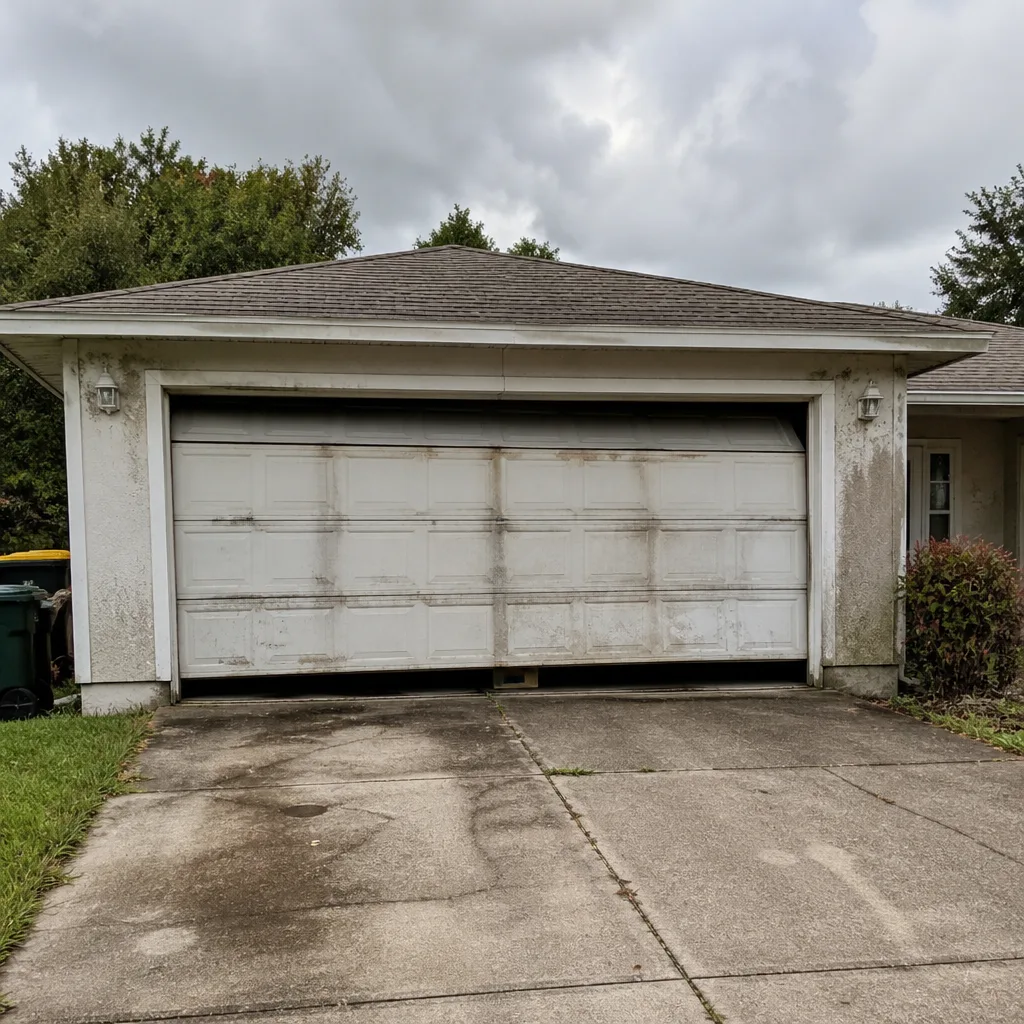 Before
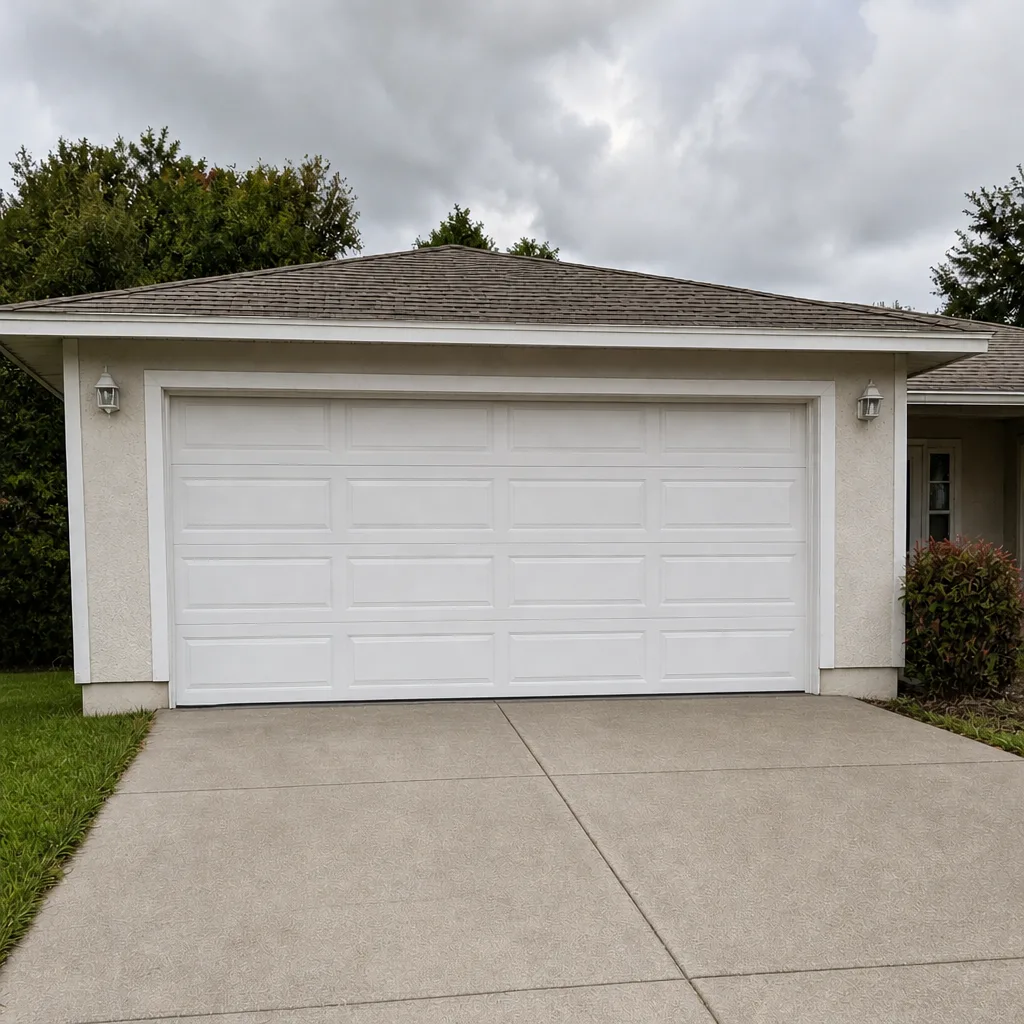 After
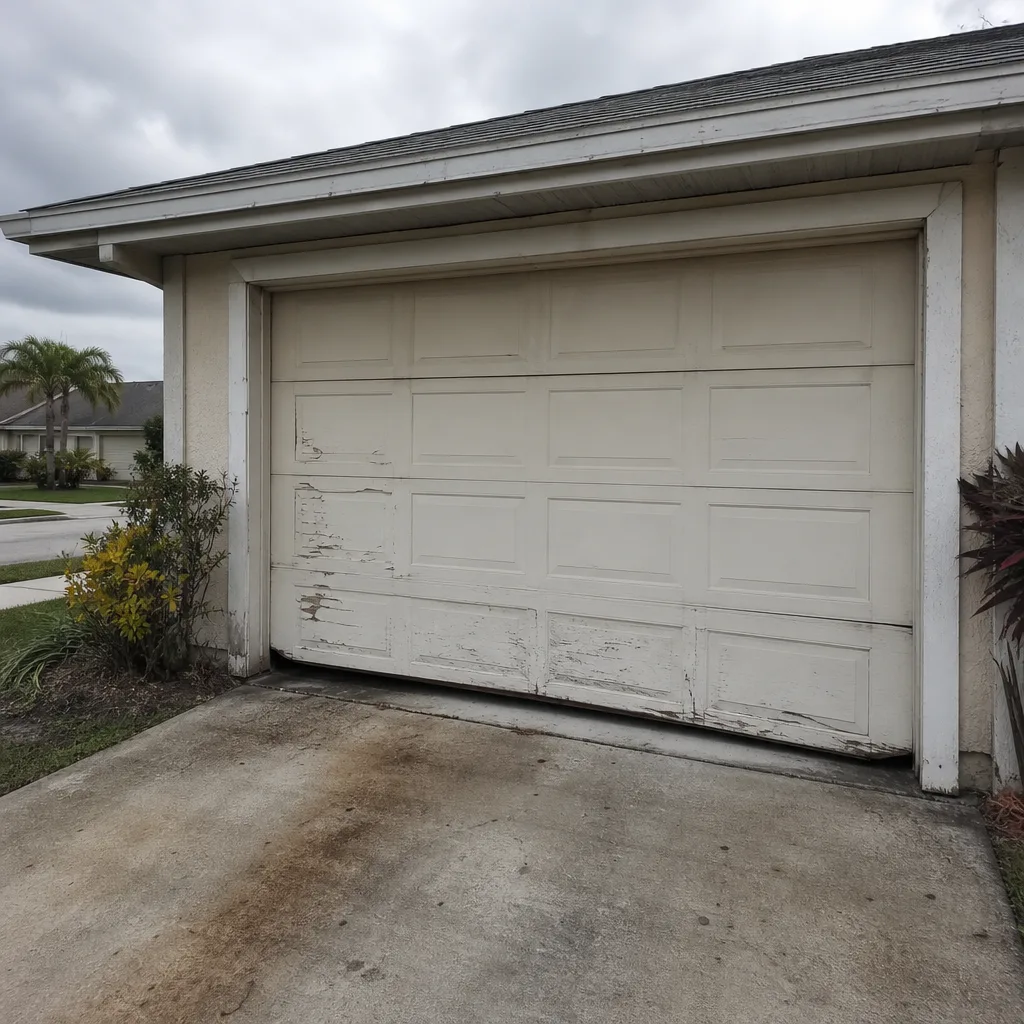 Before
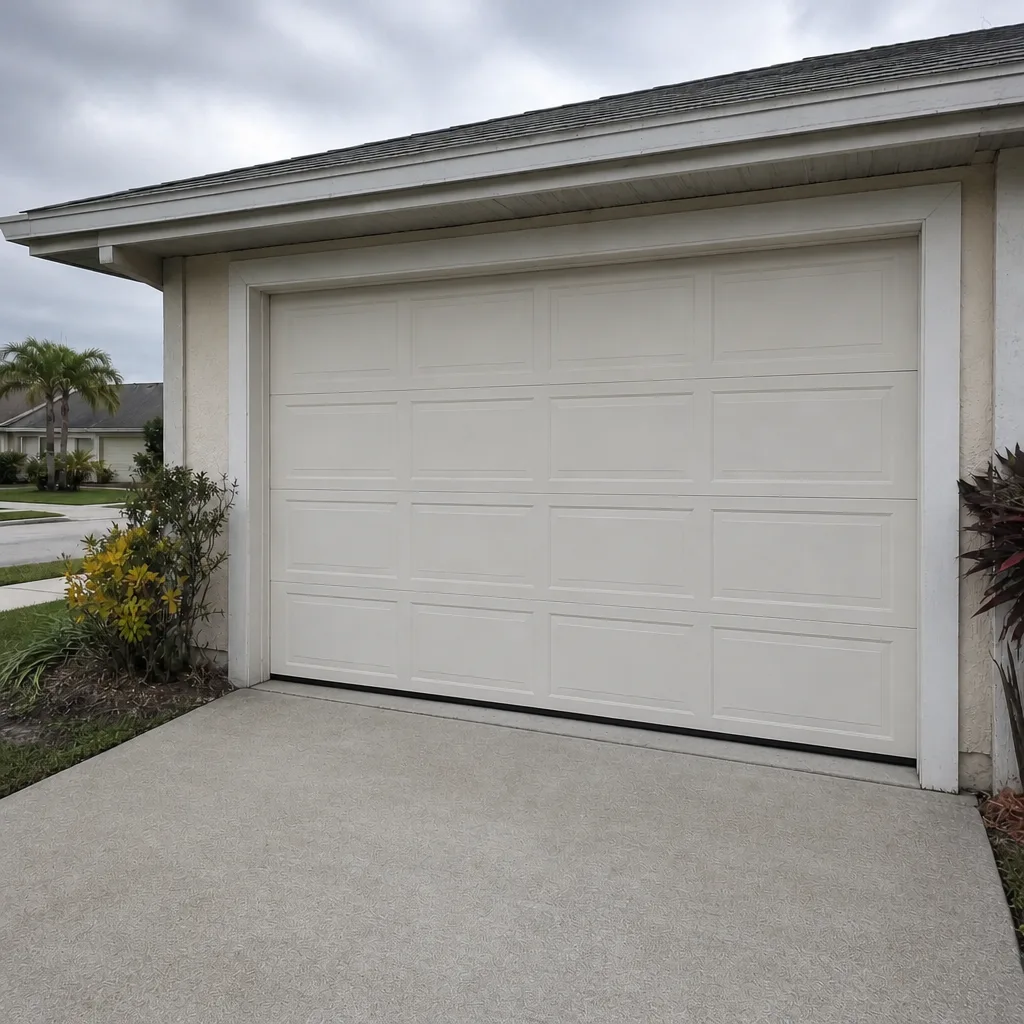 After
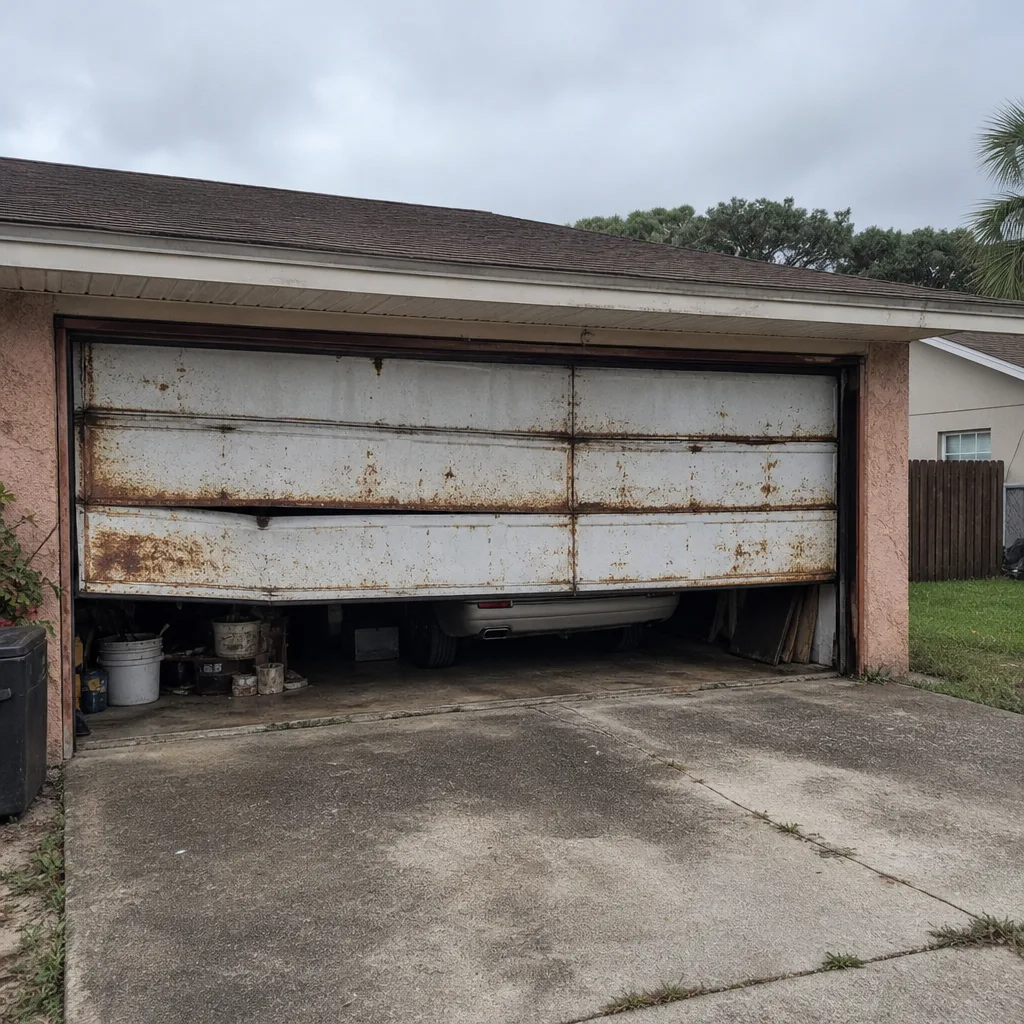 Before
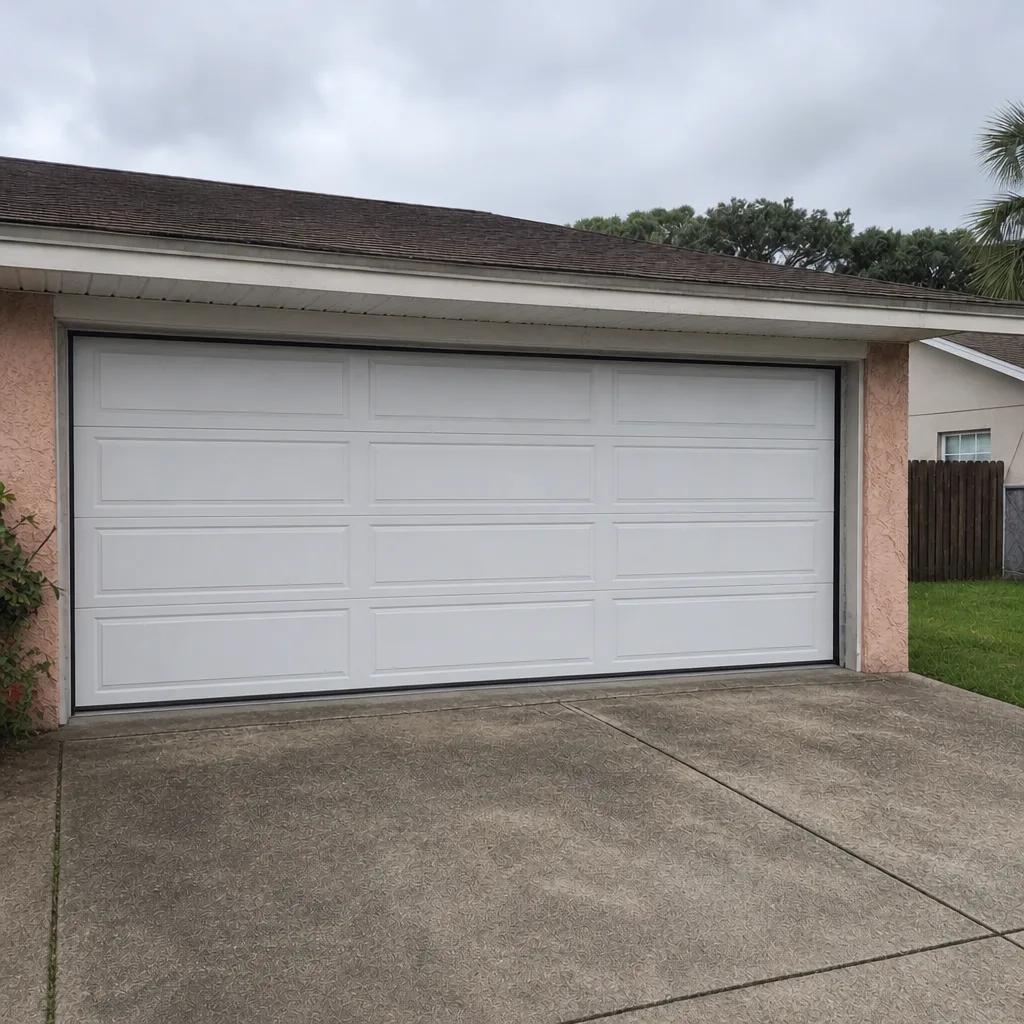 After
When to Call a Professional
Some jobs are worth waiting for the next scheduled window. Others aren’t. Call us if the door won’t open or close, if it hangs partway, or if a cable or spring looks broken or bent. Call if the opener strains, reverses for no reason, or you smell overheating. Call after a storm if the door’s travel feels different or the torsion bar area makes a new noise you can’t place. And call if you’re not sure: a free estimate costs you nothing, and a visual check catches problems early. Palm Bay Garage Door Repair Pros offers free estimates in Palm Bay – call (833) 468-5770. The price is quoted and agreed before any work starts, so there are no surprises when the job is done.
Frequently Asked Questions
Two or three service visits a year covers everything in this climate: a pre-hurricane structural check, a wet-season seals-and-tracks visit, and a dry-season spring-and-finish visit. Batching tasks into those windows keeps the important checks from getting skipped. Call (833) 468-5770 to set up a free estimate.
Torsion bar and cable stress after storms is the most commonly missed issue. The door still cycles, so nobody looks closer, but the stress shows up later. A post-storm inspection catches it before it becomes a failure. Call us to schedule one.
Yes – replacing a bottom weather seal is within reach for most homeowners who are comfortable with basic tools. If the seal failure has caused track or roller damage, that part needs a technician. Call (833) 468-5770 if you want it handled in one visit.
Metal contracts as temperatures drop, so spring tension feels different in the dry season than it does in the heat. That shift is normal, but a sudden or large change in how the door balances is worth an inspection. Springs are a safety issue, not just a convenience issue – call for an exact quote.
An older home with wood trim or a wood-framed door needs more attention to moisture and paint than a newer steel door, and the wet season is when that shows. We assess your door on arrival and adjust the checklist to what your system actually needs. Call (833) 468-5770.
Yes, emergency service is a core part of what we do. When a stuck or broken door creates a real safety or security risk, we move fast. Call (833) 468-5770 and we’ll get you the help you need.
No – the written estimate sets the price, and the price is quoted and agreed before any work starts. If a technician finds something extra, you’ll hear about it before anything is done. Call (833) 468-5770 for a free estimate.
The local pro we connect you with is licensed and insured as their state requires. Our technicians have up to 12 years of experience and are trained on eight major garage door brands, including Genie, Clopay, Amarr, and Wayne Dalton. Call us to book a visit.
The Bottom Line
Palm Bay’s climate doesn’t hand you four neat seasons. It hands you a wet season that attacks seals and tracks, a dry season that cracks rubber and shifts spring tension, and a hurricane window that tests every fastener on the door. Match your maintenance to those three phases, batch the tasks into two or three windows a year, and you’ll avoid most of the failures we get called out for. Leave the springs, cables, and post-storm inspections to a trained technician, and handle the visual checks yourself. That’s the whole system, and it works year-round.
Palm Bay Garage Door Repair Pros handles repair, spring work, opener service, and new installation, and we’ll tell you honestly whether repair or replacement is the smarter investment for your door. For a free estimate, call (833) 468-5770 – the price is agreed before any work starts.
Written by the team at Palm Bay Garage Door Repair Pros.