Last updated November 21, 2026
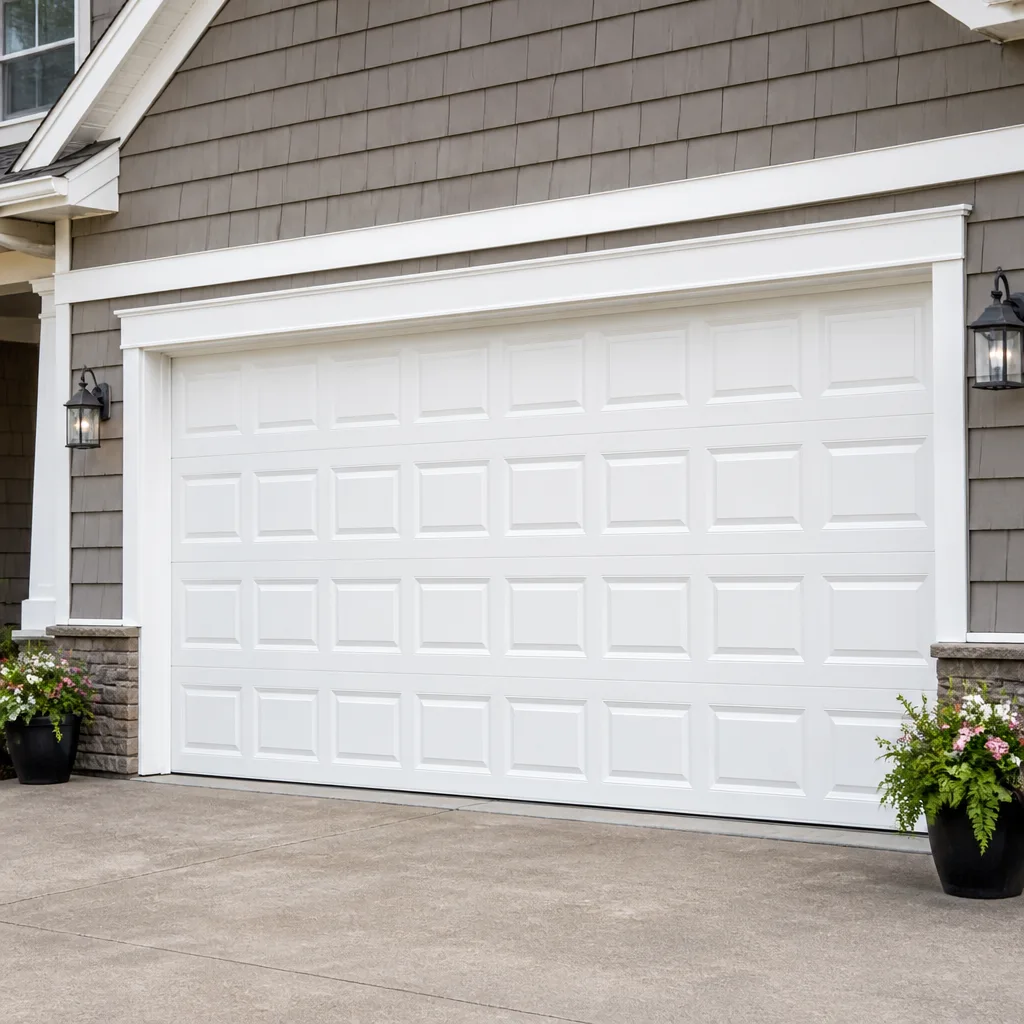 Raised-panel steel
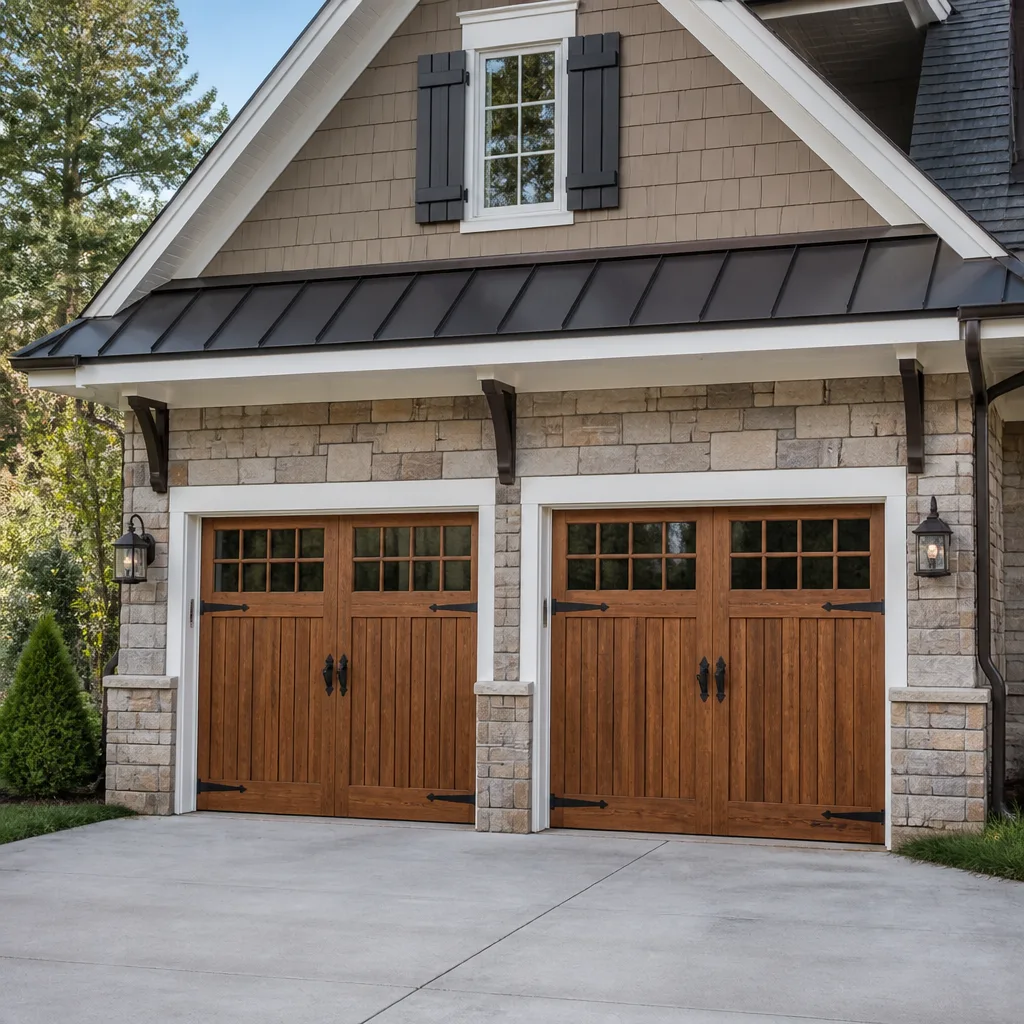 Carriage house
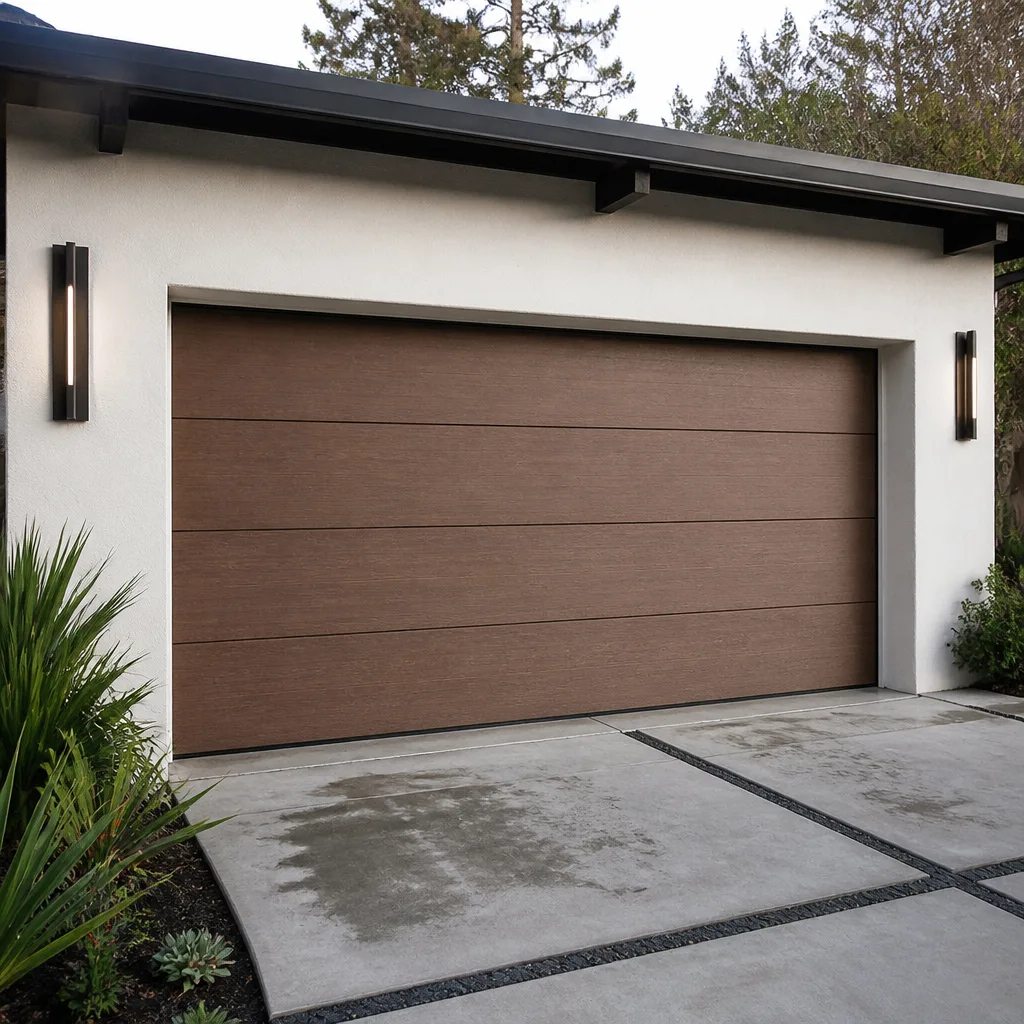 Modern flush
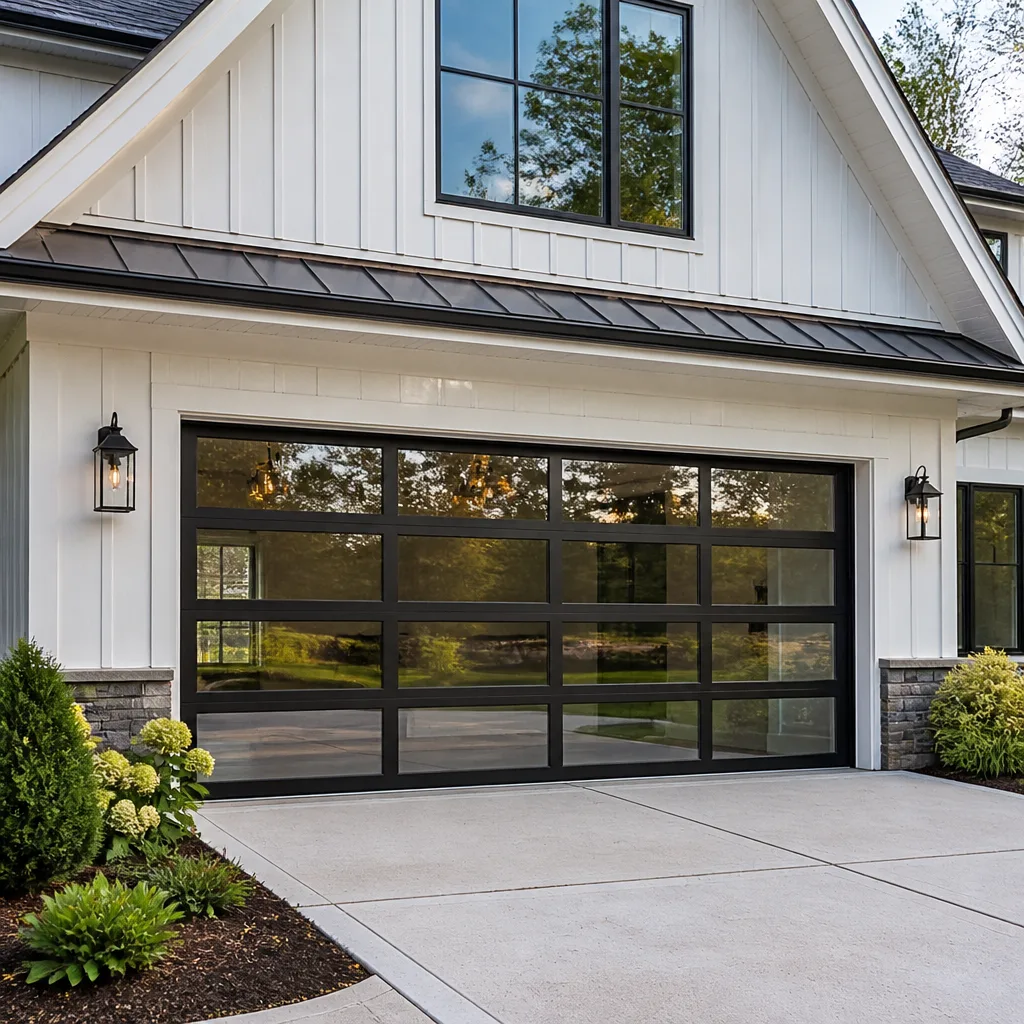 Full-view glass
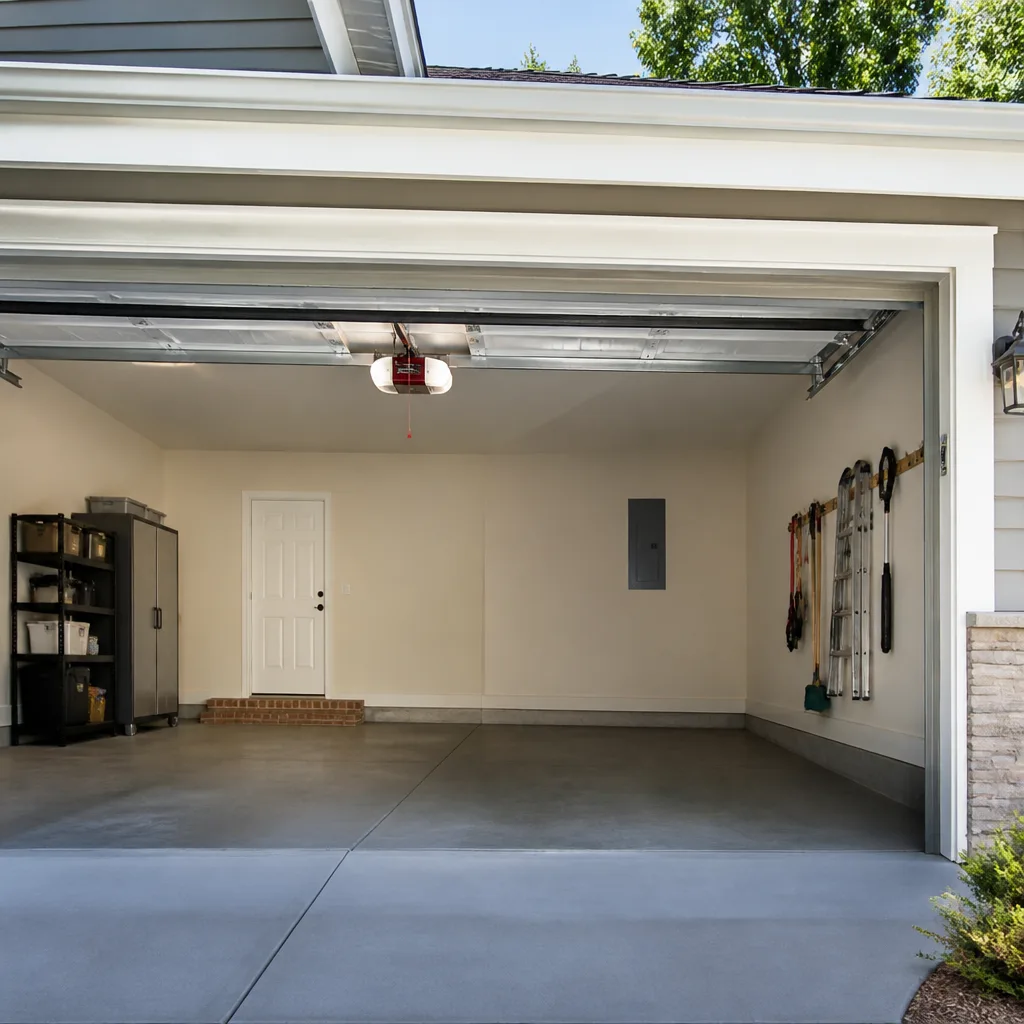 LiftMaster openers
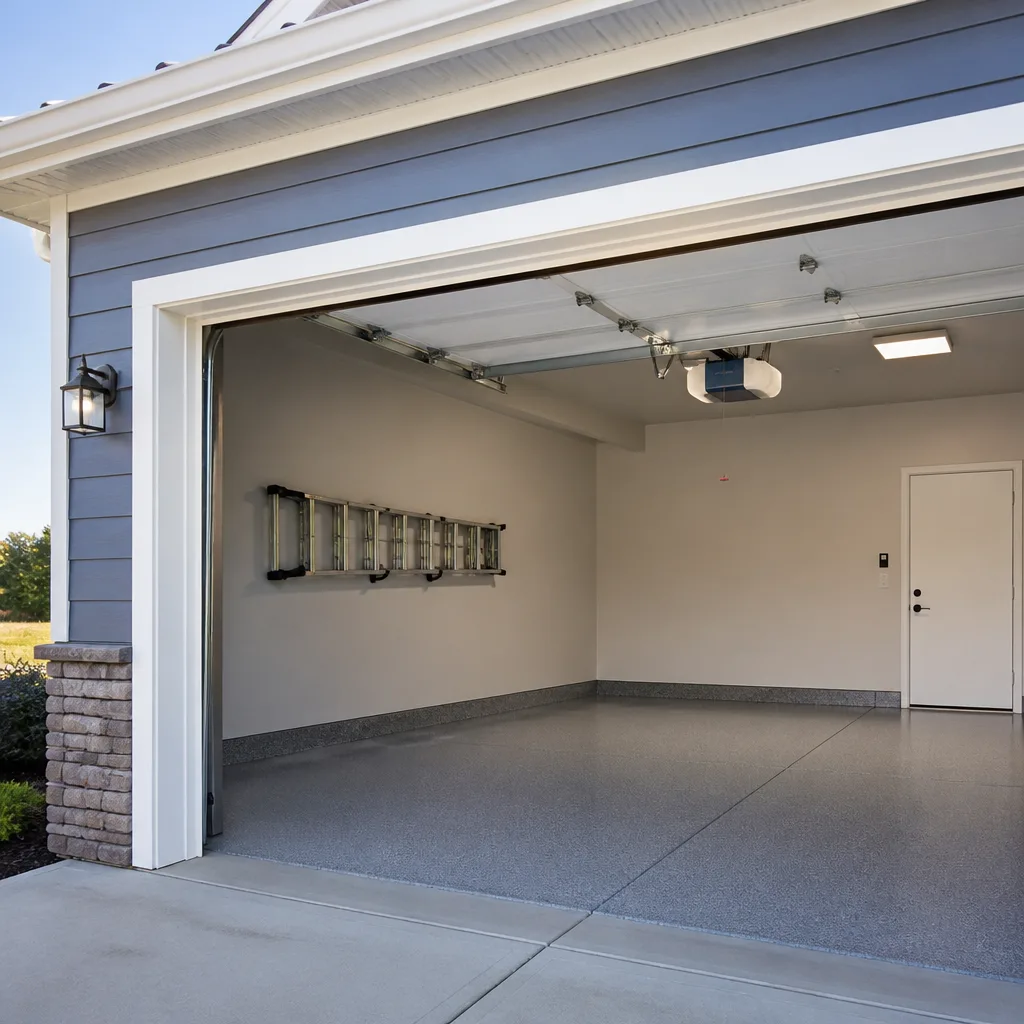 Chamberlain openers
Full 25-point door and opener safety check with every visit - springs, cables, rollers, tracks, and your LiftMaster or Chamberlain opener included
You get a price before we start. It does not change when the pro arrives.
Get your free estimateHow to Hire a Garage Door Contractor in Palm Bay: A Step-by-Step Guide
The worst moment to check a garage door contractor’s credentials is the moment your door won’t close. That’s when the car is trapped inside, the house is open to the street, and the first name on a search result gets the job. Pressure makes people skip the exact checks that matter most. We’ve seen homeowners in Palm Bay hire whoever answered first, then find out too late that the spring they paid for carries no warranty and the technician couldn’t explain what failed. The smarter move is to do your homework now, while the door still works, so that when something breaks you already know who to call. This guide walks you through license checks, contract clauses, brand questions, and the local red flags that show up during Brevard County’s storm season.
Quick Answer
To hire a garage door contractor in Palm Bay, verify the company’s state license through Florida’s DBPR database before anything else, then confirm the quote is written, itemized, and agreed before work starts. Ask who will actually arrive, which brands they’re trained on, and whether they handle both the door and the opener. Skip any contractor who works cash-only, can’t show a local address, or won’t put the price in writing. A fifteen-minute check now saves you an expensive correction later.
Styles & brands we work with
- Raised-panel steel
- Carriage house
- Modern flush
- Full-view glass
- LiftMaster openers
- Chamberlain openers
Table of Contents
- Step 1: Verify the Contractor’s Florida License
- Step 2: Read the Contract Before You Sign
- Step 3: Interrogate “Certified Installer” Claims
- Step 4: Ask Questions That Reveal Real Diagnosis
- Step 5: Spot Storm-Season Red Flags in Brevard County
- Step 6: Decide Between Repair and Replacement
- Step 7: Understand Which Repairs Are Safety-Critical
- What Garage Door Work Typically Costs in Palm Bay
Step 1: Verify the Contractor’s Florida License
Florida requires garage door contractors to hold a specific state license. That check takes under two minutes, and it’s the single most important thing you’ll do before hiring anyone in Palm Bay. The state’s Department of Business and Professional Regulation (DBPR) runs a public database where you can look up any licensed contractor by name or license number. You don’t need an account and you don’t pay a fee.
Here’s how to run the lookup:
- Go to the DBPR license search page and choose the license type that covers specialty contractors.
- Enter the company name or the license number printed on their business card, quote, or vehicle.
- Confirm the license status shows as active, not expired, suspended, or revoked.
- Check that the license type actually covers garage door work rather than a general category that doesn’t fit the job.
- Cross-check the name on the license against the name on your quote. They should match.
What you’re looking for: an active status, a matching business name, and a license type that genuinely covers what they’re proposing to do. What should stop you cold: no record at all, a license issued to a different company, or a status that reads expired. If the person on the phone can’t tell you their license number, that’s your answer.
Many companies operating in Brevard County work without the required license. Some are legitimate out-of-area outfits with paperwork in progress. Most are simply avoiding the cost and testing. When you call us, the local professional we connect you with is licensed and insured as their state requires, and we’re happy to point you to the DBPR lookup so you can confirm it yourself. You should do that regardless of who you hire.
Step 2: Read the Contract Before You Sign
Three clauses in a garage door contract do most of the work protecting you from being quoted one thing and charged another. Most homeowners never read them. Read them.
Clause 1: Itemized parts and labor
The quote should list the part being replaced, its brand and model, and a separate labor line. On a spring replacement, “spring replacement – $X” is not enough. You want to see whether it’s an extension or torsion spring, whether you’re getting one or a matched pair, and what the cycle rating is. On an opener replacement, you want the exact model number, not “new opener.” If the quote only says “spring repair” with a lump sum, ask for the breakdown before signing.
Clause 2: Written authorization for any added cost
This clause should say that no additional work or part will be added without your written or signed approval, and that the original agreed price will not change based on what’s discovered mid-job. A technician who finds a worn bearing is welcome to point it out and quote it. The point is that the quote becomes a second decision, not an automatic add-on. Get this in writing, and get it in the contract itself rather than a verbal promise.
Clause 3: Warranty on parts and labor, separately stated
Parts and labor carry different warranty terms, and the contract should show both. A spring has a manufacturer’s rating that means something specific. Labor coverage usually runs shorter. If the contractor offers only a single “one year warranty” line with no split, ask which part is covered for how long. Then keep the receipt. A warranty you can’t produce later does you no good.
One more: no work begins before the written price is agreed. That’s a standard we hold to on every job in Palm Bay, and any contractor who resists it is telling you something.
Step 3: Interrogate “Certified Installer” Claims
Almost every garage door company claims to be “certified.” The word means very little on its own. What matters is the specific manufacturer, the specific certification type, and whether the person arriving at your door actually holds it.
Brand certification comes in different levels. A company can be an authorized dealer, a certified installer, or a certified service provider, and these aren’t the same. Some are factory training programs for opener lines like LiftMaster, Chamberlain, and Genie. Others cover door systems from manufacturers like Clopay, Amarr, Wayne Dalton, and Raynor. We’re trained on all eight of those brands, and that matters because it means when your door needs work, you’re not waiting for a referral to someone else.
Ask the person quoting your job these questions:
- Which manufacturer’s certification do you hold, and at what level?
- Does that certification cover service and repair, or only new installation?
- Will the technician who arrives be trained on my specific brand?
- Is the certification current?
If the answer is “we work on all brands,” that’s not skepticism-proof. Any company can say it. The question is whether they can name the brands and describe the training. In our experience, a genuinely brand-trained technician will tell you exactly which lines they’re strongest on and won’t pretend to cover one they don’t.
A practical corollary: if your opener is a Genie and the technician arrives without the right diagnostic tool, the certification was marketing. When you need garage door opener repair, the first thing you should hear is what brand you have and how they’ll diagnose it.
Step 4: Ask Questions That Reveal Real Diagnosis
Garage door failures often share symptoms but have different causes. A door that won’t open could be a broken spring, a stripped gear in the opener, a misaligned track, a bound roller, or a dead safety sensor. A technician who replaces parts by trial is billing you for their guesswork. A technician who diagnoses first tells you exactly what failed and why.
Use these questions to separate the two:
- What exactly failed, and how do you know?
- What’s the normal lifespan for that part in this climate?
- Is anything else worn enough that it’ll fail soon?
- What would happen if we only fixed what’s broken now?
- Can I see the failed part before you replace it?
A confident technician answers all five clearly and shows you the part. One who fumbles and reaches for the parts catalog is guessing. When the diagnosis lands on the spring, the conversation should shift to safety, not price. Springs are a safety issue, not just a convenience issue. A torsion spring under load can cause serious injury if it fails while someone is working near it, which is why garage door spring repair is not a do-it-yourself job and why a technician who suggests you handle it yourself is disqualifying themselves.
For a full mechanical issue rather than a single failed part, the diagnosis should also cover the whole system. Our approach to garage door repair starts with identifying the failure before touching a tool, and the same expectation should apply to anyone you hire.
Step 5: Spot Storm-Season Red Flags in Brevard County
Brevard County’s storm season sends a wave of out-of-state crews through the area, particularly after any significant weather event. Some are legitimate. Many are not. The pattern is consistent enough that you can screen for it in advance.
- No local address. Ask for a physical business address in Palm Bay or nearby Brevard County. A P.O. box, a phone number, and a website are not an address. You can verify a business address through public records or a quick map search.
- Cash-only pricing. Cash-only is a red flag when paired with no written contract and no receipt. It removes your ability to dispute a charge, enforce a warranty, or prove the work was done. Legitimate contractors take cards or checks and produce paperwork.
- Out-of-state plates and no local phone number. Storm-season crews often work the area for a few weeks and leave. If the phone number is out of state or the vehicle bears out-of-state plates, ask where the warranty will be serviced if something fails after they’ve moved on.
- Pressure to sign today. A legitimate contractor will quote the job and let you think about it. An immediate “this price is only good today” pitch is a sales tactic, not a scheduling necessity.
- No license number on the quote or card. A licensed Florida contractor puts the license number on their materials. Its absence is meaningful.
- No visible parts or model numbers. A quote without model numbers on springs or openers leaves room to install a cheaper part than what you agreed to.
The common thread is scarcity of paper trail. When the door is stuck and the clock is ticking, the temptation to skip these checks is real. That’s exactly when they matter most. Palm Bay homeowners who’ve been through a storm-season scramble tend to ask the license question first the next time.
Step 6: Decide Between Repair and Replacement
The honest question most garage door technicians don’t answer directly enough is whether to repair or replace. The answer depends on the age of the door, the number of failures, and what the repair will actually cost against a replacement.
Here’s a rough decision framework:
- Repair is usually the right call when the door is structurally sound, only one component has failed, and the rest of the system is in reasonable condition. A single spring failure on an otherwise healthy door is a repair, not a replacement.
- Replacement deserves a serious look when the door has had multiple failures in a short period, the panels are dented or separating, the tracks are bent beyond easy realignment, or the door is very old and parts for it are hard to source.
- Opener replacement often makes more sense than repair when the unit is old enough that a new gear or logic board would cost a significant fraction of a new unit, or when parts for that model aren’t readily available.
What we’d advise against is a company that treats every service call as a replacement opportunity. The right answer is often repair, and we’ll tell you which one makes sense for your door. That’s easier for us than it is for a repair-only shop or a replacement-only shop, because we do both. On installation, a reliable contractor will measure, order, and schedule the work rather than promise same-day completion, because replacement involves lead time on the door itself. When you’re ready to talk Palm Bay Garage Door Repair Pros through your options, the conversation should start with the age of the door and what’s actually failing.
Step 7: Understand Which Repairs Are Safety-Critical
Some garage door work is straightforward. Some is genuinely dangerous. Knowing the difference tells you how carefully to vet the contractor and how much you should insist on seeing credentials before anything is touched.
The safety-critical items are:
- Torsion and extension springs. Springs store mechanical energy. A torsion spring under load can cause serious injury if it releases unexpectedly. Spring work requires specific tools and training. A contractor who proposes to do it with general tools or suggests you watch to save money is a hazard.
- Cables and drums. These hold the spring tension. They’re part of the same safety system, and a cable that fails under tension is dangerous.
- Electrical work on the opener. If you’re moving an outlet or hardwiring a new opener where the wiring isn’t already in place, that’s electrical work and it should be handled by someone qualified to do it. Ask the question before the technician arrives.
- Track and panel replacement. Less dangerous than springs, but still involves lifting and securing a heavy panel. A mis-secured panel can fall.
When the job touches a spring, cable, or the opener’s electrical connection, insist on seeing the license before work begins. Florida law and common sense agree on that. If the contractor deflects the question or suggests the licensing is a formality, hire someone else.
On the opener side, most service and repair work on an existing opener doesn’t require an electrician because the wiring is already in place. When we handle opener repair, the technician works on the unit itself. If the situation needs new wiring, we’re upfront about what we can and can’t handle on-site.
What Garage Door Work Typically Costs in Palm Bay
Pricing in the Palm Bay market follows a few patterns that are worth understanding before you get a quote. The table below shows typical estimated ranges rather than fixed prices. Every job is different, and the written estimate you receive sets the final price.
| Service | Typical Estimated Range |
|---|---|
| Spring replacement (one spring) | $180 – $340 per spring |
| Matched spring pair | About twice the single-spring cost |
| Opener repair (diagnosis and minor repair) | $120 – $280 |
| Opener replacement (unit and installation) | $350 – $850 depending on model and features |
| Door and track repair | $150 – $500 depending on extent |
| New door installation | Varies widely by door size and material; measured on site |
A few things to know about these numbers. Spring replacement on a matched pair almost always replaces both springs, not one, because the pair was installed together and the second will typically fail not long after the first. When you’re quoted for one spring on a double-door system with a pair, ask why. The honest answer is either “we believe the other is recent and healthy” or “you should replace both.” A pair costs about twice a single spring, and that’s normal.
The written quote is the price. That’s a principle we hold to. Before any work begins, you should have a written price, you should agree to it, and it should not change because the technician discovered something else once they opened up the system. If something additional genuinely needs doing, you get a new quote, not an invoice.
For the Palm Bay area specifically, pricing tends to run a bit above what you’d see in lower-cost parts of the state on installation, because lead times and delivery to Brevard County add cost on door systems. On repair work, the range is roughly comparable to most of Florida. If a quote comes in much lower than the range above, ask what part is being installed to get there. It’s usually a lower-cycle spring or an entry-level opener.
Common Mistakes to Avoid
- Skipping the license check because the door is broken. The moment of urgency is exactly when unlicensed contractors find their customers. Run the DBPR lookup even when the door is stuck, and give it two minutes while you wait for the callback.
- Accepting a quote without model numbers. “Spring replacement” or “new opener” on a quote means you don’t know what part you’re getting. Insist on brand and model, and check that the part installed matches the part quoted.
- Letting the original price change after work begins. Any additional cost should be a separate written quote and a separate decision. If the technician says “while we’re in here, we should also replace these,” ask for the added cost in writing before agreeing.
- Believing “certified” without asking which certification. Every competitor calls themselves certified. Ask which manufacturer, at what level, and whether the arriving technician holds it.
- Hiring storm-season crews with no local footprint. Check for a physical Brevard County address, a local phone number, and a warranty that will actually be honored after the crew leaves the area. Out-of-state plates and cash-only pricing together are a strong signal to keep looking.
- Assuming repair and replacement are separate calls. A company that handles both the door and the opener can give you one honest recommendation rather than sending you to a partner for half the work. That’s why we work on both.
- Skipping the warranty conversation. Parts and labor warranties run separately, and the terms matter when something fails six months later. Get them in writing and keep the receipt.
See the difference
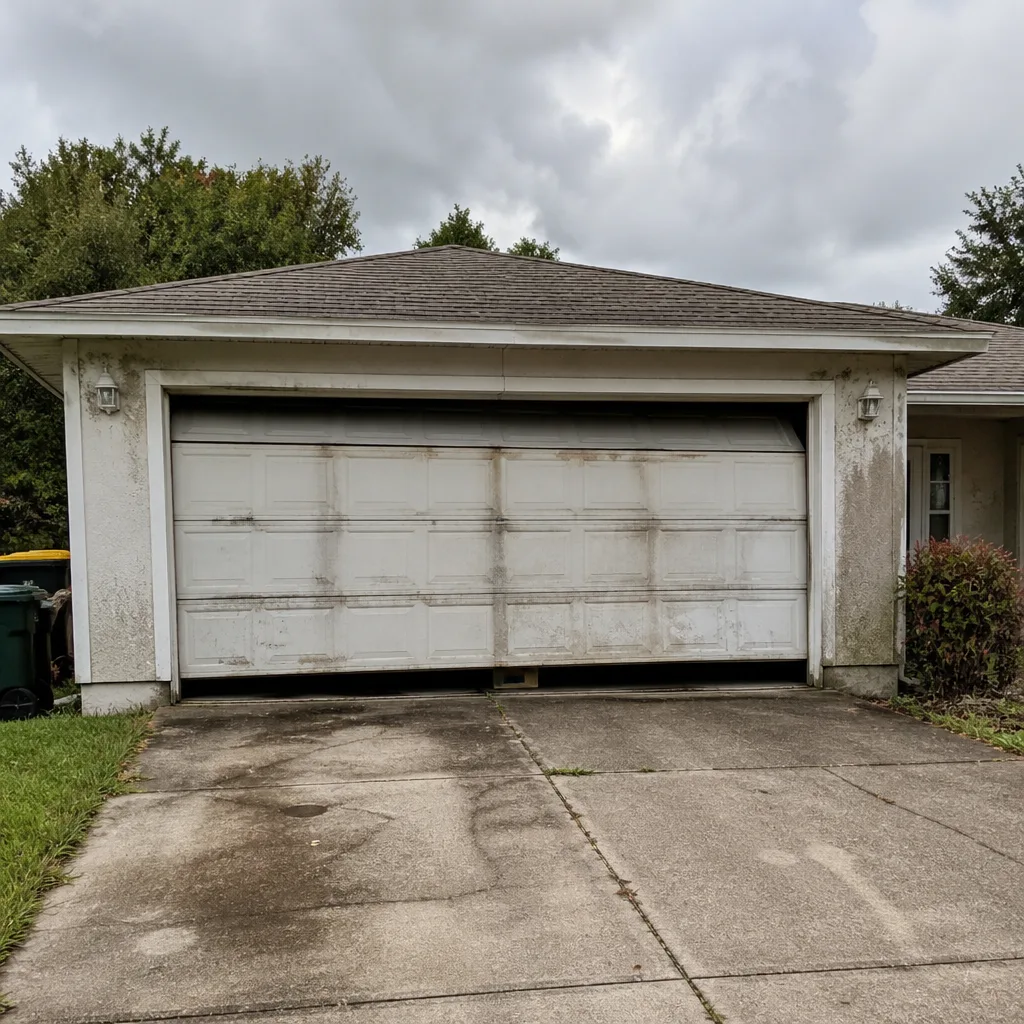 Before
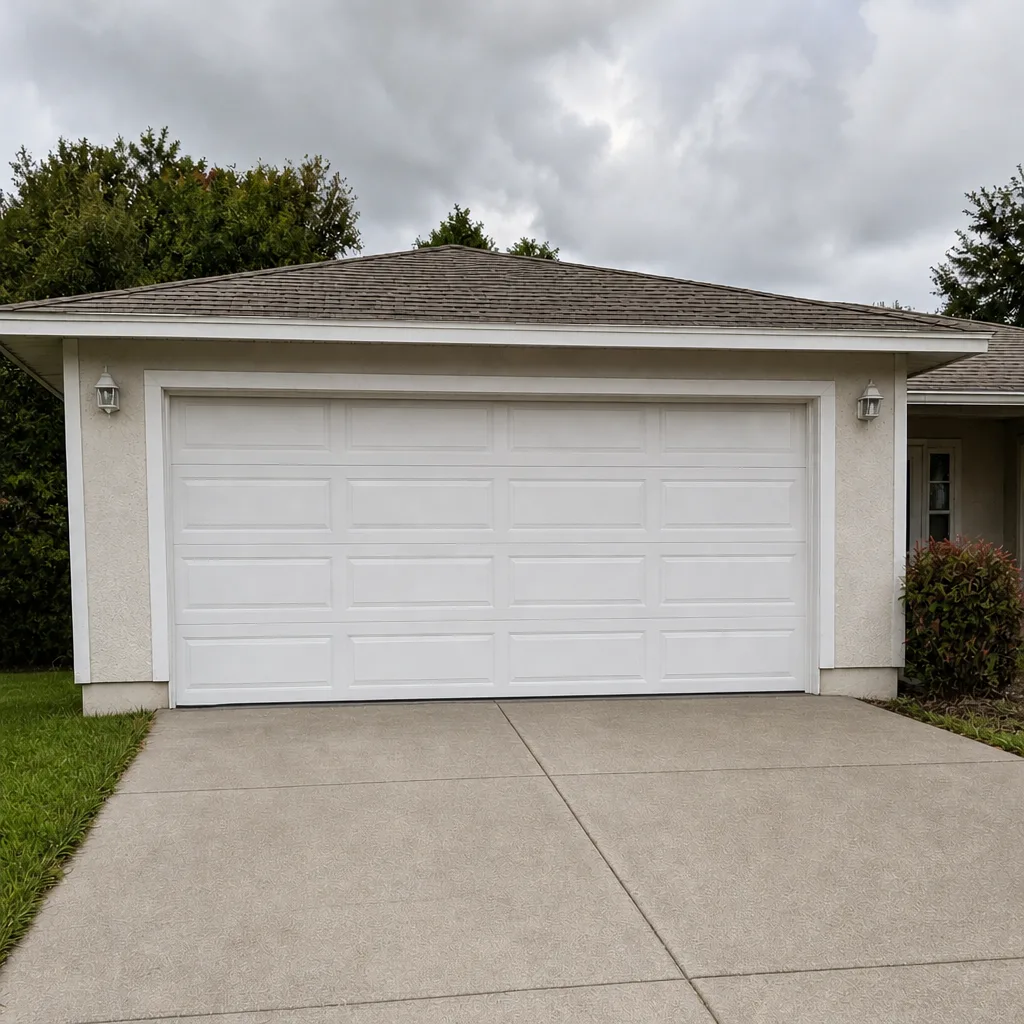 After
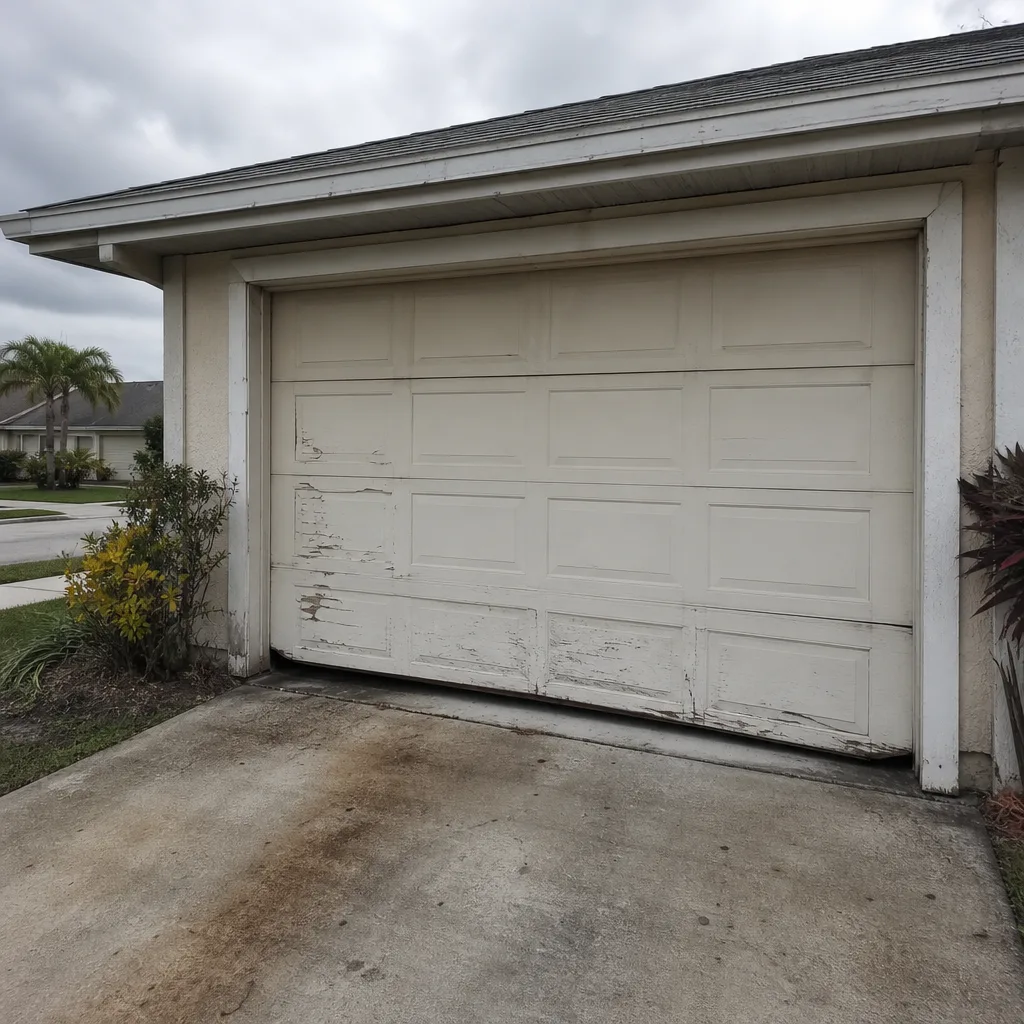 Before
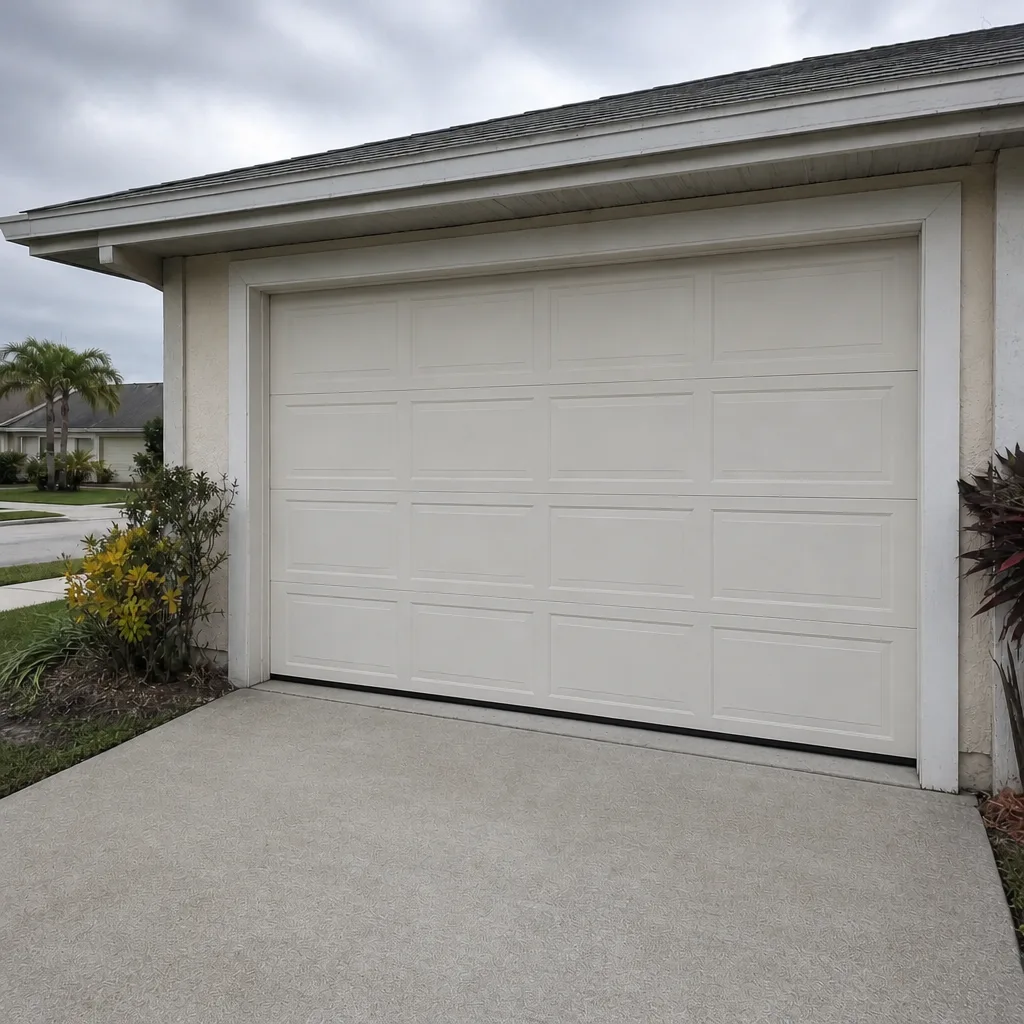 After
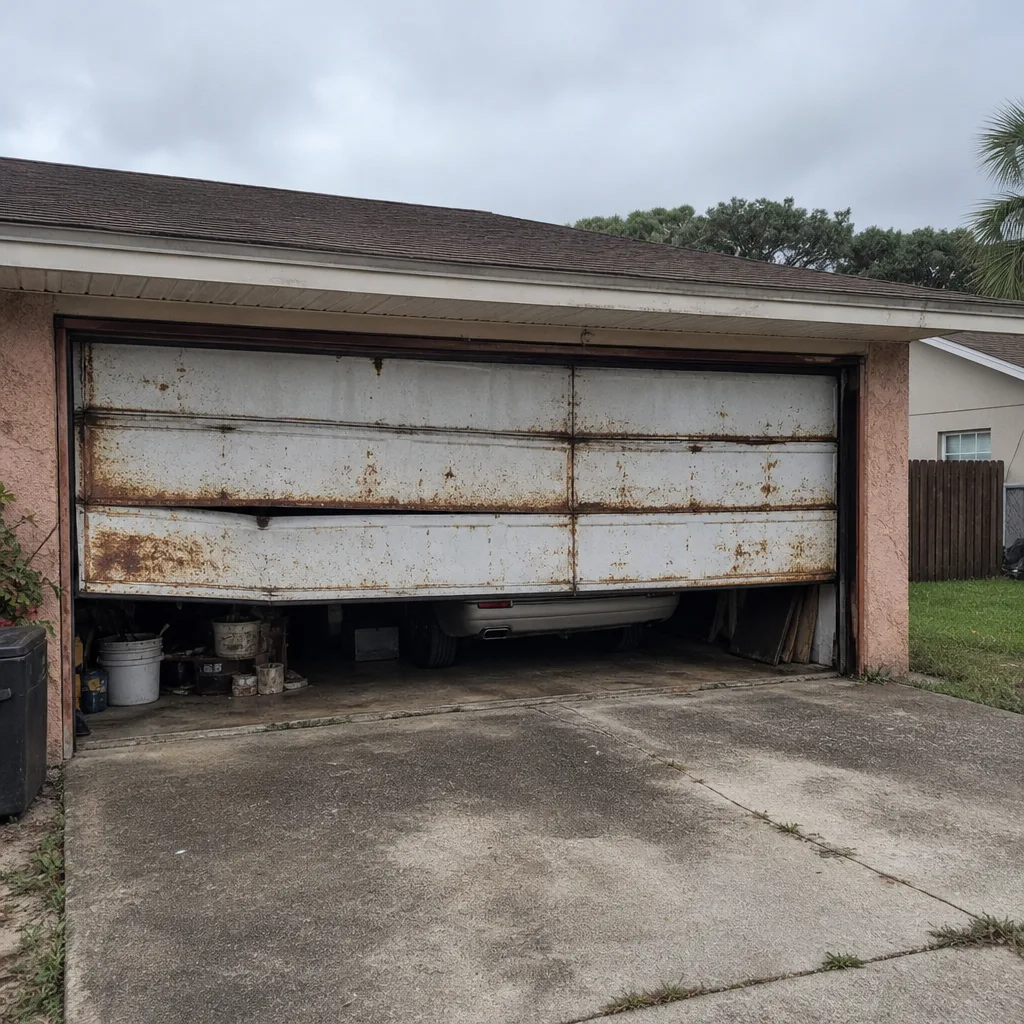 Before
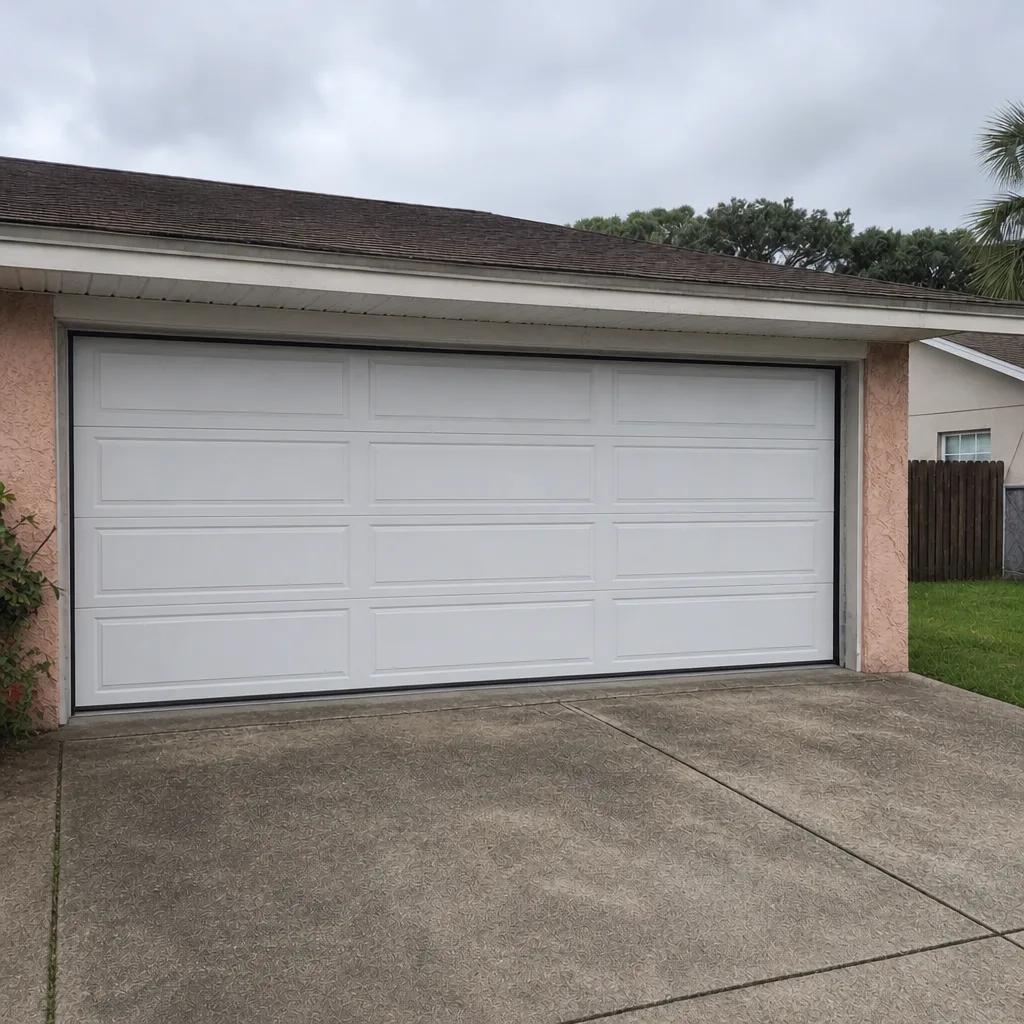 After
When to Call a Professional
Some garage door issues can wait for a scheduled visit. Others need a call today. When the spring has clearly failed and the door won’t open at all, when a cable has snapped and the door is hanging unevenly, or when the door has come off its track and won’t close, those are situations where a trained technician should be on the way rather than a homeowner experimenting with the mechanism. When the door won’t move and the house is exposed to the street, the priority is getting it secured.
Other cases are less urgent but still professional territory: an opener that’s been intermittently failing, a door that reverses before it fully closes, a noisy door that’s getting louder, or a bottom seal that’s worn out. These can be scheduled, though we still recommend a free measure and a written quote rather than any work proceeding sight-unseen.
We offer free estimates in Palm Bay and emergency service for situations where a stuck or broken door creates a real safety or security risk. Call (833) 468-5770 and describe what’s happening. The price is quoted and agreed before work starts, and we’ll tell you honestly whether it’s a repair or a replacement.
Frequently Asked Questions
Typical spring replacement in Palm Bay runs about $180 to $340 for a single spring, and a matched pair costs about twice that. The written estimate you receive sets the final price, and we won’t start work until you’ve agreed to it. Call (833) 468-5770 for an exact quote. Estimates are free.
Yes, emergency service is available for stuck or broken doors that create a real safety or security risk. Fast dispatch runs from 7am to 7pm. When your door won’t move, call (833) 468-5770 and we’ll tell you what’s realistic for your situation.
No. The written quote is the price. If additional work turns out to be necessary once the technician is on-site, you get a second written quote and a chance to decide before anything proceeds. Nothing gets added without your agreement.
The local professional we connect you with is licensed and insured as their state requires. You should still confirm that independently through Florida’s DBPR database before hiring anyone, including us. The test takes under two minutes.
We’re trained on eight major garage door brands: LiftMaster, Chamberlain, Genie, Clopay, Amarr, Wayne Dalton, Craftsman, and Raynor. That covers door systems and openers, which means one call handles both the mechanical door and the operator. If your brand isn’t on the list, call and we’ll tell you honestly whether we can help.
Most cities require a permit for garage door replacement, so ask the City of Palm Bay’s building department directly before work begins. Requirements vary by project type and can change. Getting the answer from the city is faster than getting it from a contractor who may or may not be current on the rules.
The Bottom Line
Vetting a garage door contractor is a fifteen-minute task you can do before you need one. Run the license lookup through Florida’s DBPR. Read your contract for itemized parts and labor, written authorization for added cost, and separate parts and labor warranties. Ask which certification the company holds and which brand it covers. Check for a local address, a written quote, and a warranty that will be honored after the crew leaves. Do all of this while your door still works. If the door fails before you finish, call (833) 468-5770. We’ll give you a free estimate, a written price before work starts, and an honest recommendation between repair and replacement.
Written by the team at Palm Bay Garage Door Repair Pros.