Last updated November 21, 2026
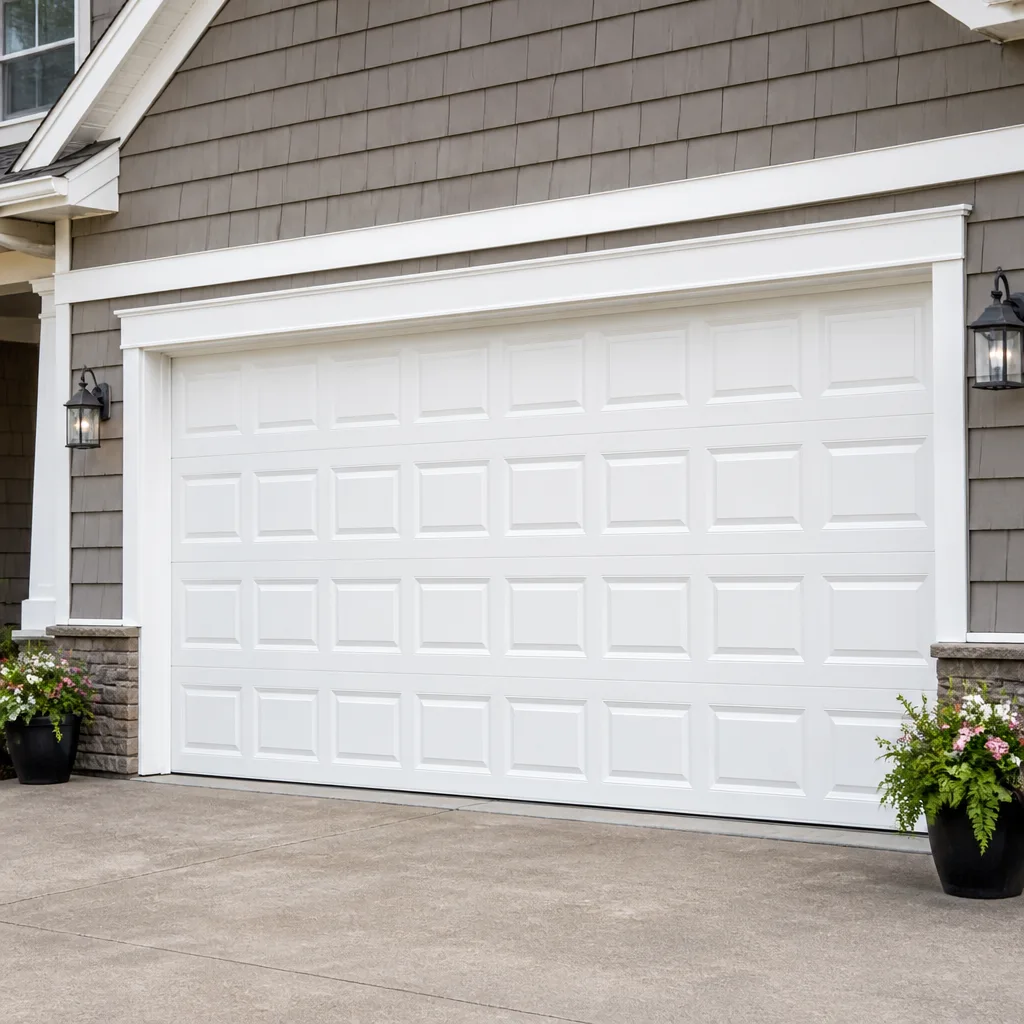 Raised-panel steel
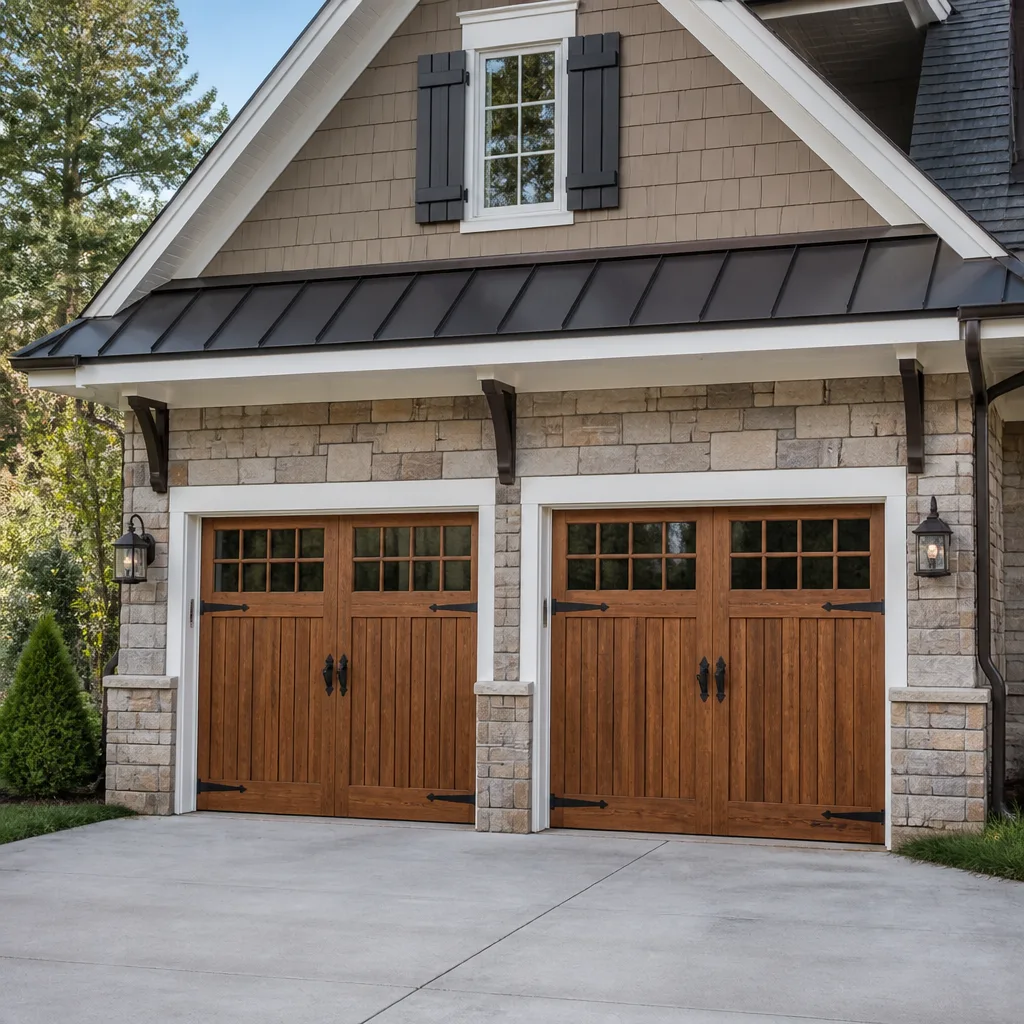 Carriage house
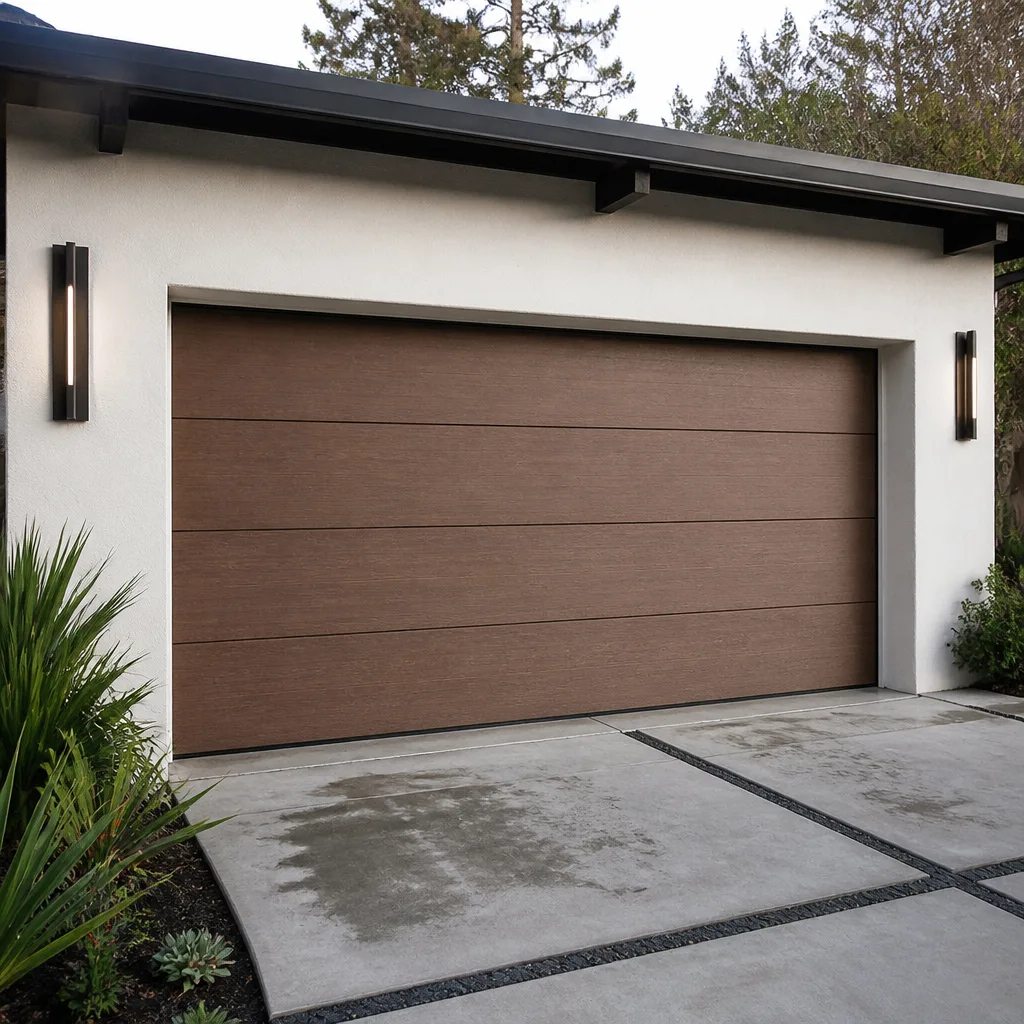 Modern flush
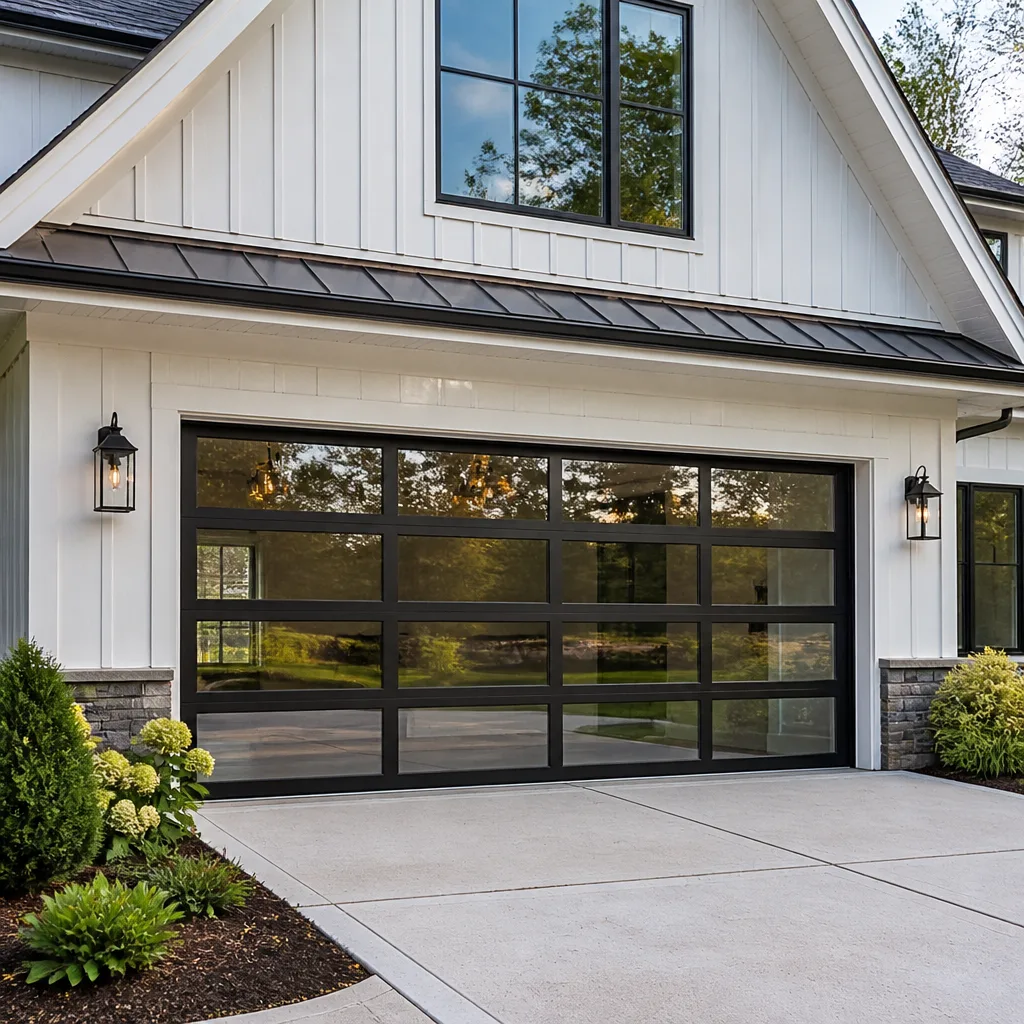 Full-view glass
 LiftMaster openers
 Chamberlain openers
Full 25-point door and opener safety check with every visit - springs, cables, rollers, tracks, and your LiftMaster or Chamberlain opener included
You get a price before we start. It does not change when the pro arrives.
Get your free estimateGarage Door Warning Signs: A Palm Bay Homeowner’s Reference Guide
Most garage doors don’t fail without warning. They tell you something is wrong days or weeks in advance, and most of us explain the symptom away: it’s just old, it’s the heat, it needed a second try today. That hesitation before the door moves is worth paying attention to. It’s often a motor capacitor or a logic board on its way out, and in our experience the gap between that first symptom and a door that won’t open at all is often measured in weeks, not months. This guide decodes the sounds, movements, and visual cues a Palm Bay door gives you, separates the ones you can watch from the ones that need a technician today, and helps you get the repair on your schedule instead of on a Sunday night.
Quick Answer
A garage door that hesitates, jerks, grinds, or runs louder than it used to is signaling a failing component before it breaks. Spring, cable, roller, and opener symptoms each have distinct warning signs, and a few of them (a snapped spring, a frayed cable, a door that reverses halfway) mean stop using the door and call a technician the same day. The rest you can monitor briefly, but almost none of them fix themselves.
Styles & brands we work with
- Raised-panel steel
- Carriage house
- Modern flush
- Full-view glass
- LiftMaster openers
- Chamberlain openers
Table of Contents
- What the sounds are telling you: a symptom-to-cause index
- Springs: how to tell lubrication from a spring about to fail
- Opener behavior: capacitor, sensor, or logic board?
- Cable and roller inspection points that predict failure
- Movement patterns: hesitation, jerking, and reversal
- Safe to monitor vs. call today: the line
- Why Palm Bay doors give these signs sooner
- What warning-sign repairs typically cost in Palm Bay
What the Sounds Are Telling You: A Symptom-to-Cause Index
Sound is the first thing most homeowners notice, and it’s usually the most diagnostic. A garage door makes a steady, low mechanical hum when everything is working. When that hum changes, something has changed inside the system. Here’s how we map the common sounds to the component behind them.
- A grinding or scraping growl: dry or worn rollers, a bent track, or a torsion spring that has lost tension and is dragging on its shaft. Grinding rarely fixes itself and tends to get louder over a week or two.
- A sharp bang from overhead: almost always a torsion spring breaking. It sounds like a gunshot because the spring stores a lot of energy and releases it all at once. Stop using the door.
- A rattle or clank on every cycle: loose hinges, a worn bottom bracket, or a roller that has popped out of its track. Usually a roller or hardware issue rather than a spring problem.
- A high-pitched squeal: metal-on-metal friction, often at the hinges or the spring coil. Lubrication helps if it’s early. If the squeal is coming from the opener unit itself, it’s a motor or gear problem instead.
- A stuttering hum from the opener with no movement: a failing capacitor or a stripped gear in the opener. This is the classic “it hums but won’t lift” symptom.
A door that used to be quiet and now announces every opening is telling you the system has drifted out of adjustment. In our experience, the single most common cause of a new grinding sound in a Palm Bay door is a roller that’s worn flat on one side, and those are inexpensive to replace before they chew into the track. If a mounting bracket or the torsion tube has come loose, the sound will be a rattle or thump at the top of the door, not at the floor.
Springs: How to Tell Lubrication from a Spring About to Fail
Springs are the highest-stress part of any garage door, and they’re the part where warning signs deserve the most respect. Torsion springs (mounted across the top) and extension springs (running along the sides) both weaken gradually before they break. A weakened spring doesn’t announce itself with a bang; it just makes the door harder to lift and the opener work harder.
You can learn a lot about a spring without touching it. Here’s what to look for from the ground:
- Gap in the coil. A torsion spring about to fail often shows a visible gap or a stretched section in the coil. A healthy spring looks uniform along its length.
- Uneven door on one side. If you stand back and lift the door by hand a few inches (safely, with no children or pets nearby), and one side lifts more easily than the other, a spring is losing tension.
- Rust streaks or metal dust. Early rust on the spring is normal in a humid climate. A fine red dust on the shaft or below the spring suggests metal is fatiguing.
- Noisy coil. Squeaking as the spring winds is usually a lubrication issue, not a failure sign. A dull thud or snap is not.
- Opener working harder. If your opener used to lift the door smoothly and now struggles, the springs are prime suspects before the opener itself.
Here’s the line you don’t cross. Never put a tool on a torsion spring. The springs on a typical garage door carry enough stored energy to seriously injure a person, and the whole system is under constant load while the door is up or down. Lubrication of the spring coil is a safe homeowner task if you follow the standard practice of using a garage-door-specific lubricant lightly on the coils. Diagnosing a spring that’s about to snap, replacing it, or balancing the door is work for a trained technician, and it’s a big part of what we do at garage door spring repair. Our technicians have up to 12 years of experience and treat springs as a safety-critical part, not a part to replace on autopilot.
One note: springs almost always fail as a matched pair on a double-spring door. When one goes, the other has usually done similar mileage, and replacing only one puts stress on the second. That’s why a matched-pair replacement is standard, and why the estimate will quote a pair rather than a single spring.
Opener Behavior: Capacitor, Sensor, or Logic Board?
Openers fail in three fairly different ways, and the symptoms tell you which one you’re dealing with. This matters because a dead opener can look like three completely different problems, and the fix is different for each.
Capacitor failure
The motor hums but the door doesn’t move, or the door moves a few inches and stops. The opener has power, the lights come on, but the motor can’t get moving. This is the classic capacitor symptom on a LiftMaster, Chamberlain, or Craftsman unit. The capacitor is a relatively inexpensive part, and a technician can usually confirm it on the spot.
Sensor misalignment
The door starts down, stops, and reverses immediately, or the opener’s light flickers. Sensors are the small photo-eye units near the floor at each side of the door. A bumped sensor, a loose bracket, or a dirty lens will cause the door to reverse consistently at the same point. Try a soft cloth on the lenses first; if the door still reverses, a technician can test the sensor alignment and wiring.
Logic board or travel-limit problems
The door stops in odd places, beeps, refuses a remote, or runs past its normal stop point. This points to the logic board, the travel limits, or a force-setting problem. It’s the hardest to diagnose from the outside, and it’s where an opener that seemed fine one day behaves unpredictably the next. Openers on Raynor, LiftMaster, and Chamberlain systems have different travel-setting procedures, so the brand matters to the technician doing the work.
On any of these symptoms, unplug the opener before you investigate further and don’t open the motor housing. Opener internals are wired to household voltage and the moving parts will bite. A trained technician can tell you in a few minutes whether it’s a capacitor, a sensor, or the board, and whether the right call is repair or a new opener. That’s garage door opener repair we handle across the brands most common in Palm Bay homes.
Cable and Roller Inspection Points That Predict Failure
Cables and rollers fail slowly, and both give you a visual preview. A visual inspection from the ground is safe; putting your hands on a cable is not. Here’s what to look at, and how to read it.
- Cable fraying near the bottom bracket. If strands are unwinding at the drum or the bottom corner, the cable has failed or is about to. Stop using the door. A snapped cable can whip and cause injury.
- Cable slack on one side. A cable with visible slack or a kink is a cable under failure load. That’s a same-day call, not a monitor.
- Roller wear. Rollers running in the track should be round and quiet. Flat spots, cracks, or missing ball bearings inside a roller mean it will fail within weeks. Worn rollers usually produce a wobble or a thump in the door as it travels.
- Track condition. A bent track, a dent near a bracket, or a gap where the track meets the wall will send a roller off its rails. Track damage is usually caused by an impact and should be checked before the door is run again.
- Bottom bracket rust or cracks. The bottom bracket carries high tension from the cable. Rust or cracking here is a technician-only inspection. Do not loosen it.
In a humid Palm Bay climate, plain steel hardware is where wear shows up first. Hinges, brackets, and springs all move more freely when they’re kept lightly lubricated, and a dry hinge can sound like a failing spring when it isn’t. That’s why the sound often comes back within a few days of lubrication if the real problem is a worn roller or a failing track. If you’re seeing cable or roller problems, it’s worth getting them looked at as part of general garage door repair rather than waiting for the door to give out.
Movement Patterns: Hesitation, Jerking, and Reversal
How a door moves is as telling as how it sounds. Movement symptoms are the ones homeowners most often dismiss as “just old.” They’re usually the most accurate predictor of a failure in the next few weeks.
- Hesitation before moving. The door sits for a second or two before it moves. That’s often a capacitor, a logic board, or a force-limit setting at the edge of its range, and it will tend to get worse.
- Jerking or stalling mid-travel. The door travels unevenly or stops mid-way. This can be a spring balance issue, a bad roller, or a track misalignment.
- Reversing partway down. If the door reverses consistently at the same point, it’s usually a sensor alignment or a force-limit problem. If it reverses immediately at random, the sensor wires or the board need testing.
- Slamming at the bottom. The door hits the floor harder than it should. That’s the travel limit or the close-force setting, and it puts stress on the bottom panel and hardware.
- A gap when fully closed. The door doesn’t seal at the floor. Usually a bottom-seal or a travel-limit issue, and it matters more in a climate with heavy summer rain.
Hesitation is the one we see dismissed most often. “It’s always been slow.” That’s fine until the day it isn’t. On a door that’s been hesitating for weeks, an expensive failure is easier to prevent than a cheap one is to repair after the fact.
Safe to Monitor vs. Call Today: The Line
Some warning signs are a nudge to book a service call. Others are a signal to stop using the door right now and call a technician. We don’t blur this line, because the cost of getting it wrong is real injury or a much bigger repair.
List 1: Call today or stop using the door
- Any sign of a broken spring (a bang, a visible gap, a door too heavy to lift by hand).
- A frayed, kinked, or visibly slack cable.
- A door that has come off its track or is hanging crooked.
- An opener that hums but won’t move the door, or a door that reverses instantly and won’t close.
- A bottom bracket that is cracked, rusted through, or shifting.
- A door that is stuck down and trapping a vehicle or blocking entry.
List 2: Book a service call soon
- Grinding or squealing that came on gradually.
- Hesitation before movement.
- Rollers with flat spots or a wobble as the door travels.
- A door that closes with a gap at the floor.
- A remote or wall control that only works some of the time.
If you’re not sure which list a symptom is on, treat it as a safety question. A quick call to us is free, and we’ll tell you whether it’s a wait-and-book or a stop-using-the-door. Our Palm Bay Garage Door Repair Pros team handles emergency garage door service for exactly this reason.
Why Palm Bay Doors Give These Signs Sooner
Palm Bay is a warm, humid, storm-prone climate, and a garage door here is worked harder than most homeowners realize. Doors here run more often week to week than they would in a colder climate where people drive less and garage doors sit idle. Every cycle wears the rollers, stretches the springs slightly, and loosens hardware. On a busy household in Palm Bay, that adds up faster than you’d expect.
The humidity is the other factor. In Palm Bay, damp air works on the hinges, brackets, cables, and springs year round. Where a dryer climate would leave a bare torsion spring alone for years, our moisture gives it surface rust much sooner. Rust on a coil is normal in small amounts. Fraying cables and rust at a bottom bracket are not, and they’re both things we see often in garage doors around Palm Bay, from older two-car doors off Malabar Road to newer three-car doors in the Bayside Lakes area.
Then there’s storm season. Palm Bay gets strong summer storms and the occasional named system, and every storm cycle sends debris, branches, and wind gusts against doors. A door that took a bump in June can show a bent track in July, and the symptom (a wobble or a grind on the way up) gets blamed on the opener. When you call a technician in Palm Bay, tell them about storm damage, because a bent track needs to be straightened before anything else gets adjusted.
Humidity also affects the opener. Circuitry in a garage isn’t sealed against moisture the way it is inside the house, and logic boards in Palm Bay openers get exposed to a lot of humid air. If your remote is getting spotty in summer, or your opener has started beeping at odd times, that’s a Palm Bay opener symptom worth checking before it gets worse.
What Warning-Sign Repairs Typically Cost in Palm Bay
Being ready with a ballpark helps you decide faster. Here are the typical ranges we see for the repairs most often tied to the warning signs in this guide. Every job is quoted before any work starts, and the written estimate is the price; the ranges below are estimates and the written estimate sets the final price for your Palm Bay home.
| Warning-sign repair | Typical range | What’s usually included |
|---|---|---|
| Roller and hinge replacement | $130 – $260 | Replacing worn rollers, lubricating hinges, checking track alignment |
| Single torsion spring replacement | $180 – $340 | One spring, matching the door’s load; a matched pair is about twice that |
| Two torsion springs, matched pair | $360 – $680 | Both springs replaced together, door balanced |
| Cable replacement (one side) | $150 – $280 | Cable, bottom bracket inspection, door re-tensioned |
| Opener capacitor replacement | $120 – $230 | Motor tested, capacitor replaced, door cycled and tested |
| Opener sensor repair or realignment | $90 – $180 | Sensor alignment, wiring check, door travel test |
| Track straightening or replacement | $140 – $320 | Track adjusted or replaced, door re-aligned |
A few things shift the number. A taller or heavier door with a matched spring pair costs more than a single-spring door. If the warning sign turns out to be a logic board rather than a capacitor, the part cost is higher. If a bent track has damaged rollers or hardware along with it, that gets bundled into one estimate so you’re not paying two call-out fees. Repair-or-replace questions are fair, too: on a door older than fifteen or twenty years with several coinciding problems, we’ll say plainly when a replacement makes more financial sense than a series of repairs, and that’s a conversation to have with the technician, not guessed at over the phone. Call (833) 468-5770 for an exact quote, and remember the price you agree to before the work starts is the price you pay.
Common Mistakes to Avoid
- Dismissing a new sound as “just old.” A door that was quiet last month and is loud this month is telling you a part has changed. Waiting for it to fail on its own terms gets you the emergency appointment instead of the scheduled one.
- Lubricating a spring and calling it fixed. Lubrication quiets the coil, but it doesn’t restore tension. If the door is harder to lift or quieter but still struggling, lubricating again is not the fix.
- Using WD-40 or a household oil on the springs and rollers. Light solvent-based sprays attract dust and gum up the rollers. Use a garage-door-specific lubricant, and use it sparingly.
- Adjusting travel limits or force settings on your own. Those settings control how hard the door closes. Turning them up to make a struggling door move can hide a spring problem and push the opener closer to failure.
- Trying to fix a torsion spring yourself. This is the most dangerous DIY mistake in the trade. A torsion spring under load can cause serious injury, and no homeowner should reset or replace one.
- Replacing rollers or hinges before you’ve identified the actual problem. A grinding sound that’s really a bent track won’t go away with new rollers. Get the right diagnosis before you spend on parts.
- Ignoring a red flag because the door “still works.” A door that reverses instantly or hums but won’t move is a hazard, not a quirk. If you’ve ever had to hold a button down to keep it moving, that’s the call.
- Waiting until storm season to look at the door. Palm Bay storm damage is easiest to catch in the days after a storm. Once a bent track has been run for weeks, the roller damage stacks up.
See the difference
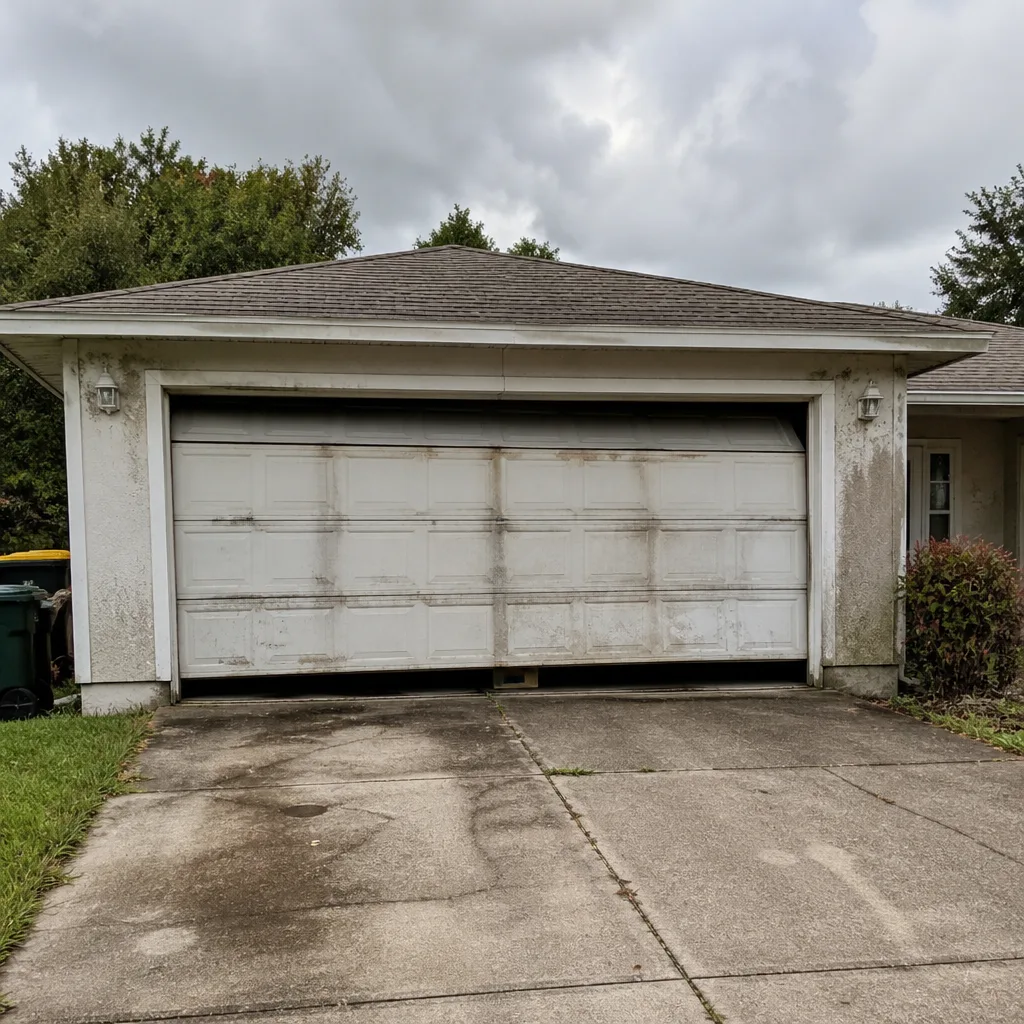 Before
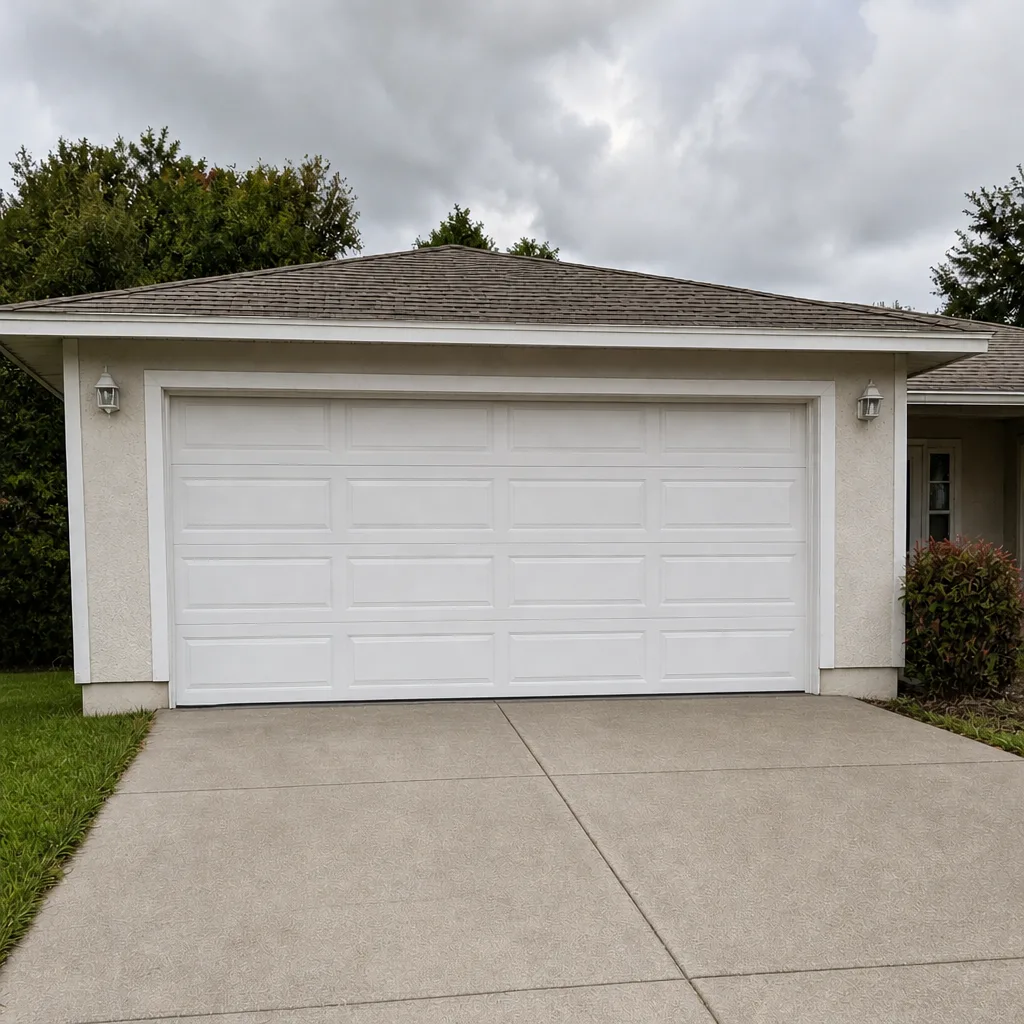 After
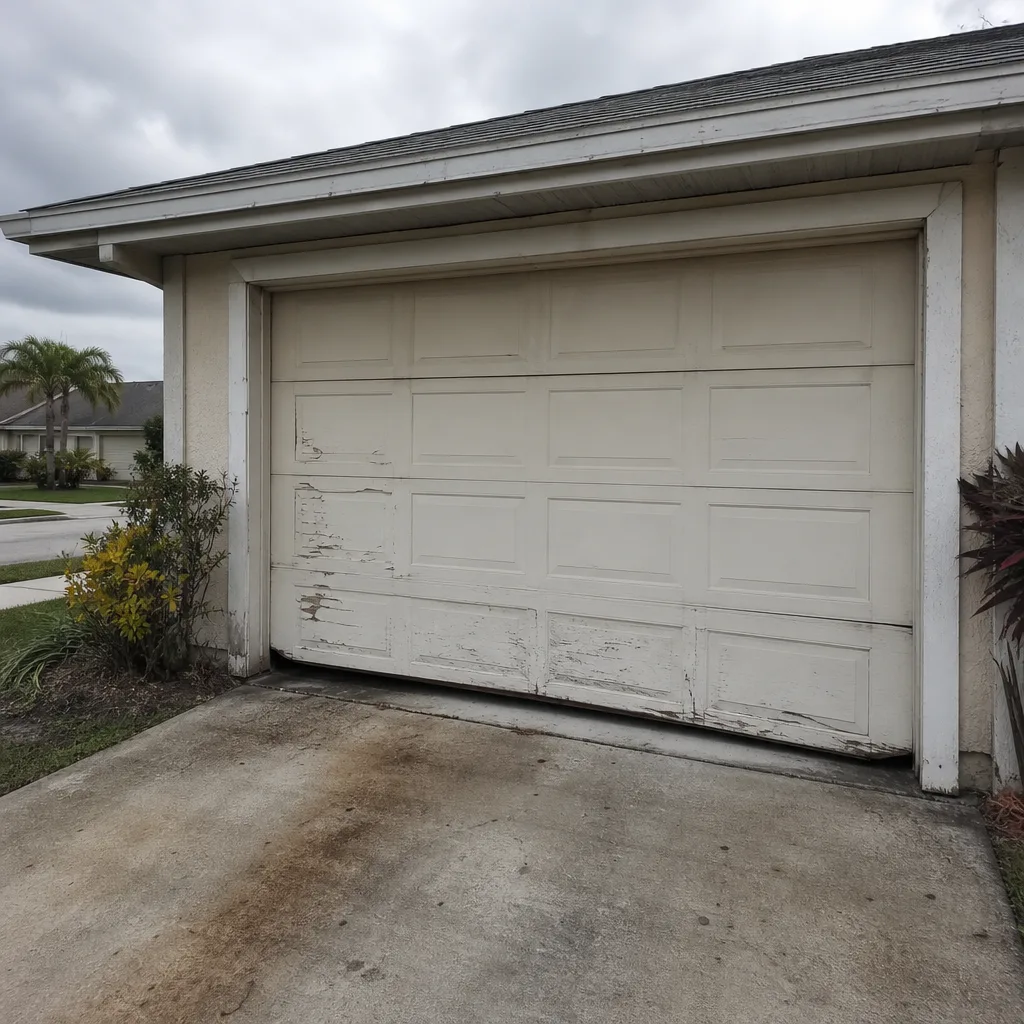 Before
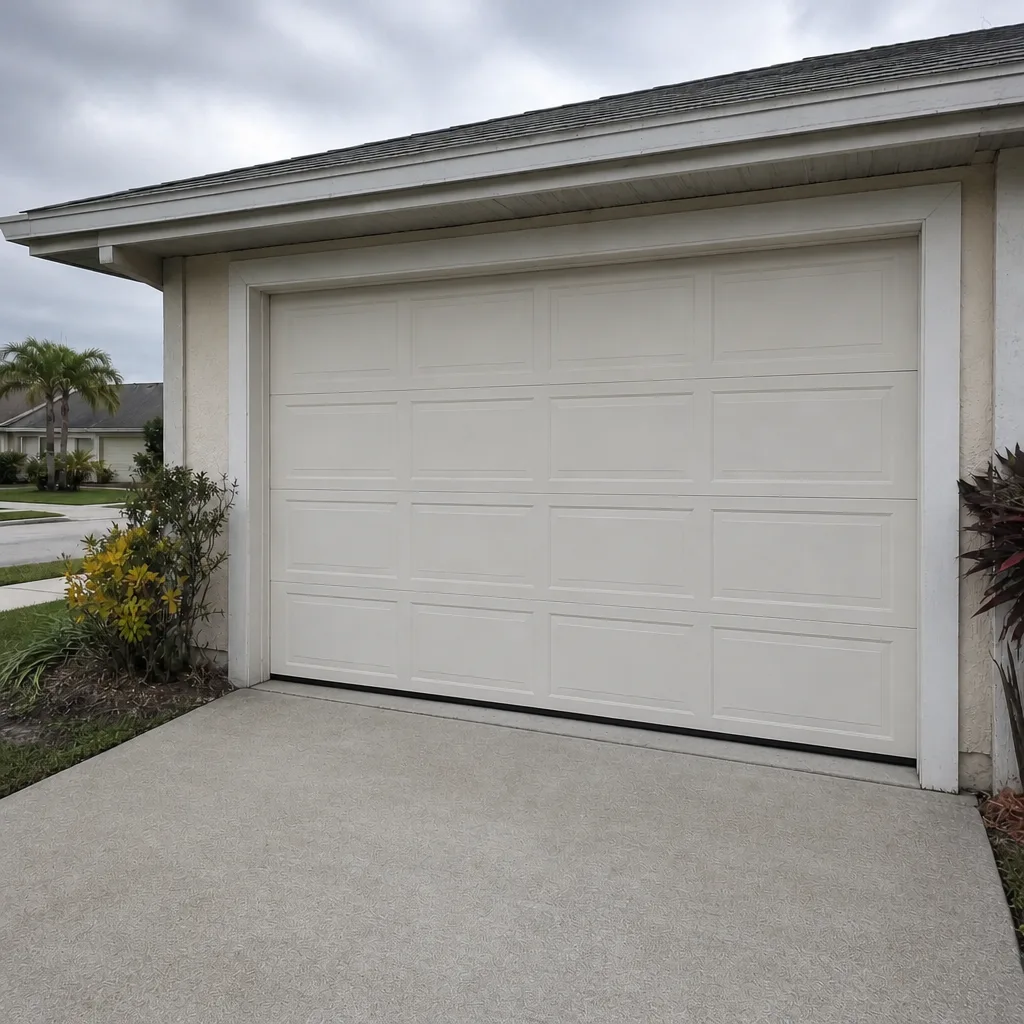 After
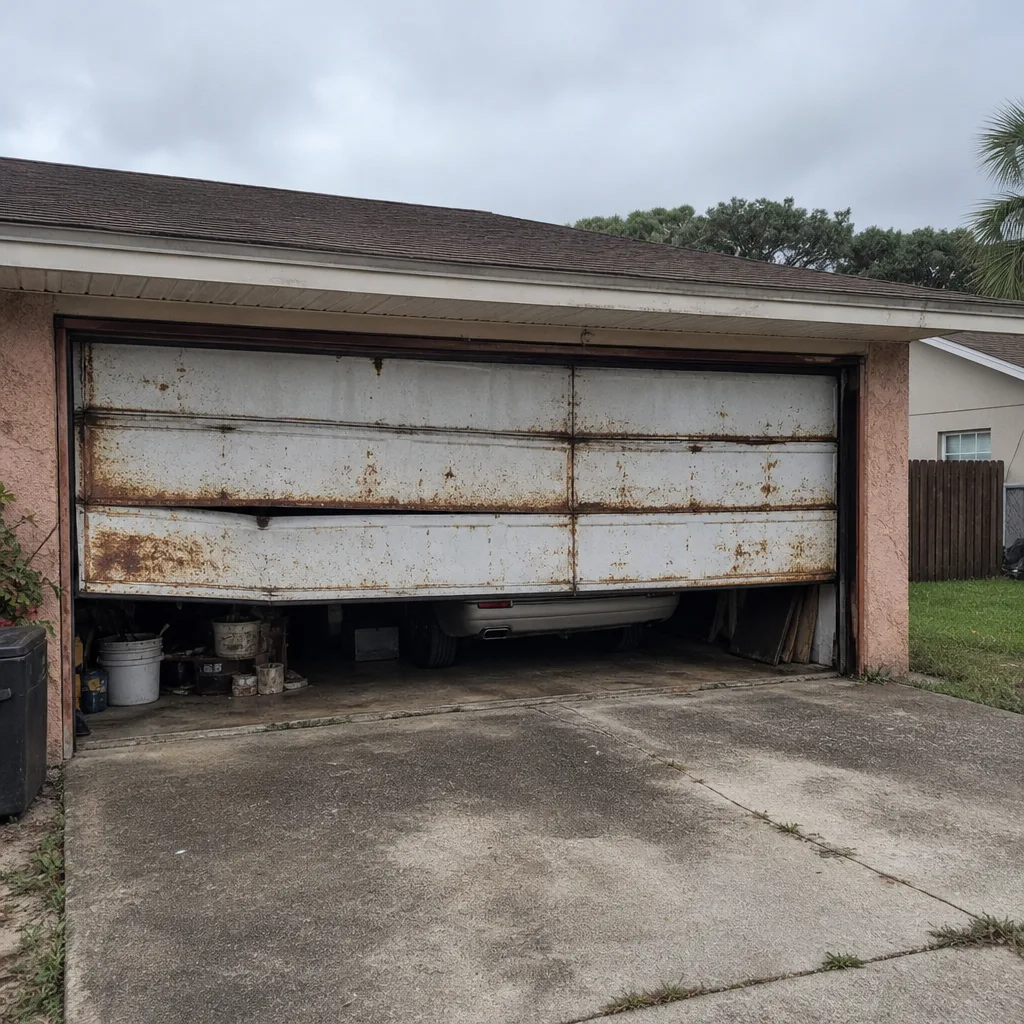 Before
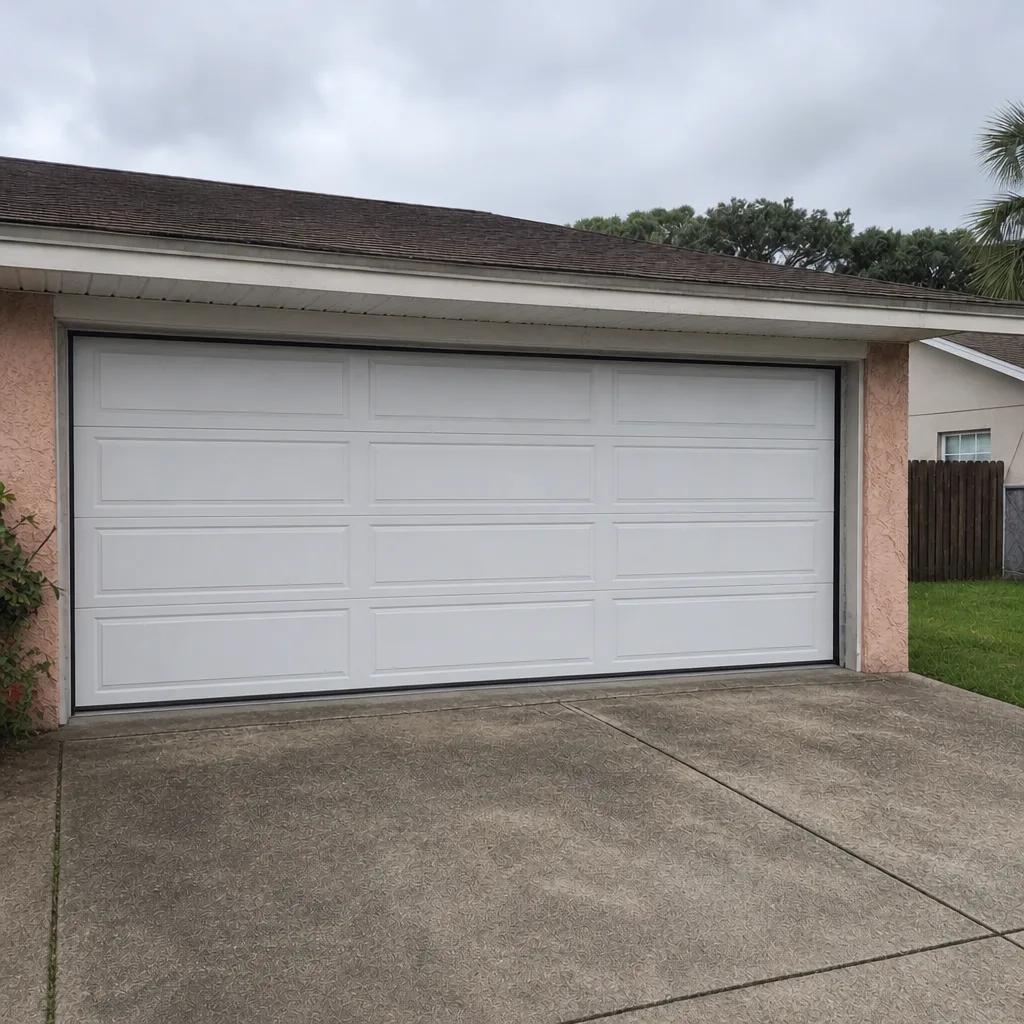 After
When to Call a Professional
Call us the same day if any of these are true: you hear a bang and the door won’t move; a cable is frayed or slack; the door is crooked or off its track; the opener hums but the door is stuck; the door reverses instantly and won’t close; or someone in the house has had to lift the door by hand. Those are safety items, and getting them off your schedule is worth more than any wait. For the quieter signs (grinding, hesitation, a wobble on the way up, a remote that’s getting flaky), book a service call within a week or two. That’s when a small repair stays small. Palm Bay Garage Door Repair Pros offers free estimates in Palm Bay, and we work on the full range of door and opener brands (LiftMaster, Chamberlain, Genie, Clopay, Amarr, Wayne Dalton, Craftsman, and Raynor). Call (833) 468-5770 for a free estimate.
Frequently Asked Questions
The most common warning signs we see in Palm Bay are new grinding or squealing, hesitation before the door moves, visible spring gaps, and openers that hum without lifting. Palm Bay’s humidity also makes rust and cable wear show up sooner than in drier climates, so cables and brackets are worth checking at least a couple of times a year. Any sign that involves a spring, cable, or the door hanging crooked is a same-day call. Call (833) 468-5770 for an exact quote – estimates are free.
It varies by component, but a hesitating opener or a grinding door often has weeks, not months, before it fails completely. Spring failures can be sudden, but the door usually feels harder to lift by hand for a while first. If a symptom is new this week, book a service call within the next week or two and you’re very likely still in the “small repair” window. Call (833) 468-5770 for an exact quote – estimates are free.
Yes, lightly lubricating the spring coil with a garage-door-specific lubricant is a safe homeowner task, but that’s the limit. You should not adjust tension, replace a spring, or touch the torsion tube. A spring that’s already losing tension won’t be fixed by lubrication, and a torsion spring under load can cause serious injury. When in doubt, don’t touch it. Call (833) 468-5770 for an exact quote – estimates are free.
That’s a failure, not a warning sign. A hum with no movement usually points to a failing capacitor or a stripped gear inside the opener, and the door won’t move until it’s repaired. Unplug the opener, don’t force the door, and call us. We work on LiftMaster, Chamberlain, Craftsman, and Raynor units, among others. Call (833) 468-5770 for an exact quote – estimates are free.
No. We quote and agree on the price before any work starts, and the written estimate is the price. If the inspection turns up something different from what you described on the phone (a bent track instead of a roller, or a logic board instead of a capacitor), we’ll tell you before doing anything and adjust the estimate with you. You’ll never be handed a surprise invoice after the fact. Call (833) 468-5770 for an exact quote – estimates are free.
The local pros we connect you with are licensed and insured as their state requires, and our technicians have up to 12 years of experience. They’re trained on the eight major door and opener brands, so you won’t get a referral or a “we don’t work on those” after the appointment is set. Call (833) 468-5770 for an exact quote – estimates are free.
The Bottom Line
Most garage door failures give you a warning before they happen. New sounds, hesitation on the way up, a wobble, a frayed cable, an opener that hums but won’t move: each of these maps to a specific component and a specific repair window. The signs that are safe to monitor are rolling, grinding, and the occasional flaky remote. The signs that need a technician today are springs, cables, tracks, and a door that won’t close. In Palm Bay’s humid, storm-prone climate, you’ll see the early signals sooner than homeowners in drier parts of the country, which gives you more time to fix the small thing before it becomes the emergency. When a repair or a replacement is the honest answer, we’ll say so. Call Palm Bay Garage Door Repair Pros at (833) 468-5770 for a free estimate, and we’ll get your door back on your schedule instead of the other way around.
Written by the team at Palm Bay Garage Door Repair Pros.